
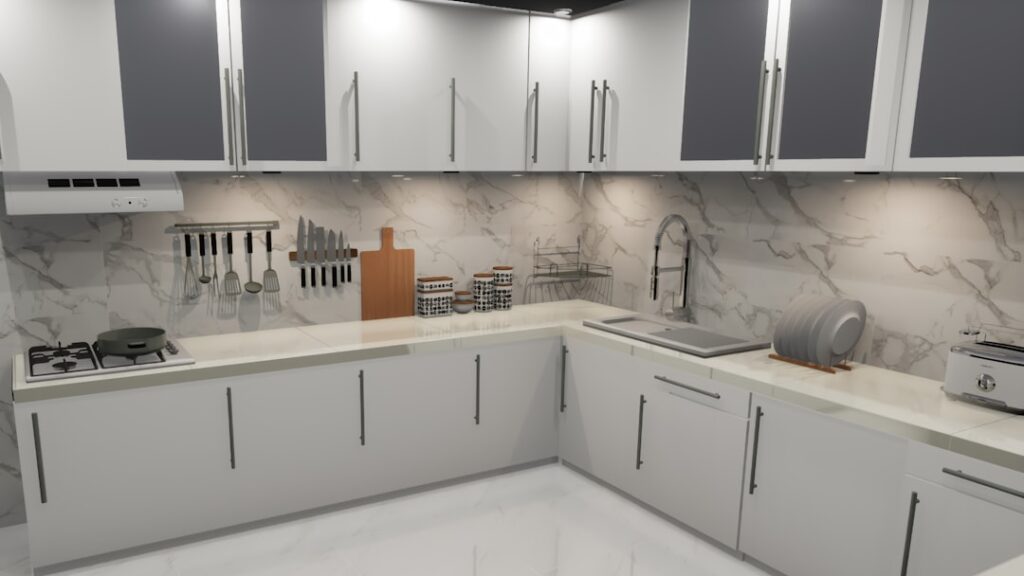
Modern glass kitchen cabinets turn ordinary upper cabinetry into the visual centerpiece of a kitchen. Whether you want a single illuminated display run or a full wall of transparent doors, the glass softens the heavy, boxy look that solid slab fronts can create. After installing cabinets in hundreds of remodels, I can tell you the difference between a build that looks custom and one that looks like a builder special almost always comes down to a few well-placed glass doors. This guide walks through every decision you’ll face, from frame style to glass texture to the LED strips that make the whole thing glow.
Part of our Kitchen Remodeling guide — explore the full guide →
Glass Cabinet Styles: Full-Glass vs Glass-Front Uppers
Not all glass cabinets are built the same way. The most common option is the glass-front upper, where the cabinet box is standard plywood or particleboard and only the door panel carries glass. These run alongside solid doors and are an easy way to add a few accent cabinets without committing to a full glass wall.
Full-glass cabinets take it further. The sides, and sometimes the back, are glass too, so light passes completely through the box. These look stunning flanking a range hood or above a peninsula, but they demand that everything inside stay neat, because there is nowhere to hide clutter.
Frameless vs Framed Construction
Frameless cabinets (also called full-access or European style) skip the face frame, so the glass door covers nearly the entire opening. The result reads clean and contemporary, with door gaps as tight as 1/8 inch. Framed cabinets add a 1.5-inch wood face frame around the opening, giving a more traditional border even when the door itself is glass. For a genuinely modern look, frameless almost always wins.
Choosing the Right Glass Type
Glass selection changes the entire personality of the cabinet. Here are the types I specify most often:
- Clear glass — fully transparent, shows everything inside. Best for displaying curated dishware and stemware.
- Frosted glass — acid-etched or sandblasted for a soft, opaque finish that hides contents while still passing light. Great for cabinets you want to glow without revealing the mismatched mugs inside.
- Seeded glass — contains tiny intentional air bubbles for a handmade, slightly vintage texture. It blurs contents while keeping a light, airy feel.
- Reeded or fluted glass — vertical ribbed texture that has exploded in popularity. It distorts the view into a striped pattern and reads very current.
- Smoked or tinted glass — gray or bronze tint that pairs beautifully with black or brass hardware for a dramatic, restaurant-style look.
Tempered safety glass is worth the small upcharge on any door at or below counter height, and many local codes require it. Expect tempered glass to add roughly 15 to 25 percent to the door cost.
Aluminum vs Wood Framing
The frame holding the glass sets the tone. Wood frames, painted or stained to match the rest of the kitchen, give warmth and blend with surrounding doors. They typically use a 2- to 2.5-inch stile and rail around the glass insert.
Aluminum frames are the hallmark of high-end modern kitchens. The slim profiles, often just 3/4 inch wide, in matte black, brushed nickel, or champagne bronze, let far more glass show. Aluminum-framed doors cost more, frequently 30 to 50 percent above a comparable wood door, but nothing else delivers that crisp, architectural edge.
Lighting the Display
Glass cabinets without lighting fall flat. Interior LED puck lights mount to the top of the cabinet and throw focused pools of light downward, ideal for highlighting a few hero pieces. LED strip lighting runs along the inside front edge or up the vertical sides and washes the whole interior evenly.
Stick to a warm color temperature between 2700K and 3000K to keep dishware looking inviting rather than clinical. Wire the cabinet lights to their own switch or dimmer so you can run them as nighttime ambient lighting independent of the bright task lights over the counters. Hardwired LED strips draw very little power, often under 4 watts per foot, so they’re cheap to leave on.
What to Display Behind Glass
Glass invites scrutiny, so be intentional. Stick to items with cohesive color and shape: white dinnerware, clear glassware, ceramic bowls, or a small collection of barware. Group items in odd numbers and leave breathing room, treating each shelf like a small still life.
Avoid stuffing in cereal boxes, plastic storage tubs, or a jumble of mismatched mugs. If you want the glow without the styling pressure, frosted or reeded glass is your friend, since it hides the specifics while keeping the soft light.
Cost Ranges Per Linear Foot
Glass upgrades layer onto your base cabinet price. Stock cabinets run roughly $100 to $300 per linear foot, semi-custom $150 to $650, and full custom $500 to $1,200 or more. Adding glass-front doors typically tacks on $50 to $150 per door over a solid door.
Textured glass like reeded or seeded adds another $30 to $80 per door, and slim aluminum-framed doors can push a single door to $250 to $450. Budget another $40 to $120 per cabinet for integrated LED lighting and a transformer. A modest accent run of three to four glass uppers usually lands between $600 and $1,800 installed.
Pros and Cons
On the plus side, glass cabinets make a kitchen feel larger and brighter, break up monotonous cabinet walls, and turn everyday dishes into decor. They also help you find things faster.
The trade-offs are real, though. Glass shows fingerprints and dust, demands tidy interiors, costs more than solid doors, and offers slightly less concealment for the contents you’d rather not display. Clear glass especially is a commitment to staying organized.
Maintenance and Cleaning
Keeping glass crisp is simple but ongoing. Wipe doors weekly with a microfiber cloth and a streak-free glass cleaner, or a 50/50 mix of distilled water and white vinegar. Spray the cloth rather than the glass to keep cleaner off the wood or metal frame, where it can dull the finish over time.
For textured glass, a soft toothbrush reaches into the grooves of reeded or seeded panels. Dust interior shelves and contents monthly so the display stays photo-ready behind that transparent door.
Design Tips That Pull It Together
Use glass cabinets as accents rather than the entire wall unless you’re confident in your styling discipline. A common, foolproof move is two glass uppers flanking a window or range hood. Match the cabinet interior color to the trend you want: a contrasting painted back panel makes white dishes pop, while a continuous color makes the cabinet recede.
Coordinate the glass framing finish with your hardware and faucet for a deliberate look. When in doubt, choose frosted or reeded glass with warm LED lighting, because that combination forgives a lot and still delivers the elevated, modern result most homeowners are after.


