
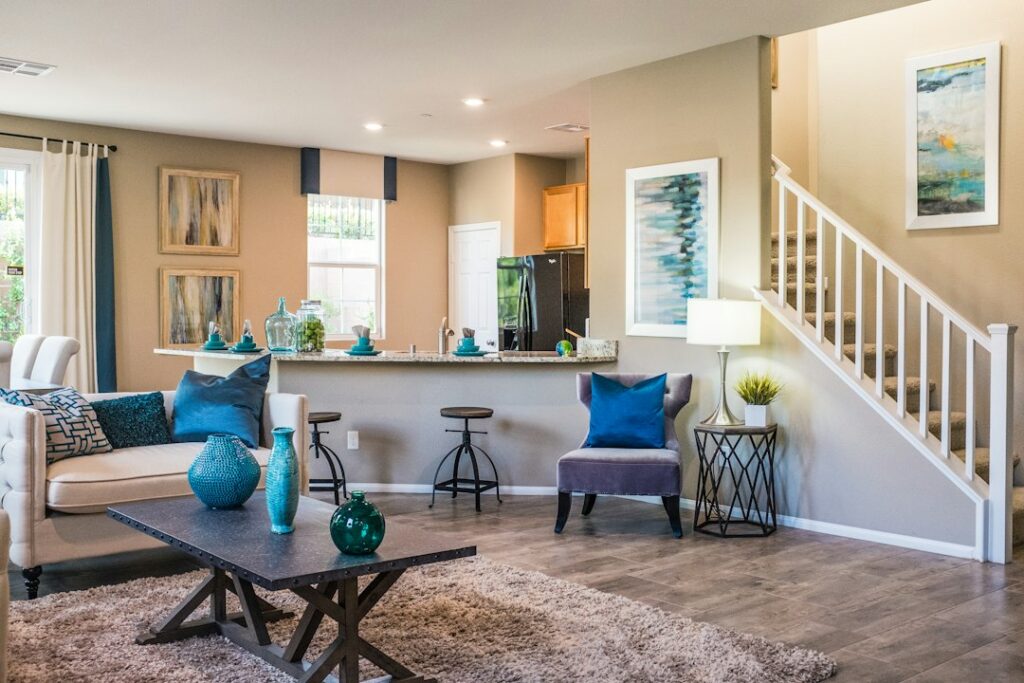
Many homeowners love crown molding, paneled doors and a good wingback chair but feel their rooms look dated. Modern traditional decor solves that tension. It keeps the bones of classic design, including symmetry, millwork, rich wood and timeless furniture shapes, then refreshes them with cleaner colors, modern lighting, simpler fabrics and fewer accessories. The house still feels gracious, just lighter and more relevant.
The style is sometimes called modern classic. Either name describes the same approach: you are not ripping out the traditional details that give a house character. You are editing around them so they stand out, and introducing a few crisp contemporary elements that keep the room from reading as old-fashioned.
Done well, the look is one of the most durable choices you can make. Classic architecture does not go out of style, and the modern layer is easy to update as tastes change.
What Modern Traditional Decor Looks Like
Imagine a living room with paneled walls painted a soft greige, a pair of rolled-arm sofas in solid linen facing each other, a marble fireplace surround, and a sculptural brass chandelier with clean, linear arms. Add a large abstract painting over the mantel, a pair of lamps with simple drum shades and an antique chest. That mix of old and new, balanced with restraint, is the essence of modern traditional interior design.
Its defining traits include:
- Classic architecture kept and highlighted. Crown molding, wainscoting, paneled doors, coffered ceilings and fireplace mantels stay, usually painted one color for a cohesive look.
- Symmetry and balance. Paired lamps, chairs and sconces flank focal points, a habit borrowed from classic interior design.
- Calmer palette. Instead of heavy reds, golds and dark greens, rooms lean on whites, grays, navy, soft blues and earthy neutrals.
- Simplified fabrics. Solids, subtle textures and one or two refined patterns replace heavy chintz and fringe.
- Modern accents. Contemporary lighting, abstract art, glass or metal tables and streamlined hardware.
Modern Traditional vs Traditional and Transitional
Pure traditional design embraces ornament: tufted upholstery, layered drapery with valances, collections of porcelain, patterned rugs and plenty of dark wood. Modern traditional decor keeps the furniture forms and architecture but strips back the layering.
Transitional design goes further toward modern. It uses traditional shapes only as a softening influence, with very neutral palettes and minimal ornament. Modern traditional sits a step closer to classic: you will still see turned legs, carved details, antique pieces and confident use of color, just in a cleaner frame.
Neoclassical interior design is a related cousin that draws on Greek and Roman motifs: columns, pediments, medallions, fluted details and strict symmetry. A modern traditional home can borrow neoclassical touches, such as a fluted console or a pair of urns, without adopting the full formality.
Color Palettes That Work
Pick a restrained base and add depth with one or two richer tones. Some combinations that consistently work:
- Warm white and navy: crisp, classic and easy to accessorize with brass and wood.
- Greige and charcoal: calm and sophisticated, with black accents in lighting and frames.
- Soft blue and cream: airy in bedrooms and baths, especially with marble.
- Sage or olive with white trim: a fresh take on traditional greens for libraries, dining rooms and kitchens.
- Deep tone on millwork: painting paneling, built-ins or a library in an inky blue, green or charcoal creates drama that feels both old and new.
For trim, a satin or semi-gloss finish shows off molding profiles and wipes clean. Walls usually look best in eggshell or matte.
Flooring for a Modern Classic Interior
Floors in classic homes tend to be wood or stone, and that holds true here. The modern update is mostly in color and finish.
Hardwood
Oak remains the go-to. Mid-tone natural finishes or warm browns look updated compared with the orange and red stains of past decades. Herringbone and chevron patterns are a strong fit, adding classic character while feeling fresh. Strip widths of 3 to 5 inches suit traditional architecture better than very wide rustic planks. A satin or matte finish feels current and hides scratches better than high gloss.
Stone and Tile
Marble, limestone and porcelain that mimics them work in foyers, baths and kitchens. Checkerboard marble in white and gray or black is a classic entry look that suits modern classic home decor. Hexagon mosaics and basketweave patterns fit bathrooms. Honed finishes are less slippery and more forgiving than polished in wet areas.
Practical Alternatives
Engineered hardwood offers the same face appearance with better stability over concrete or radiant heat. High-quality luxury vinyl in a herringbone or oak visual is a budget-friendly choice for kitchens and basements, as long as the visual is realistic and the sheen is low.
Steps to Update a Traditional Room
- Assess what to keep. List the classic elements worth preserving: molding, fireplace, built-ins, good-quality furniture frames and antiques.
- Edit accessories. Remove at least half of the small items. Modern traditional rooms breathe more than traditional ones.
- Repaint walls and trim. Move from heavy colors or yellowed whites to a clean neutral, or paint trim and walls the same color for a tailored, contemporary look.
- Simplify window treatments. Replace swags and valances with tailored panels hung close to the ceiling, or with Roman shades in a solid fabric.
- Reupholster selectively. Keep well-built sofas and chairs, but recover them in solid or subtly textured fabrics.
- Swap the lighting. Lighting changes the era of a room faster than anything else. Replace dated fixtures with simplified chandeliers, linear pendants or sculptural sconces. If any new fixture involves wiring, turn off the breaker and confirm power is off with a non-contact voltage tester before you start, or hire a licensed electrician.
- Introduce modern art. A large abstract or black-and-white photograph over a traditional mantel instantly bridges the two styles.
- Update hardware. Change knobs, pulls and door hardware to unlacquered brass, polished nickel or matte black in simple shapes.
Room Ideas
Living Room
Arrange seating symmetrically around the fireplace. Pair classic sofas with a modern coffee table in glass, stone or metal. Use a large, low-pile rug in a subtle pattern so the floor still shows at the edges.
Kitchen
Inset or shaker cabinets in white, cream or a muted color, marble or quartz counters, and a classic subway or marble backsplash form the base. Modern pendants over the island and slim hardware keep it current. Range hoods with simple plaster or wood covers add architectural presence.
Dining Room
A traditional pedestal or trestle table with upholstered or modern chairs is a reliable formula. A statement chandelier and a single large mirror or artwork complete it. Wainscoting with a contrasting wall color adds depth.
Bedroom and Bath
An upholstered or turned-post bed, matching nightstands and lamps, and layered white bedding feel tailored and calm. In baths, marble, nickel fixtures and a furniture-style vanity bring the classic feel, while a frameless glass shower keeps it modern.
Common Pitfalls
Too formal. Perfect symmetry everywhere can feel stiff. Break it with one asymmetric element, such as a single large plant or an off-center art grouping.
Too many eras. Combining heavy carved furniture, mid-century pieces and industrial lighting in one room can feel confused. Keep the modern layer consistent, for example all clean-lined brass or all matte black.
Undersized lighting. Tiny modern fixtures look lost in rooms with tall ceilings and heavy molding. A chandelier should usually be roughly one-half to two-thirds the width of the table it hangs over.
Ignoring the floor. A worn orange oak floor can drag a freshly updated room back in time. Refinishing in a more natural tone often does more than any furniture purchase.
Budget and Professional Help
Painting and editing are inexpensive and have huge impact. Reupholstering a sofa often costs less than buying a well-built new one. Lighting can range from modest to very expensive per fixture. Refinishing hardwood typically runs a few dollars per square foot, while new herringbone hardwood installed costs more than straight-lay because of extra labor and waste.
Bring in an interior designer if you are blending inherited antiques with new pieces across several rooms, and use licensed electricians for new fixtures, circuits or recessed lights. A finish carpenter can add or repair molding and paneling so new work matches the old profiles. In homes built before 1978, test painted trim for lead before sanding or stripping and follow lead-safe practices.
Modern traditional decor works because it respects what is already good about a classic house. Keep the architecture, quiet the palette, edit the clutter and let a few contemporary pieces carry the update.
Frequently Asked Questions
Is modern traditional the same as transitional?
They overlap but are not identical. Modern traditional keeps more classic detail, including antiques, turned legs, symmetry and richer colors. Transitional is more pared back, with very neutral palettes, minimal ornament and furniture that only hints at traditional shapes.
What flooring suits modern traditional decor?
Oak hardwood in a natural or warm brown finish, especially in herringbone or chevron patterns, is a classic match. Marble or marble-look tile suits foyers and baths, and engineered wood or realistic luxury vinyl are practical alternatives.
Can I mix antiques with modern furniture?
Yes, that mix is central to the style. Balance is the goal: pair an antique chest with a modern lamp, or classic chairs with a contemporary table, and keep the overall palette consistent so the pieces relate.
What colors are popular in modern classic interiors?
Warm whites, greige, soft gray, navy, soft blue, sage and charcoal are common. Many designers also paint millwork or entire libraries in deep, saturated tones for drama.
How do I make a traditional house feel more modern without remodeling?
Repaint in lighter, cleaner colors, edit accessories, simplify window treatments, swap dated light fixtures and hardware, and add one or two pieces of modern art. These changes shift the feel dramatically without touching the architecture.


