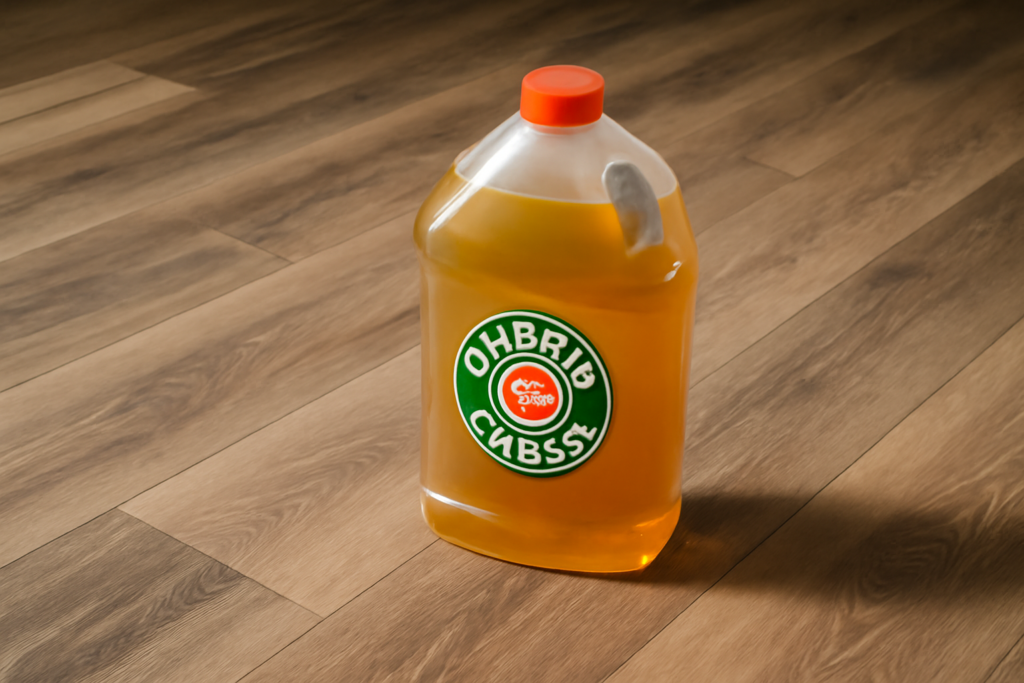
It is one of the most common questions homeowners ask after installing luxury vinyl plank: can you use the same wood cleaner your grandmother swore by? Using Murphy’s Oil Soap on vinyl plank flooring feels intuitive because the planks look like wood, but the honest answer is that it is not the right cleaner, and over time it can leave a dull, sticky film that is frustrating to remove.
Murphy’s Oil Soap was formulated in 1905 for finished and sealed wood. Its cleaning action relies on a plant-derived oil-soap base that lifts grime and leaves a slight conditioning residue on porous wood surfaces. Vinyl plank is neither porous nor wood. That mismatch between what the product does and what LVP needs is the whole reason to think twice.
The Short Answer
Occasional, heavily diluted use of Murphy’s Oil Soap will not destroy a vinyl plank floor overnight, so a one-time mopping is not an emergency. But it is not recommended as a regular cleaner. The oil-based residue it deposits builds up film, dulls the finish, and can leave floors slippery. Most luxury vinyl manufacturers, including major brands, specifically advise against oil soaps, waxes, and “mop and shine” products in their care guidelines. If your warranty depends on following those guidelines, oil soap is a gamble.
Why Oil Soap and Vinyl Do Not Mix
To understand the problem, it helps to know how vinyl plank is built. A typical LVP has a clear urethane or aluminum-oxide wear layer on top, a printed design film beneath it, and a rigid or flexible core below that. The wear layer is a sealed, non-porous plastic. It does not absorb conditioners, so anything oily simply sits on the surface.
Residue and Haze
Because the oil cannot soak in, each cleaning leaves a microscopically thin film. Layer after layer, that film clouds the finish into a persistent haze, especially visible in raking sunlight or under kitchen lights. What started as a shiny floor gradually looks foggy and never quite “clean.”
A Slippery, Dirt-Grabbing Surface
The same oily residue that dulls the shine also makes the floor slick when wet, a real hazard on stairs and in kitchens. Worse, the tacky film actually attracts and holds dust and grit, so the floor gets dirty faster and each mopping seems less effective than the last.
Potential Warranty Issues
Manufacturers write care instructions to protect the wear layer. Using a product they explicitly warn against, if it causes damage, can give them grounds to deny a warranty claim. For a floor that cost $3 to $7 per square foot installed, that is a needless risk.
What to Use Instead
The good news is that vinyl plank is one of the easiest floors to keep clean, and the right products are cheap and simple.
- Plain warm water. For routine cleaning, a well-wrung damp microfiber mop with nothing but warm water handles most dirt.
- pH-neutral vinyl floor cleaner. Products made for LVP and LVT rinse clean without residue. Look for the words “pH neutral” and “no-rinse.”
- Manufacturer-recommended cleaners. Brands like Shaw, Mannington, COREtec, and Karndean sell or endorse specific cleaners tuned to their wear layers.
- A homemade solution. One cup of white vinegar in a gallon of warm water cuts light grime and dries residue-free. Use it sparingly and do not let it pool.
- A drop of dish soap for tough spots. A tiny amount in a bucket of water tackles greasy kitchen messes, followed by a clean-water pass to rinse.
Avoid, alongside oil soap: paste wax, “restorer” polishes, ammonia-heavy glass cleaners, bleach, steam mops (heat and forced moisture can lift edges and void warranties), and abrasive scouring pads.
How to Properly Clean Vinyl Plank Flooring
A simple routine keeps LVP looking new for its full 15-to-25-year lifespan. Follow these steps.
- Dry-clean first. Sweep, dust-mop, or vacuum with the beater bar off to remove grit that would otherwise scratch the wear layer. Do this a few times a week in busy areas.
- Mix a neutral solution. Fill a bucket with warm water and either a capful of pH-neutral LVP cleaner or a cup of white vinegar. Skip the oil soap.
- Wring the mop nearly dry. Vinyl is water-resistant, not waterproof at the seams. Use a damp, not sopping, microfiber mop so no water sits on the joints.
- Work in sections. Mop with the plank direction, rinsing the mop head as it picks up dirt so you are not just spreading grime.
- Spot-treat stubborn marks. Rub scuffs with a little rubbing alcohol on a cloth; lift sticky residue with a plastic scraper, never metal.
- Let it air dry. The floor should dry in minutes. Buff any streaks with a dry microfiber cloth.
How to Remove Existing Oil Soap Buildup
If you have already been using Murphy’s Oil Soap and your floor looks hazy or feels tacky, you can strip the film. Mix one gallon of warm water with one cup of white vinegar and a few drops of dish soap. Mop a section, then immediately go over it with a second mop dipped only in clean warm water to rinse away the loosened residue. Change your rinse water often, because dirty water just redeposits the film. Stubborn cloudiness may take two or three passes over several cleanings to fully clear. Once the floor is truly residue-free, switch to a neutral cleaner to keep it that way.
Frequently Asked Questions
Will one accidental use ruin my floor?
No. A single diluted application will not permanently harm the wear layer. Just rinse thoroughly with clean water afterward and avoid making it a habit.
Is Murphy’s “multi-use” wood and vinyl spray different?
Murphy makes several formulas, and some are labeled for use on more surfaces. Read the label carefully; if a specific product lists vinyl or laminate as approved and it is a spray-and-wipe rather than an oil-soap concentrate, it may be acceptable. When in doubt, a dedicated LVP cleaner is the safer bet.
Why does my LVP look dull even after mopping?
Dullness almost always signals residue buildup from an oily or filming cleaner. Strip it with the vinegar-and-rinse method above, then maintain with plain water or a neutral cleaner.
Understanding Your Manufacturer’s Warranty Language
Vinyl plank warranties are surprisingly specific about cleaning, and reading the fine print pays off. Most residential LVP carries a wear-layer warranty of 15 to 25 years, but nearly all of them include a clause requiring you to follow the published maintenance instructions to keep coverage valid. Those instructions almost universally list “no oil soaps, no wax, no polish, no abrasive cleaners” among the prohibited products.
The reason is not arbitrary. A hazy, residue-coated floor can look like premature wear-layer failure, and manufacturers do not want to replace floors that were simply dulled by the wrong cleaner. If you ever need to file a claim, the first thing a rep may ask is what you have been cleaning with. Keeping to plain water or a labeled neutral cleaner protects both the floor’s appearance and your right to make a warranty claim down the road.
A Simple Weekly and Seasonal Routine
Building cleaning into a light rhythm keeps LVP effortless. On a daily or every-other-day basis, run a dust mop or vacuum over high-traffic paths to lift grit. Once a week, damp-mop the whole floor with a neutral cleaner or a mild vinegar solution. Every month, move lightweight furniture and clean the edges and corners where dust collects.
Seasonally, check that furniture felt pads are intact and replace worn ones, since bare chair and table feet scratch the wear layer faster than any cleaner. Place walk-off mats at exterior doors to capture road salt and sand in winter and tracked-in pollen and mud in spring. This modest routine, none of it involving oil soap, is all a modern vinyl plank floor needs to stay bright for its full service life.
The Bottom Line
While the temptation to reach for a familiar bottle is understandable, using Murphy’s Oil Soap on vinyl plank flooring works against the way the material is built. The oil residue it leaves clouds the finish, creates a slippery film, attracts dirt, and can jeopardize your warranty. Stick with warm water, a pH-neutral vinyl cleaner, or a light vinegar solution, keep grit swept up, and mop with a barely-damp microfiber head. Do that and your vinyl plank will stay bright and clean for decades without a drop of oil soap.
Prefer to explore on your own?
See how new flooring looks in your actual room in seconds — free, no signup.
Try the free Floor Studio →