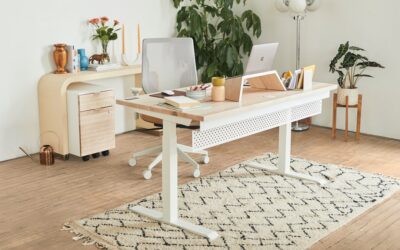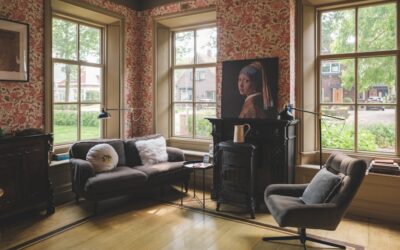
An office without a rug echoes, every chair roll wears the floor, and the room feels like a leftover bedroom rather than a place where real work happens. The right rug fixes all three problems in one purchase. Smart office rug ideas consider chair traffic, acoustic absorption, ergonomic lighting reflection, and resale appeal in roughly that order. Get the size right first, then the material, then the pattern. Backwards order is how most people end up with a rug that looks great in photos and fails in daily use.
- Rug Sizing Rules for Home Offices
- Best Materials for Chair Wheel Traffic
- Color and Pattern Strategies That Work
- Acoustic Benefits Worth Quantifying
- Layered Rug Looks for Visual Interest
- Placement Configurations for Different Desk Setups
- Rug Pads That Make or Break the Setup
- Style Direction by Office Type
- Budget Tiers and Where to Shop
- Care to Hit the Lifespan
Rug Sizing Rules for Home Offices
The single biggest mistake in office decorating is buying a rug that is too small. A 5×7 under a desk leaves chair wheels tipping off the edge constantly. Work backward from the chair zone: when fully reclined, your chair wheels should still sit on rug. For most U-shaped or L-shaped desks, that means a minimum 8×10. For a simple writing desk, a 6×9 covers it.
- Compact home office (under 100 sq ft): 6×9 rug under desk and chair
- Standard home office (120 to 180 sq ft): 8×10 rug centered under desk
- Large or executive office (200+ sq ft): 9×12 or 10×14 rug grounding the entire seating area
Best Materials for Chair Wheel Traffic
Office chairs roll over the same 4 square feet of rug thousands of times per year. Cheap polyester rugs flatten and pill within a year. Choose either a low-pile wool or a flatweave polypropylene. Avoid shag, plush, or any pile higher than 1/2 inch under a rolling chair, period.
Tightly woven jute and sisal hold up but feel rough on stocking feet and shed fibers that clog the chair casters. They work better in static-seating offices with non-rolling chairs.
Color and Pattern Strategies That Work
Office rugs benefit from medium-tone colors that hide both light dust and dark debris equally well. Solid charcoal, warm beige, mid-blue, and deep olive consistently photograph well in video calls without distorting webcam color balance. Bright white rugs amplify glare on Zoom calls and show every coffee drip. Pure black rugs absorb all the light from your overhead fixture and force you to add a second lamp.
For pattern, low-contrast geometric designs and Persian-style traditional rugs both perform well behind a desk. They hide cable creep and the inevitable footprint shadows where you set your feet down a thousand times a day.
Acoustic Benefits Worth Quantifying
A 9×12 rug with a quality felt-rubber pad reduces office reverb by roughly 25 to 40 percent measured at typical desk-microphone distance. That difference is audible on every recorded meeting, podcast, or YouTube video filmed in the room. If you take 10 or more video calls per week, the rug pays for itself in audio quality alone.
Pair the rug with soft window treatments and at least one upholstered chair to push reverb time below 0.4 seconds, which is the threshold most audio engineers consider professional.
Layered Rug Looks for Visual Interest
Layering a smaller decorative rug on top of a larger neutral foundation rug is one of the most underused office rug ideas in design publications. Start with a 9×12 flatweave jute or low-pile wool as the base. Add a 4×6 vintage Persian or kilim on top, positioned slightly off-center under the desk chair. The layering adds depth without sacrificing chair-wheel performance because the top rug sits behind the seating zone.
Placement Configurations for Different Desk Setups
Desk position dictates rug placement. Three configurations cover almost every home office.
- Desk against the wall: Center rug 6 to 12 inches in front of desk so chair wheels stay on rug fully extended
- Desk floating in room center: Rug extends 24 inches past chair on all sides, treats desk like an island
- L-shaped corner desk: Use an asymmetric placement, with the rug aligning to the long leg and extending 36 inches into the room
Rug Pads That Make or Break the Setup
A heavy felt-rubber rug pad in 1/4-inch thickness costs $50 to $120 for a 9×12 and triples the lifespan of the rug above it. Skip it and the rug bunches under chair wheels, slides on hardwood, and creates trip hazards on every entry. Look for pads rated for office chair use specifically, like the Mohawk Ultra Premium or RugPadUSA Superior Lock.
For chairs with very heavy occupants or aggressive rolling, add a clear polycarbonate chair mat over the rug in just the chair zone. It is uglier but adds another five years to the rug.
Style Direction by Office Type
Match rug style to the work the office hosts. Creative work spaces lean toward bold colorful kilims, Moroccan Beni Ourain, or modern abstract art rugs. Professional consulting or legal home offices look best with traditional Persian, Heriz, or Tabriz patterns in red, blue, and ivory. Tech and minimalist setups use solid charcoal, cream, or low-contrast geometric flatweaves. Industrial conversions with exposed brick or wood beams favor jute, sisal, or vintage Turkish rugs in muted earth tones.
Budget Tiers and Where to Shop
Quality office rugs span a wide price range, but a few sweet spots emerge for value:
- Budget ($150 to $400): RugsUSA, Wayfair flatweaves, IKEA Stockholm collection
- Mid-range ($500 to $1,200): Loloi, Surya, Rugs.com hand-loomed wool
- Premium ($1,500 to $5,000+): Annie Selke, Doris Leslie Blau, vintage Persian dealers
For most home office rug ideas at the working professional level, the mid-range tier delivers the best balance of durability and aesthetic. A $700 hand-loomed wool 8×10 will last 15 years if cared for properly.
Care to Hit the Lifespan
Vacuum weekly using a vacuum without a beater bar (or with the beater turned off) on wool and flatweave rugs to prevent fiber damage. Rotate the rug 180 degrees every six months to even out chair-wheel wear. Spot-clean spills immediately with a clean white cloth and water; coffee and red wine set permanently within 30 minutes on wool. Schedule professional cleaning every 24 to 36 months for office rugs that see daily 8-hour use.