A good patio heater can stretch your deck season by two or three months on each end, turning chilly spring and fall evenings into usable outdoor time. Choosing the right outdoor heaters for deck setups comes down to fuel type, heat output measured in BTUs, and the clearances your deck can safely accommodate. Pick wrong and you either freeze under an underpowered unit or create a fire hazard over a wood deck and a low roof. This guide walks you through every decision.
Part of our Decks & Outdoor guide — explore the full guide →
The Three Main Fuel Types
Outdoor heaters generally run on one of three energy sources, and each suits a different deck situation.
Propane Heaters
Propane is the most popular choice for freestanding patio heaters. The classic mushroom-style tower runs off a standard 20-pound propane tank hidden in its base. Propane units are portable, need no installation, and put out serious heat, typically 40,000 to 48,000 BTUs. Expect to pay roughly $120 to $400 for a quality tower. The trade-off is ongoing fuel cost: a 20-pound tank lasts about 8 to 10 hours on high and costs $20 to $30 to refill.
Electric Heaters
Electric infrared heaters warm objects and people directly rather than heating the air, so they work well in breezy spots where propane heat blows away. They produce no fumes, which makes them safe for covered porches and partially enclosed decks. Wall- and ceiling-mounted models save floor space. A 1,500-watt unit covers a small seating area and costs about $80 to $250. Running cost is modest at roughly 15 to 20 cents per hour, but you need a nearby outlet on its own circuit.
Natural Gas Heaters
If your deck already has a natural gas line, a hardwired natural gas heater is the most economical to run because you never buy or swap tanks. These are usually permanently mounted and require a licensed plumber or gas fitter to connect the line. Upfront cost is higher, often $300 to $700 plus installation, but operating cost is the lowest of the three.
How to Size by BTU
BTU (British Thermal Unit) output tells you how much heat a unit delivers. A rough sizing rule for outdoor spaces is to multiply the square footage you want to heat by about 20. For a 300-square-foot deck area, you would want a heater rated around 6,000 usable BTUs, though wind, open sides, and cold climates push that number higher.
- Small deck or bistro set (up to 100 sq ft): a single tabletop or 1,500-watt electric unit
- Medium deck (100 to 300 sq ft): a 40,000-BTU propane tower or two infrared units
- Large deck (300+ sq ft): multiple heaters or several mounted infrared panels
Freestanding propane towers heat a circle roughly 9 to 18 feet in diameter, decreasing with wind and cold. Do not expect one tower to warm a sprawling deck.
Heater Styles to Consider
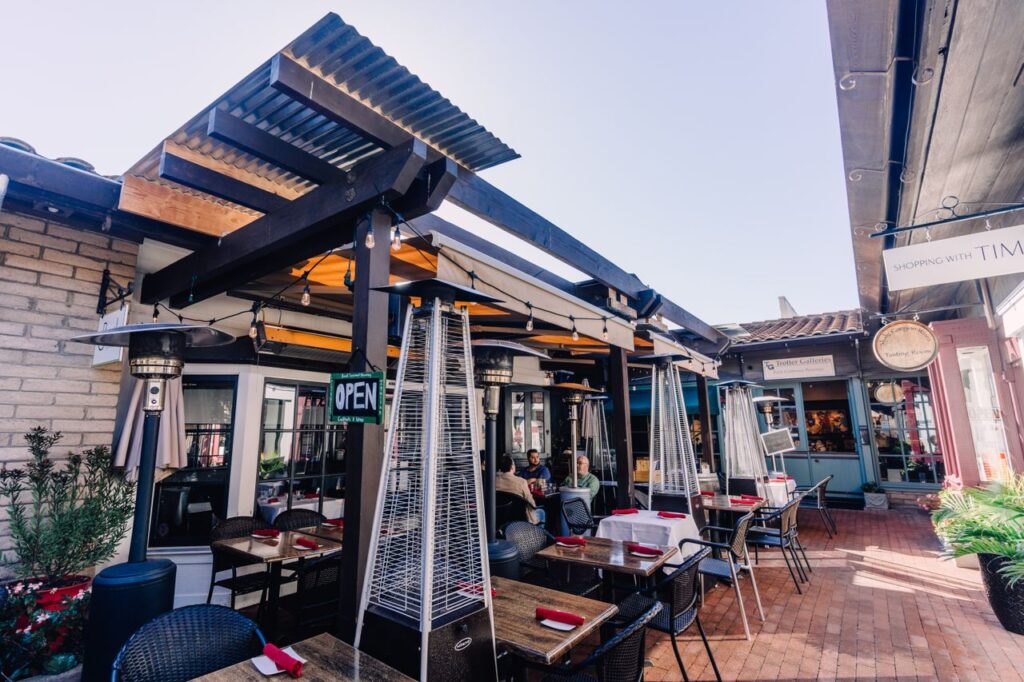
- Freestanding towers: the tall mushroom style, best for open patios and decks; portable but tippy in wind.
- Tabletop heaters: compact propane units for dining tables; good for small areas.
- Wall-mounted infrared: electric, space-saving, ideal for covered decks and pergolas.
- Hanging/ceiling infrared: mounts under a covered porch ceiling, completely out of the way.
- Fire pit/fire table styles: double as a focal point, though they heat a smaller, lower zone.
Safety and Clearance on a Wood Deck
Decks introduce two hazards open patios do not: a combustible wood surface and, often, a low roof or pergola overhead. Take these precautions seriously.
- Maintain the manufacturer’s required clearances, commonly 18 to 36 inches from walls and at least the full specified distance from any overhead structure.
- Never run a propane or natural gas heater under a fully enclosed roof; combustion gases need ventilation. Open-sided pergolas are usually fine if clearances are met.
- Place freestanding towers on a flat, stable section of decking and consider a weighted or anchored base so wind cannot tip them. A tip-over auto-shutoff valve is a must-have feature.
- Keep a fire extinguisher nearby and never leave a lit gas heater unattended.
- Store propane tanks outdoors, never indoors or in a garage.
For covered or partially enclosed decks, electric infrared is the safest choice because it produces no carbon monoxide.
Features Worth Paying For
Beyond fuel type and BTUs, a few features genuinely improve the experience. Look for an automatic tip-over shutoff and a flame-failure safety device on gas units. Piezo or push-button ignition beats fumbling with a lighter. A weighted base, wheels for repositioning, and a weather cover extend the life of the unit. On electric models, a remote control and multiple heat settings add convenience.
Cost of Ownership
Sticker price is only part of the picture. A propane tower may be cheapest to buy but costs the most to fuel over a season. Electric infrared has a low running cost but limited reach. Natural gas costs the most to install but the least to operate long term. If you use the deck heater more than a few nights a week through cold months, the running cost difference adds up quickly, so weigh frequency of use against upfront price.
Positioning for Maximum Comfort
Where you place a heater matters as much as which one you buy. Radiant infrared units should aim across the seating area, not at an empty corner, since they warm whatever the energy strikes. Freestanding propane towers radiate heat in a circle, so center one near the gathering spot rather than against a railing. On a windy deck, position the heater upwind of the seating so warmth blows toward people, and use a windbreak like a partial screen or planter wall to keep heat from dissipating. For dining, a tabletop or overhead unit keeps feet and torsos warm without taking floor space.
Maintenance and Off-Season Storage
A little care extends a heater’s life and keeps it safe. For propane units, check the hose and connections for leaks each season with soapy water, and clean the burner and emitter screen of spiderwebs and debris that can cause uneven flames. Wipe down electric infrared elements and reflectors so they radiate efficiently. Cover any heater left outdoors with a weatherproof cover to keep out rain and rust. When the season ends, store propane tanks outdoors and bring portable electric units inside if possible. Inspect the tip-over and flame-failure safety devices annually to confirm they still work.
Match the heater to how your deck is built and how often you will actually use it, respect every clearance the manufacturer specifies, and you will get comfortable evenings outdoors well past the warm season.