A covered porch, a sun-baked patio, and a shaded deck each ask something different from the floor covering you roll out. Outdoor rugs and carpet soften hard surfaces, cut glare, define a seating zone, and hide stains on concrete or worn decking, but only the right material survives a full season outdoors. After specifying floor coverings on dozens of exterior projects, I can tell you the failures almost always come down to two things: the wrong fiber and no drainage. Get those right and a good outdoor rug lasts three to five years of real weather.
Part of our Windows & Doors guide — explore the full guide →
Materials That Actually Hold Up Outside
Nearly every quality outdoor rug is woven from synthetic fibers because natural materials like wool, jute, and cotton absorb water, rot, and mildew within weeks of exposure. The three names you will see most often are polypropylene, PET, and olefin, and it helps to know how they differ.
- Polypropylene (olefin): The workhorse. It is technically the same polymer family as olefin, resists moisture and fading, and costs the least. A 5×8 polypropylene rug runs $40 to $120. It can feel slightly plasticky underfoot and matt down in high-traffic lanes.
- PET (recycled polyester): Made from recycled plastic bottles, PET feels softer and more like indoor carpet. It holds color well and drapes nicely, but it is a touch less abrasion-resistant than polypropylene. Expect $60 to $180 for a 5×8.
- Polyester and nylon blends: Softer and richer looking, better on a covered porch than in open sun, since prolonged UV shortens their life.
For open patios and pool surrounds, choose flatweave polypropylene or PET. For a covered porch where feel matters, a plush PET pile is worth the small premium.
UV, Mold, and Weather Resistance
The single biggest killer of outdoor floor coverings is ultraviolet light. Look for the phrase “solution-dyed” on the label. Solution-dyed fibers have color locked into the strand before it is spun, so the pigment runs all the way through rather than sitting on the surface. These rugs hold their color for years, while surface-printed rugs can fade noticeably in a single hot summer.
Mold and mildew do not feed on the synthetic fibers themselves, but they will grow in trapped dirt, pollen, and organic debris. That is why drainage and airflow matter as much as the fiber. A rug that stays damp against a solid surface grows a musty smell and dark blotches within a couple of weeks. Choose an open flatweave over a dense pile if your area sees frequent rain or humidity.
Once your patio flooring is in place, think about how you’ll use the space. A gazebo adds shade and structure, while a good outdoor furniture set turns it into a spot you’ll actually want to hang out in. A deck box is also worth considering if you need somewhere to stash cushions and outdoor gear.
We may earn a commission when you purchase through our links.
Sizing Your Space
Measure the usable area, then subtract 18 to 24 inches on each side so the rug frames the furniture rather than filling wall to wall. Common outdoor sizes and where they fit:
- 3×5 and 4×6: Entry mats, a bistro table for two, a narrow balcony.
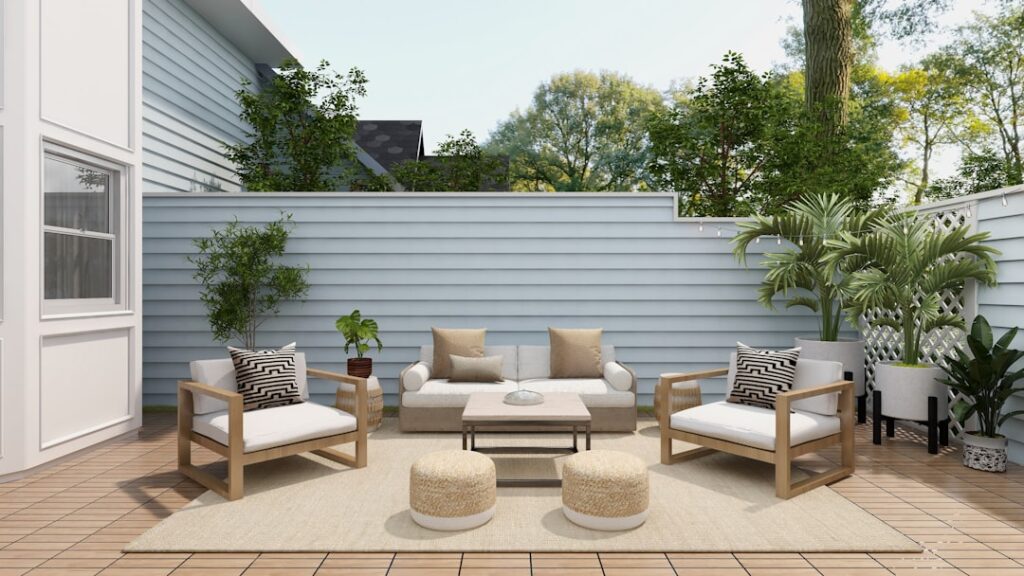
- 5×8 and 6×9: A standard patio conversation set with a coffee table.
- 8×10 and 9×12: A full sofa-and-chairs arrangement or a dining set for six.
- Runners (2.5×8 or larger): Deck walkways and covered breezeways.
For a dining set, make sure the rug extends at least 24 inches past the table edge so chairs stay on the rug when pulled out. If you are covering an entire deck with wall-to-wall outdoor carpet instead of a rug, add roughly 3 inches per side for trimming.
Securing Rugs on Decks and Patios
An unsecured outdoor rug becomes a sail in the first strong gust and a trip hazard the rest of the time. How you anchor it depends on the surface.
On concrete and pavers
A dual-surface non-slip rug pad rated for outdoor use keeps the rug planted and lets water pass through. Avoid indoor PVC pads, which trap moisture and can discolor pavers. For windy spots, add low-profile rug weights or landscape corner anchors at each corner.
On wood and composite decks
Use outdoor-rated rug tape or hook-and-loop strips that peel off cleanly, or thread the rug corners to eye hooks screwed into the deck frame. Never leave a solid-backed rug flat on wood for long stretches; lift it periodically so the boards can dry and you avoid a mildew ghost outline.
Drainage and Airflow
Water has to go somewhere. The best outdoor rugs are reversible flatweaves with an open structure that lets rain drain straight through to the surface below. If you own a pile rug or a rubber-backed piece, prop up one edge after storms so air circulates and the underside dries. On a deck, the gaps between boards do the draining for you, which is one reason decks are more forgiving than solid concrete slabs that pool water.
Cleaning and Seasonal Care
Routine care is refreshingly simple with synthetics. Shake or sweep off debris weekly, and hose the rug down when it looks dusty. For a deeper clean, mix a squirt of mild dish soap into a bucket of water, scrub with a soft-bristle brush, rinse thoroughly, then hang the rug over a railing to dry fully before laying it back down.
- Mildew spots: A solution of one part white vinegar to three parts water kills surface mold. Rinse well.
- Grease or food: Blot, then treat with dish soap and warm water. Skip bleach on colored fibers.
- Winter storage: Clean it, dry it completely, roll it (never fold, which creases the backing), and store it upright in a dry shed or garage.
A rug that goes into storage wet is a rug you throw away in spring. Full drying is the whole ballgame.
What Outdoor Rugs and Carpet Cost
Budget outdoor rugs start around $30 for a 4×6 and climb from there with size and quality. Here is a realistic snapshot:
- 4×6 polypropylene flatweave: $30 to $80
- 5×8 solution-dyed PET: $70 to $180
- 8×10 premium recycled polyester: $150 to $400
- Wall-to-wall outdoor marine carpet: $2 to $5 per square foot, plus adhesive and labor if installed professionally
Marine-grade outdoor carpet glued to a deck or boat surface is a different product than a loose rug; it is meant to be permanent, drains through a perforated backing, and needs proper outdoor adhesive to stay down.
Rugs Versus Wall-to-Wall Outdoor Carpet
Homeowners often use the terms interchangeably, but they solve different problems. A loose outdoor rug is decorative and portable; you can lift it, take it inside for winter, and swap it when your taste changes. Wall-to-wall outdoor carpet, sometimes called marine or indoor-outdoor carpet, is a permanent covering glued down over a deck, porch, or concrete slab to hide a worn or unattractive surface entirely.
The marine-grade product is engineered differently. It uses a solid or perforated rubber backing that either sheds water off the surface or lets it drain through, and it is bonded with a trowel-applied outdoor adhesive rated for temperature swings and moisture. Because it is thin and dense, it dries fast and stands up to constant foot traffic. If you go this route, prep is everything: the substrate must be clean, dry, and free of flaking paint, and the adhesive has to match the backing type. A rug is a weekend accessory; wall-to-wall outdoor carpet is a small renovation.
When to choose each
- Choose a rug when you want flexibility, seasonal storage, and an easy style refresh.
- Choose wall-to-wall when you need to permanently cover an ugly slab, old decking, or a boat deck and want full, seam-to-seam coverage.
Common Mistakes to Avoid
A handful of errors account for most disappointed buyers. Steer clear of these:
- Using an indoor rug outside. Cotton, jute, and viscose look great for two weeks, then absorb water, mildew, and rot. Only synthetics belong outdoors.
- Skipping the pad. A breathable outdoor pad prevents slips and, just as importantly, lets air move under the rug so it dries. A solid rug flat on concrete traps water every time.
- Buying surface-printed instead of solution-dyed. The color difference after one summer is dramatic, and you cannot fix a faded rug.
- Leaving it out through winter. UV, freeze-thaw cycles, and constant moisture age a rug fast. Clean and store it and you double its life.
- Wrong size. A rug that is too small makes furniture look like it is floating; leave that 18-inch border on each side.
Making the Right Choice
Match the product to the exposure. Full-sun patio? Solution-dyed polypropylene flatweave with a breathable pad and corner weights. Covered porch you want to feel cozy? A soft PET pile. Whole deck you want to look finished? Wall-to-wall marine carpet installed with the right adhesive. When you shop outdoor rugs and carpet, prioritize solution-dyed fiber, a size that leaves an 18-inch border, and a plan for both securing and draining the piece. Do that, and your outdoor floor covering will look sharp through several seasons instead of turning into a faded, musty mess by August.