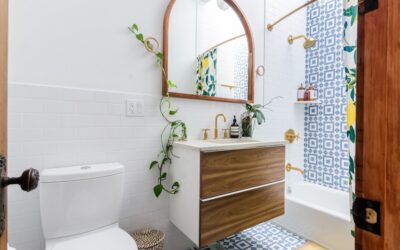
Choosing paint colors for bathrooms is different from painting any other room, and homeowners who forget that usually pay for it with peeling walls and mildew within a year. A bathroom fogs with steam twice a day, gets minimal natural light, and reflects color off tile, glass, and porcelain. The right hue works with those conditions while the right paint formula survives them. After painting countless baths, from tiny powder rooms to spa-like primary suites, I have learned that the color and the finish matter equally. This guide covers both, plus room-size strategy.
Part of our Bathroom Remodeling & Flooring guide — explore the full guide →
Why Bathrooms Need Special Consideration
Two forces shape every bathroom paint decision: humidity and light. Constant moisture invites mildew and can lift ordinary paint, so the finish must resist water and wipe clean. Meanwhile, most bathrooms have small windows or none at all, which means artificial light and reflective surfaces dictate how a color reads.
Because of that, the best paint colors for bathrooms are ones you have tested under the actual lighting, in a finish built for moisture. A shade that looks perfect in a bright bedroom can turn dim and muddy in a windowless bath. Plan around the room’s real conditions rather than the paint chip in the store aisle.
Ventilation quietly shapes how long your paint job lasts, no matter the color. A bathroom with a weak or missing exhaust fan holds steam far longer, and that lingering moisture is what feeds mildew and lifts paint at the seams. Before you repaint, confirm the fan actually pulls air, hold a square of tissue to the grille and it should hold the tissue in place, and run it for at least fifteen minutes after every shower. A good fan does more for a lasting finish than any premium paint.
The Best Light and Airy Shades
Soft, light colors keep a bathroom feeling clean and open, which is why they dominate the category. They bounce the limited light around and pair beautifully with white fixtures and tile.
- Sherwin-Williams Sea Salt (SW 6204): a soft green-blue that reads spa-like and calming.
- Benjamin Moore Palladian Blue (HC-144): an airy blue-green that flatters white subway tile.
- Sherwin-Williams Alabaster (SW 7008): a warm white that avoids the clinical look of stark white.
- Benjamin Moore Gray Owl (OC-52): a light, versatile gray with a soft green undertone.
These shades excel in small and medium baths where brightness matters most, and they photograph well if you ever sell the home.
Light neutrals also carry a practical resale advantage. Real estate agents consistently report that soft, clean bathroom colors read as move-in ready to buyers, while a bold or dated color can become a mental to-do item that chips away at an offer. If you plan to sell within a few years, a broadly appealing shade like a warm white or a gentle greige protects your investment. You can always layer personality through towels, art, and a shower curtain that are cheap to swap.
Do not overlook the ceiling in a bright bathroom. Steam rises and collects overhead, so the ceiling actually endures more moisture than the walls and benefits from the same mildew-resistant paint. Many people default to a flat ceiling white that grows spots within a year over a shower. A satin or specialty bath finish on the ceiling shrugs off that moisture and keeps the whole room looking fresh far longer.
Bold and Dramatic Options
A windowless powder room is actually the perfect place to go dark and dramatic, because you are not fighting to preserve natural light you do not have. A deep, saturated color turns a small half-bath into a jewel box.
Consider Benjamin Moore Hale Navy (HC-154) or Sherwin-Williams Iron Ore (SW 7069), a near-black charcoal, paired with a statement mirror and warm sconce lighting. Emerald and forest greens like Sherwin-Williams Pewter Green (SW 6208) also create a rich, boutique-hotel feel. The rule with dark bathrooms is to commit fully and light them well; a single dim fixture will make the room feel like a closet.
Dark colors also reward you by hiding the small imperfections that plague a busy bathroom. Water spots, toothpaste flecks, and the inevitable scuffs near the toilet-paper holder all but disappear on a deep charcoal or navy wall, whereas they announce themselves on a pale one. Just be sure to choose a wipeable satin or semi-gloss even in a dark room, because the moisture challenge does not go away with the color, and you will want to clean the occasional splash without leaving a dull mark on the finish.
Choosing the Right Sheen
Sheen is the make-or-break functional choice in a bathroom, arguably more important than the color itself. Flat paint traps moisture and grows mildew, so you need a finish that sheds water and cleans easily.
- Satin: the go-to for bathroom walls, subtle sheen, durable, wipeable.
- Semi-gloss: best for trim, doors, and full baths with heavy steam.
- Specialty bath paint: Sherwin-Williams Emerald and Benjamin Moore Aura Bath & Spa have mildew resistance built in.
For a full bath with a shower, spend the extra $15 to $20 a gallon on a moisture-resistant formula. You will use one or two gallons at most, so the premium is small against years of mold-free walls.
Prep is what makes that premium paint actually perform. Wash the walls to strip away hairspray, soap film, and body oils that block adhesion, and spot-treat any existing mildew with a diluted bleach solution before priming. A stain-blocking primer seals old water marks so they do not bleed through, and it gives the topcoat a uniform base for even color. Skipping prep is the number-one reason a bathroom repaint peels within a year, no matter how good the paint in the can is.
Strategy by Bathroom Size
Size changes the smart approach. A small bathroom benefits from light, reflective colors or a fully committed dark tone, while a large bathroom can carry more variety and depth without feeling cramped.
In a small bath, choose a high-reflectance soft neutral to open the space, and consider carrying the wall color onto the ceiling to make the room feel taller. In a spacious primary bath, you have room to play, a moody accent wall behind the tub, a warm greige on the main walls, or a deeper green on a vanity wall. Larger rooms with good light forgive bolder choices that a tiny powder room could not.
Coordinating With Tile and Fixtures
Your tile and fixtures are fixed, so let them lead the paint choice. Cool white tile pairs happily with blue-greens and cool grays, while warm travertine or beige tile calls for creamy whites and warm neutrals rather than cool grays that would make the tile look dirty.
Hold your paint chip against the grout as well as the tile face, since grout often carries its own undertone. Then evaluate the color at night under your actual bathroom bulbs, because a warm 2700K light yellows a color while a cool 4000K light blues it. This single test prevents the most common bathroom paint regret.
Bringing It All Together
The winning formula for paint colors for bathrooms is straightforward: pick a shade suited to your light and tile, choose a mildew-resistant satin or semi-gloss, and adjust your boldness to the room’s size. Small baths reward light-reflective neutrals or a fully committed dark tone; large baths can carry more drama and depth.
Trending Bathroom Colors Worth Considering
Beyond the timeless neutrals, a few directions are defining fresh bathrooms right now. Warm, earthy tones have surged as a reaction to a decade of cool gray, so shades like Benjamin Moore Pale Oak and soft greige bring a spa-like warmth that flatters skin tones under vanity light. Nature-inspired greens, from sage to deep forest, feel current and calming in equal measure.
Moody, saturated bathrooms are having a moment too, especially in powder rooms where a deep navy, charcoal, or emerald paired with brass fixtures reads as a boutique-hotel splurge. On the softer end, blush and muted terracotta warm up a bright bath without going bold. Whichever direction tempts you, ground it in the practical rules first: the right sheen, honest testing under your own light, and a color that flatters your fixed tile. Trends come and go, but those fundamentals never change.
Always buy a $6 sample pot, paint a two-foot square, and live with it for a couple of days under real conditions before committing to a gallon. Do that, and your bathroom will look intentional and stay fresh, which is exactly what the best paint colors for bathrooms are supposed to deliver: style that survives the steam.