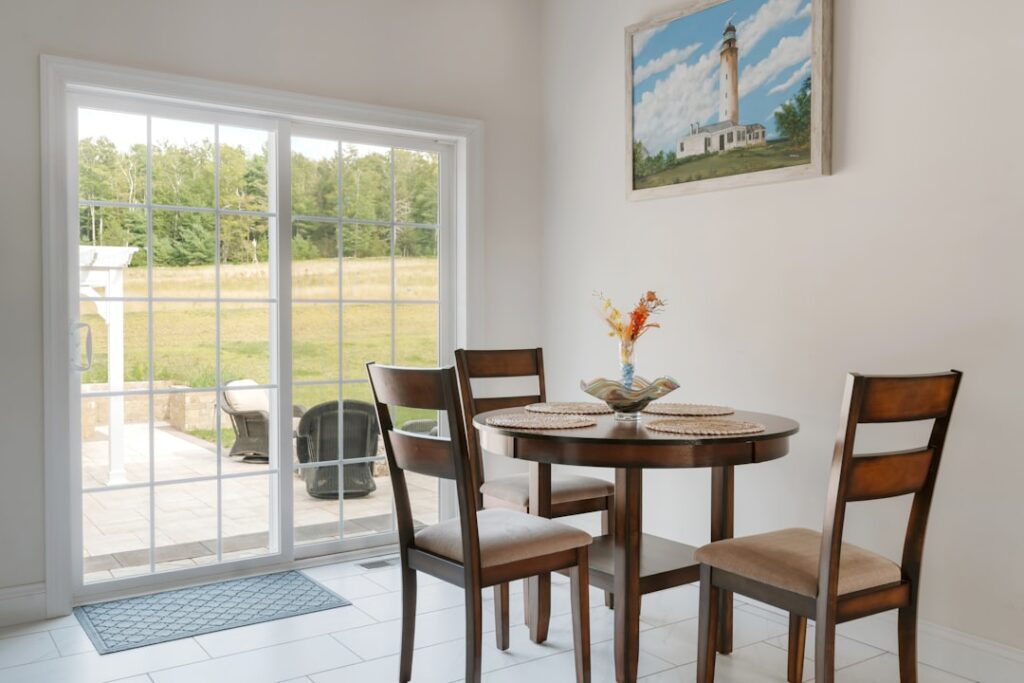
Most patio doors fail slowly — a roller flattens, a seal fogs, a threshold rots — and homeowners live with the drag and the draft for years longer than they should. A full patio door replacement typically runs $1,200 to $4,500 for a standard sliding unit installed, and the job takes a competent crew four to eight hours. The variables that swing the price are not the glass; they are the frame condition, the door style you choose, and whether the opening needs structural work. Here is how the whole process plays out, from measuring to the final bead of caulk.
Part of our Decks & Outdoor guide — explore the full guide →
Signs It Is Time to Replace, Not Repair
Rollers, handles, locks, and weatherstripping are all replaceable parts — a $40 roller kit can revive a slider that feels dead. Replace the whole door when the problems live in the frame or the glass:
- Fogged or milky glass between panes means the insulated unit’s seal failed; on older doors, replacing the door often costs little more than new glass
- Rot or rust in the frame, sill, or threshold, especially soft wood you can dent with a screwdriver
- Racked or out-of-square frames that leave daylight gaps no adjustment fixes
- Single-pane glass — the energy penalty is roughly double the heat loss of a modern low-E unit
- Water stains on the interior floor or wall below the door after storms
Insert Replacement vs. Full-Frame Replacement
An insert (or pocket) replacement leaves the existing frame in the wall and slides a new door unit inside it. It is faster, cheaper by $300 to $800, and does not disturb siding or interior trim. The catch: you inherit the old frame’s condition and lose about an inch of glass on each side. Insert replacement only makes sense when the existing frame is square, dry, and rot-free.
Full-frame replacement strips the opening back to the rough framing. The installer can inspect and repair the sill pan, re-flash the opening properly, and insulate the perimeter — which is why most pros push full-frame on any door older than 20 years. If your old door leaked, full-frame is not optional; the water damage is hiding behind the frame you would otherwise keep.
Replacement Cost by Door Type
Installed prices for a standard 6-foot opening break down roughly like this:
- Vinyl sliding door: $1,200 – $2,800 installed; the value pick, covered in depth in our vinyl patio doors guide
- Fiberglass or aluminum-clad slider: $2,500 – $5,500
- Wood or clad-wood French doors: $3,000 – $7,000
- Multi-slide or telescoping systems: $6,000 – $15,000+
- Folding glass walls: $8,000 – $25,000+; see the separate guide to bifold patio doors before budgeting one
Labor alone is usually $400 to $1,200 for a like-for-like swap. Add $500 to $2,000 for rot repair, $150 to $400 for a new sill pan and flashing, and $1,500 or more if you are widening the opening and need a new structural header with permits and an inspection.
The Replacement Process, Step by Step
Knowing the sequence helps you judge whether a contractor is doing it right:
- Measure the rough opening, not the old door — width and height in three places each, plus a check for square and level. Doors are ordered 1/2 to 3/4 inch smaller than the opening.
- Remove the old unit: panels come out first, then trim, then the frame is cut free of fasteners and pried out.
- Inspect and repair: probe the subfloor and framing for rot, then install a sill pan — a waterproof tray that directs any future leak back outside. Skipping the pan is the most common shortcut in cheap installs.
- Set and shim the new frame dead level and plumb, fasten through the shims, and confirm the panels glide and lock before anything is sealed.
- Flash and seal: self-adhering flashing tape at the sides and head, exterior sealant, low-expansion foam at the interior perimeter, then trim inside and out.
A clean like-for-like swap is a one-day job. Full-frame with rot repair or stucco patching stretches to two or three days.
Choosing the New Door: What Actually Matters
Match the door to the climate and the wall, not the showroom. In cold regions, look for a U-factor of 0.30 or lower; in the Sun Belt, prioritize a solar heat gain coefficient (SHGC) under 0.30 to cut cooling load. Check the design pressure (DP) rating if you are in a coastal or high-wind zone. On sliders, spend the upgrade money on stainless or ball-bearing tandem rollers and a multi-point lock — those two items determine how the door feels in year ten. Screen quality is worth a question too; flimsy screen doors generate more service calls than the glass panels do.
DIY or Hire It Out?
A confident DIYer with a helper can handle an insert replacement into a sound frame: the panels are heavy (a 6-foot glass slider panel weighs 75 to 100 pounds) but the carpentry is modest. Full-frame replacement is another animal — flashing integration with the weather barrier, sill pan work, and header exposure are where amateur installs fail, usually invisibly and expensively. If the wall shows any water history, hire a pro and get the flashing detail in writing. Expect quotes to vary 30 percent or more; the low bid that excludes rot repair “until we open it up” is not really the low bid.
Timeline, Permits, and Scheduling the Job
From signed contract to finished opening, a patio door replacement usually runs three to eight weeks — almost all of it lead time on the door itself. Stock vinyl sliders from a big-box store can be picked up same week; custom sizes, special glass packages, and premium brands run four to ten weeks from order. Installation day is predictable by scope: like-for-like insert swaps wrap in half a day, full-frame jobs take one full day, and anything involving rot repair, stucco cutting, or opening resizing stretches to two or three.
Permits surprise people on this job. A same-size replacement typically needs no permit in most jurisdictions, but enlarging the opening, altering the header, or changing egress usually does, and coastal wind-zone counties in Florida and along the Gulf require permits and impact-rated or shuttered products for nearly any door change. A contractor who shrugs off the permit question on a structural modification is telling you something. Timing-wise, late fall and winter bookings often price 10 to 15 percent better than spring, and installers can swap a door in 40°F weather without harming the house — the opening is only fully exposed for an hour or two.
When comparing quotes, make each bidder itemize: door unit brand and series, sill pan, flashing method, rot repair allowance, haul-away, and interior/exterior trim. Identical bottom-line numbers frequently hide very different scopes, and the sill pan line item is the fastest way to spot a corner-cutter.
Making the New Door Last
Before signing off on install day, run the acceptance checks yourself: the panel should glide with one finger, the lock should engage without lifting or forcing, the reveal between panel and frame should be even top to bottom, and a hose test on the exterior — five minutes of spray at the sill corners — should leave the interior bone dry. Punch-list items are far easier to get fixed before the final payment than after.
Replacement day is also setup day for the next 30 years. Vacuum the track monthly and hit the rollers with dry silicone spray twice a year — grit is what kills them. Check the exterior sealant joint each spring; a $7 tube of sealant re-applied at year eight prevents the rot repair that costs $1,500 at year eighteen. Keep sprinklers from hitting the door, and adjust the roller height screws the first time the latch starts catching instead of forcing it. Small habits, long door life.