Pool epoxy is a heavy-duty, waterproof coating designed to seal and protect the interior surface of swimming pools, most often concrete, plaster, gunite, or fiberglass shells. When properly applied, it forms a hard, glossy, chemical-resistant film that resists pool chemicals, UV exposure, and the constant abrasion of water and swimmers, extending the life of a pool surface for years.
Part of our Epoxy, Concrete & Garage Floors guide — explore the full guide →
It is a serious coating for a demanding environment, and success depends far more on preparation and patience than on the painting itself. Rushed prep is the number one reason pool coatings fail early.
What Makes Epoxy Different From Other Pool Paints
Pools can be coated with several products, and epoxy sits at the top of the durability ladder. Acrylic and water-based pool paints are easier to apply and cheaper, but they wear faster and need recoating every couple of seasons. Chlorinated rubber paints were once common but have largely fallen out of favor for environmental and longevity reasons.
Two-part epoxy, by contrast, cures into a thick, durable, solvent-resistant shell that commonly lasts five to eight years or more between coats. It bonds tightly to properly prepared concrete and plaster, resists staining and chemical etching, and delivers the smoothest, glossiest finish of the common options.
Where Pool Epoxy Works Best
Epoxy is formulated primarily for concrete, plaster, gunite, and unpainted or previously epoxy-coated surfaces. It also adheres well to properly prepped fiberglass. What it does not do is bond reliably over incompatible existing coatings, so you must know what is already on your pool.
- Always identify the existing coating before recoating; epoxy over acrylic or rubber-based paint usually fails.
- Bare or previously epoxy-coated concrete and plaster are ideal candidates.
- For previously painted pools, test compatibility or strip the old coating entirely.
Surface Preparation Is Everything
The difference between a coating that lasts eight years and one that peels in eight months is almost always prep. The pool must be drained, cleaned, and chemically prepared so the epoxy can grip a sound, contaminant-free surface.
- Drain the pool completely and remove all debris, oils, and organic growth.
- Acid-etch or otherwise profile bare concrete and plaster so the surface is slightly rough, like fine sandpaper, for mechanical bond.
- Wash away all etching residue and let the surface dry fully; epoxy will not bond to damp concrete.
- Patch cracks and divots with a compatible repair product and let repairs cure.
- Confirm the surface is bone dry, since trapped moisture causes blistering and delamination.
Concrete must often dry for several days after etching. Do not rush this step no matter how eager you are to refill.
Applying the Coating
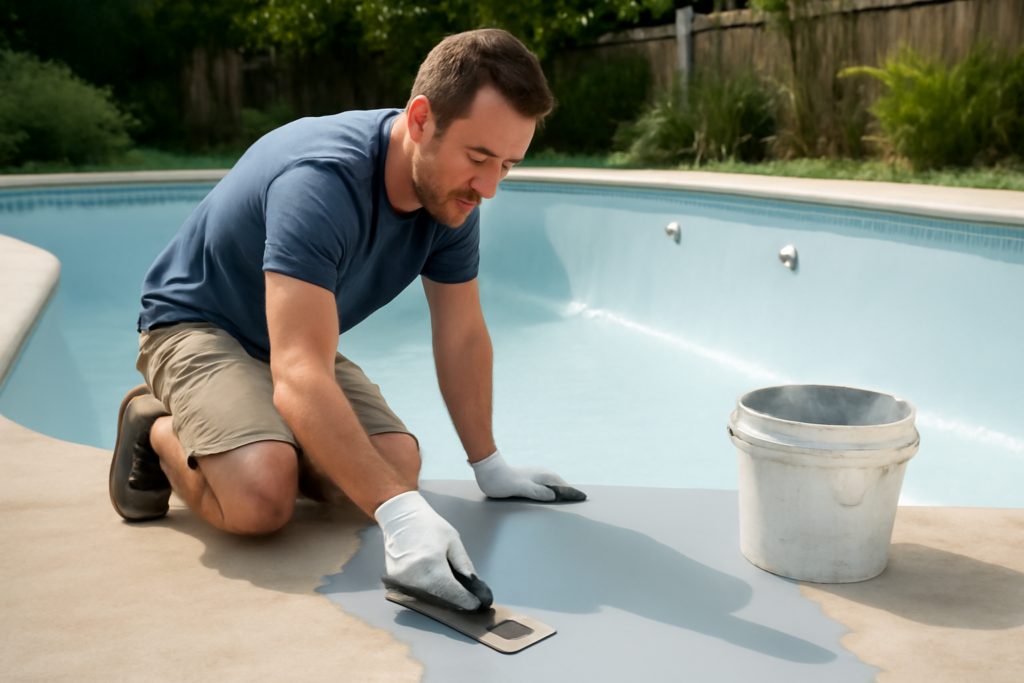
Pool epoxy is a two-part product: you mix the resin and hardener in the exact ratio the manufacturer specifies, then let it sit for the required induction time before rolling. Apply thin, even coats with a quality roller, working in manageable sections and maintaining a wet edge to avoid lap marks.
Most products call for two coats, with a specified recoat window between them. Follow the manufacturer’s instructions precisely on mix ratio, induction time, and coverage rate, since these vary by brand and getting them wrong compromises the cure. Work within the recommended temperature range, typically a moderate, dry stretch of weather.
Cure Time Before Refilling
This is where homeowners get impatient and ruin their work. Epoxy needs a full cure before water goes back in, and that often means several days of dry, mild weather after the final coat, longer in cool or humid conditions. Refilling too soon traps solvents, softens the film, and leads to peeling.
Check the data sheet for the specific cure-before-immersion time and respect it, even if the surface feels dry to the touch. Full chemical cure lags behind surface dryness.
Safety Considerations
Epoxy resins and their solvents produce strong fumes and can irritate skin, eyes, and lungs. Even though a pool is outdoors, work with good airflow, wear a respirator rated for organic vapors, gloves, and eye protection, and keep the product away from ignition sources. Acid etching demands acid-resistant gloves, goggles, and careful handling and neutralizing of runoff. Read and follow the safety data sheet, and when a pool surface is badly deteriorated or the job feels beyond your comfort, hire an experienced pool-coating contractor.
Maintaining an Epoxy-Coated Pool
A well-applied epoxy finish rewards you with low maintenance, but a few habits extend its life. Keep your water chemistry balanced, since persistently low pH or high chlorine can slowly etch and chalk even a durable coating. Brush the walls and floor regularly to prevent algae and mineral buildup from staining the smooth surface.
Watch for early signs of wear such as chalking, fading, or thin spots, particularly in the sun-exposed shallow end and along the waterline. Addressing minor wear with a timely recoat is far cheaper than waiting until the coating fails and the underlying plaster or concrete is exposed. With balanced chemistry and routine cleaning, an epoxy finish commonly delivers its full multi-year service life before it needs attention.
When to Recoat and How to Tell
No coating lasts forever, and recognizing the right time to recoat saves money and trouble. The telltale signs are chalking that leaves a powdery residue on your hand, a faded or dull appearance, and areas where the gloss has worn through to a rougher surface underneath. Persistent staining that no longer cleans up easily is another clue the protective film is thinning.
When you do recoat with epoxy over an existing sound epoxy surface, the prep is less intensive than bare concrete but still essential: clean thoroughly, lightly abrade the old coating for adhesion, rinse, and let it dry completely before applying fresh epoxy. Catching the recoat window before the old layer fully fails keeps the job simpler and protects the structural surface beneath.
What It Costs
Epoxy pool coating material generally runs in the range of a few hundred to over a thousand dollars depending on pool size and the number of kits required, with professional application adding significantly more for prep and labor. While epoxy costs more upfront than acrylic paint, its longer service life often makes it the better value over time. Prep it right, apply thin even coats, and let it fully cure, and pool epoxy delivers a tough, beautiful, waterproof finish that holds up season after season.