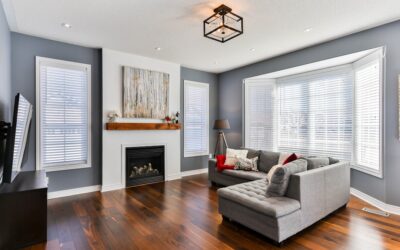
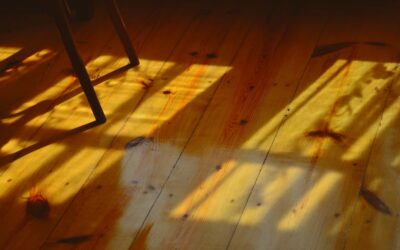
Pine has a Janka rating of 380 to 870 depending on species, which puts it at the bottom of the hardwood hierarchy. That softness is exactly why people love it: dents and patina are part of the look, not a defect. Prefinished pine flooring skips the sanding, staining, and three-coat-finish chaos of a site-built install and arrives at the door with seven to nine coats of UV-cured aluminum oxide already baked onto the board.
Species Matters More Than Anything Else
Walk into a flooring store asking for pine and you will hit three completely different products. Eastern white pine (Pinus strobus) is the softest at 380 Janka, with a cream to honey color and pronounced knots. Southern yellow pine (loblolly, longleaf) rates 690 to 870 Janka and yellows fast under UV. Heart pine is the dense old-growth heartwood of longleaf pine, rated 1225 Janka and milled almost exclusively from reclaimed timbers.
For a typical home where the goal is character and warmth, Eastern white is the right choice. For high-traffic family rooms, specify Southern yellow or heart pine. Mixing them in one installation creates a Janka mismatch and uneven wear across the floor.
Brand Lineup Worth Knowing
Carlisle Wide Plank Floors out of New Hampshire is the benchmark for prefinished Eastern white. Their boards come in widths from 4 to 20 inches, hand-distressed, with a low-sheen oil-modified urethane. Expect $11 to $18 per sq ft for material alone. Sutherland Welles offers prefinished pine with their tung oil hardwax system at $9 to $14 per sq ft. For Southern yellow, Goodwin Heart Pine sells reclaimed heart pine prefinished with eight coats of aluminum oxide at $14 to $22 per sq ft. Mid-market shoppers should look at Cali Bamboo, Hurst Hardwoods, and Lumber Liquidators house brands at $3.20 to $6.50 per sq ft.
Cost Tiers and What You Get
- Budget $3-5 per sq ft: 3/8 inch engineered with knotty Eastern white veneer over an HDF core. 12 mil wear surface.
- Mid $5-9: 3/4 inch solid Southern yellow, factory-finished, 25-year residential warranty on the finish.
- Premium $9-18: 3/4 inch Eastern white, milled to 6 to 12 inch widths, oil finish with rosin or beeswax additives.
- Luxury $18-28: Reclaimed heart pine, often 12 to 20 inch widths, sourced from demolished mills and barns, hand-distressed.
Install labor adds $3.50 to $6.00 per sq ft for nail-down. Wider boards above 8 inches usually require glue-assist over the nails to control seasonal movement, adding $1.20 per sq ft in adhesive.
Why Prefinished Pine Specifically
Site-finished pine is a nightmare because soft early wood absorbs stain faster than dense late wood, leaving a striped result. The factory does this better with controlled UV-cure equipment and dye stains that lock pigment to the cell wall before urethane lays down. Prefinished boards also let you walk on the floor the same day, no off-gassing, no dust, no displaced family for a week.
The trade-off is the beveled edge. Almost every prefinished board ships with a micro bevel or eased edge between 1/64 and 1/32 inch deep. Site-finished pine is flat, board to board. If a perfectly seamless plane is the goal, prefinished is the wrong product.
Installation Notes That Save Headaches
- Acclimate boards on site for 7-14 days. Pine moves more than oak: target 6-9% MC in the boards within 2% of the subfloor MC.
- Use a Powernail 50P or Bostitch MIIIFN cleat nailer with 1.5 to 2 inch cleats every 6 to 8 inches.
- Stagger end joints by at least 8 inches and avoid H-patterns across three rows.
- Leave a 3/4 inch expansion gap at all walls. Pine expands 0.25% across the grain per 4% MC change.
- Hand-scribe around hearths and door jambs rather than using gap-fill, which never matches the finish coat.
How It Wears Over Time
Aluminum oxide topcoats put prefinished pine in a different durability tier from site-finished. A 7-coat factory system tests at 1,000+ revolutions on the Taber abrader compared to 300 for a three-coat oil-modified poly. Real-world translation: scratches show as scuffs in the topcoat, not gouges in the wood. Dents from dropped pans still happen because Janka is Janka. Most owners refinish at year 20 to 25, sanding through the factory finish and recoating with site-applied Bona Traffic HD.
Cleaning and Long-Term Care
Skip wet mopping. Use a microfiber dust mop daily and a barely damp mop with Bona Hardwood Floor Cleaner weekly. Felt pads under every chair, area rugs in pivot zones, and 60% RH year-round are the three habits that determine whether your floor still looks great at year 15. Pine especially hates a winter living room at 25% RH: gaps that swallow a dime open between boards by February.
Common Buying Mistakes
The first mistake is buying narrow strip pine (under 4 inches) when the design intent is rustic farmhouse. Narrow strip reads 1960s ranch, not historic plank. Specify 5 to 8 inch widths minimum. The second is ordering tight-grade A-select pine; the result is too clean to read as authentic pine and you pay a premium for the wrong look. Specify rustic or character grade with visible knots and mineral streaks. The third is mixing engineered and solid pine across rooms; the slight color shift at transitions becomes obvious within two years of UV exposure.
Who Should Buy Prefinished Pine
Period homes built before 1940, farmhouse new builds, and anyone who actively wants a floor that records life. Skip it if you have a 90 lb dog with untrimmed nails, a household that wears stilettos indoors, or a low tolerance for the patina look. Pine is not for everyone, but for the right home there is no substitute. The character that makes pine polarizing is exactly what makes it desirable to the right buyer.
Prefer to explore on your own?
See how new flooring looks in your actual room in seconds — free, no signup.
Try the free Floor Studio →