A pressure washer is only as versatile as the tools you connect to it. The right pressure washer accessories turn a basic wand into a system that can strip a driveway in half the time, wash a two-story house from the ground, foam a car gently or scrub a deck without gouging it. Knowing which attachments matter, and how to match them to your machine, is the key to better results.
- Surface Cleaners: The Biggest Upgrade
- Nozzle Tips and Their Color Codes
- Extension Wands and Telescoping Lances
- Detergent and Foam Cannons
- Brushes and Rotating Scrubbers
- Hoses, Extensions and Reels
- Gutter Cleaners and Specialty Attachments
- Matching Accessories to Your Machine
- What to Buy First
- Quick-Connect Couplers and Adapters
- Pressure Ratings and Safety Margins
- Building a Starter Kit
- Maintenance and Care
- Mistakes to Avoid
- Frequently Asked Questions
- Final Verdict
Surface Cleaners: The Biggest Upgrade
A surface cleaner is a flat, disc-shaped housing with two or more rotating nozzles enclosed under a spinning arm. It cleans concrete, pavers and flatwork in wide, even passes without the streaks left by a single wand. A 15- to 16-inch model cuts driveway time dramatically, turning a two-hour chore into 30 minutes. Match the surface cleaner’s flow rating to your machine’s GPM so the nozzles spin at full speed.
Nozzle Tips and Their Color Codes
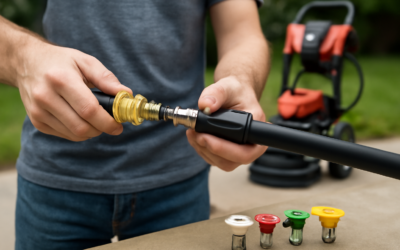
Quick-connect nozzle tips are the cheapest, most impactful accessory. The standard set includes 0-degree (red, pinpoint, use rarely), 15-degree (yellow, heavy stripping), 25-degree (green, general cleaning), 40-degree (white, gentle rinsing) and a soap tip (black, low-pressure detergent). A turbo or rotary nozzle spins a 0-degree jet in a cone, combining pinpoint power with wider coverage for stubborn grime.
Extension Wands and Telescoping Lances
An extension wand adds reach for second-story siding, soffits and gutters without a ladder. Rigid extensions add a few feet; telescoping lances made of aluminum or fiberglass can reach 18 to 24 feet. Fiberglass is preferred near power lines because it does not conduct electricity. A U-shaped or angled wand tip reaches under eaves and around obstacles.
Detergent and Foam Cannons
A foam cannon mixes soap and water with air to create thick, clinging foam that dwells on the surface, loosening dirt before you rinse. Foam cannons are popular for car and vehicle washing because the thick suds lift grit safely, reducing swirl marks. For house-washing, a downstream injector or J-rod applies cleaning solution through the low-pressure tip across large areas.
Brushes and Rotating Scrubbers
- Fixed utility brushes for gentle agitation on cars and siding
- Rotary brushes driven by water flow for hands-free scrubbing
- Soft bristle wash brushes for delicate finishes
- Wheel and rim brushes for automotive detailing
Brushes let you combine mechanical agitation with pressure, which is gentler on painted and coated surfaces than a high-pressure jet alone.
Hoses, Extensions and Reels
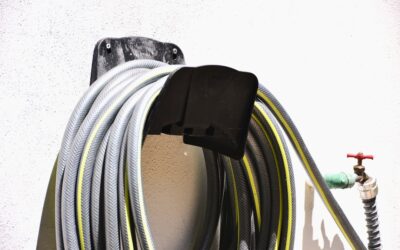
Longer high-pressure hoses give you more range around the property. Standard hoses run 20 to 25 feet, but 50-foot extensions let you clean far from the machine. Match the hose’s pressure rating to your washer, and confirm the fitting type, M22, 3/8-inch quick-connect, or proprietary. A hose reel keeps the line tangle-free and extends its life by preventing kinks.
Gutter Cleaners and Specialty Attachments
A gutter-cleaning attachment is a rigid wand bent into a U shape that lets you blast leaves and debris from gutters while standing on the ground. Other specialty tools include undercarriage cleaners for cars, sandblasting kits for rust and paint removal, drain-cleaning jetters that snake into pipes, and pivoting coupler joints that angle the spray.
Matching Accessories to Your Machine
The single most important compatibility factor is your machine’s GPM and PSI. Surface cleaners and rotary brushes rely on adequate flow to spin, so a 1.2 GPM electric washer cannot drive a 16-inch surface cleaner that needs 2.5 GPM effectively. Also confirm the connection standard. Most consumer machines use a 1/4-inch quick-connect at the wand and M22 threads at the gun and pump.
What to Buy First
If you own a basic machine and want the biggest upgrade, buy a surface cleaner sized to your flow rate and a full set of quick-connect nozzle tips. Add a foam cannon if you wash vehicles, a telescoping wand if you have tall siding, and a gutter attachment if you dread ladder work. These four cover the vast majority of home cleaning tasks.
Quick-Connect Couplers and Adapters
Quick-connect couplers are the small fittings that let you swap accessories in seconds instead of threading them on. Most consumer machines use a 1/4-inch quick-connect at the wand tip and M22 threaded fittings at the gun and pump outlet, though some brands like Ryobi and Karcher use proprietary bayonet connectors. Adapter kits bridge these standards, letting you use universal accessories on a proprietary machine. Keeping a few brass adapters and spare O-rings on hand means you are never blocked by a mismatched fitting mid-job.
Pressure Ratings and Safety Margins
Every accessory carries a maximum pressure rating, and using one below your machine’s output is dangerous. A hose or coupler rated for 2000 PSI can burst if fed by a 3200 PSI gas washer, so always match or exceed your machine’s PSI when buying hoses, guns and fittings. Reputable accessories list their rating on the packaging or the part itself. When in doubt, choose components rated well above your washer’s output to build in a safety margin against wear and pressure spikes.
Building a Starter Kit
For a homeowner outfitting a new machine, a practical starter kit is easy to assemble. Begin with a five-piece quick-connect nozzle set and a surface cleaner matched to your GPM. Add a foam cannon or downstream injector for detergent, a set of brass adapters, and spare O-rings. If you have tall siding or gutters, include a telescoping wand and a gutter attachment. This modest bundle, often under $150 total, covers the overwhelming majority of driveway, siding, vehicle and gutter cleaning tasks.
Maintenance and Care
Flush accessories with clean water after each use, especially after running detergent or bleach solutions, to prevent buildup and corrosion. Clear nozzle orifices with the included cleaning pin when spray becomes uneven. Store hoses coiled without kinks, and keep quick-connect O-rings lubricated so they seal without leaking. Replace worn O-rings promptly to avoid pressure loss.
Mistakes to Avoid
Do not buy a surface cleaner rated for more GPM than your machine produces, or it will spin slowly and clean poorly. Do not use a 0-degree tip on wood, cars or glass. Do not run bleach-heavy solutions through accessories without a thorough freshwater flush afterward. And do not mismatch fittings; forcing an incompatible coupler can strip threads and cause dangerous blowoffs under pressure.
Frequently Asked Questions
What is the single best accessory to buy first?
A surface cleaner sized to your machine’s GPM. It transforms driveway and flatwork cleaning from a slow, streaky wand job into fast, even passes, cutting the time dramatically while eliminating stripes.
Will any accessory fit my pressure washer?
Not automatically. Compatibility depends on your machine’s GPM and PSI and its fitting standard, usually a 1/4-inch quick-connect at the wand and M22 threads at the gun. Brass adapters bridge most differences, but flow-driven tools like surface cleaners must be matched to your GPM to spin properly.
Can I use a surface cleaner on a small electric washer?
Only if you choose one rated for your flow. A 15- or 16-inch cleaner needing 2.5 GPM will spin poorly on a 1.2 GPM electric unit; look for compact models designed for lower-flow machines instead.
Is a foam cannon worth it for washing cars?
Yes. The thick, clinging foam loosens grit before you touch the paint, reducing swirl marks and giving a safer, more thorough wash than a plain jet.
How do I clean second-story siding safely?
Use a telescoping extension wand, ideally fiberglass rather than aluminum, which does not conduct electricity near power lines, to reach the upper wall from the ground. Apply a house-wash detergent through the low-pressure soap tip, let it dwell without drying, then rinse. This avoids the danger of operating a pressure wand from a ladder, where recoil can throw you off balance.
What nozzle should I use most often?
The 25-degree green tip is the general-purpose choice for the majority of surfaces, from driveways to fences. Step up to the 40-degree white tip for delicate work like cars and windows, and reserve the narrow 15-degree yellow tip for heavy grime. Keep the 0-degree red tip for rare, stubborn spots and never use it on wood, glass or paint.
Final Verdict
The right pressure washer accessories multiply what your machine can do, from stripping driveways with a surface cleaner to safely foaming a car or reaching second-story gutters from the ground. Match each attachment to your washer’s GPM and fitting standard, start with a surface cleaner and quality nozzle set, and maintain your gear so it performs season after season.