The biggest complaint homeowners have about tiled showers is not the tile, it is the grout, the moldy, discolored lines that never seem to stay clean no matter how much you scrub. Quartz shower panels solve that problem by covering the wall in large, seamless slabs, giving you a spa-like surface with almost no grout to maintain. These engineered stone panels have moved from high-end hotels into everyday remodels because they combine the luxury look of stone with genuinely low upkeep. This guide covers what they are, what they cost, and whether they make sense for your bathroom.
Part of our Countertops guide — explore the full guide →
What Quartz Shower Panels Actually Are
Quartz shower panels are large-format slabs made from the same engineered material as quartz countertops: roughly 90 percent crushed natural quartz bound with resins and pigments. Instead of dozens of small tiles, your shower walls are clad in just two or three big panels, often measuring several feet wide and running from the pan to the ceiling. The result is a continuous, nearly seamless surface with a consistent color and pattern. Because the material is non-porous, water cannot soak in, and there is no field of grout lines for mold and mildew to colonize.
The panels are typically bonded to a prepared, waterproofed wall using construction adhesive, with seams sealed by color-matched silicone rather than grout. That single design difference is why they clean up so easily.
The Main Advantages
Homeowners choose quartz panels for reasons that go beyond looks, though the seamless appearance is a big draw. The practical benefits add up quickly over years of use.
- Almost no grout: only thin silicone seams to maintain instead of hundreds of feet of grout
- Non-porous surface: resists staining, water absorption, and mold growth
- Easy cleaning: a wipe with mild soap keeps them looking new
- Consistent appearance: engineered color and veining you can preview before install
- Durability: the same tough material used for kitchen counters, resistant to chips and scratches
For anyone who has spent Saturday afternoons scrubbing grout with a toothbrush, the maintenance savings alone justify a serious look at panels.
The Downsides to Weigh
No surface is perfect, and quartz panels carry a few real drawbacks. Cost is the first: the material and specialized installation run higher than standard ceramic tile. Weight is another consideration, because full-height quartz slabs are heavy and require solid, properly reinforced walls and experienced handlers to lift and set them. Repairs are harder too, since a damaged panel usually cannot be patched the way a single cracked tile can be swapped out. Finally, some manufacturers caution against continuous exposure to very high heat, so a steam shower may narrow your options or require confirming the product rating.
Cost of Quartz Shower Panels
Expect quartz shower panels to run higher than tile but in the same neighborhood as a premium stone surround. Material alone typically falls between $60 and $100 per square foot, and a full shower surround often totals $2,500 to $6,000 installed depending on size, panel color, and local labor rates. Premium colors that mimic Calacatta marble sit at the top of that range. While that is more than a basic ceramic tile shower, the labor is faster because there is no tile-setting and grouting, and the long-term maintenance cost is lower. When you factor in the years of grout cleaning, sealing, and eventual regrouting you avoid, the lifetime value narrows the gap.
Thickness and Panel Options
Quartz shower panels commonly come in thicknesses around one-quarter inch for lightweight wall cladding up to three-quarters inch or more for slab-style installations. Thinner panels are easier to handle and less expensive, while thick slab panels deliver the substantial, high-end look of solid stone. Beyond thickness, you can choose from a wide palette of colors and patterns, from clean solid whites to dramatic marble-look veining. Matching or coordinating the shower panels with your bathroom vanity top creates a cohesive, designed-together look that tile rarely achieves.
How Installation Works
Professional installation is strongly recommended, and here is the general sequence a good crew follows:
- Prep and waterproof: the walls are made flat, plumb, and sealed with a waterproof membrane or backer
- Template and cut: panels are measured and cut to fit walls, niches, and fixture openings
- Dry fit: the crew test-fits the pieces to confirm alignment before bonding
- Adhere the panels: construction adhesive holds the slabs to the prepared wall
- Seal the seams: color-matched silicone finishes the corners and joints
Because the panels are heavy and unforgiving of measurement errors, this is not a typical weekend DIY project. A botched cut on a several-hundred-dollar panel is an expensive mistake, which is why most homeowners hire a fabricator or specialty installer.
Maintaining Quartz Panels
Upkeep is refreshingly simple. Wipe the panels down with a soft cloth and a mild, non-abrasive cleaner, and squeegee after showers to prevent water spots in hard-water areas. Avoid harsh chemicals, bleach-heavy cleaners, and abrasive pads, which can dull the finish over time. Unlike natural stone, engineered quartz does not need periodic sealing. The only ongoing maintenance is keeping the silicone seams in good shape and replacing them if they ever discolor or pull away, a quick and inexpensive job compared with regrouting an entire tiled shower.
Design Options and Layout Ideas
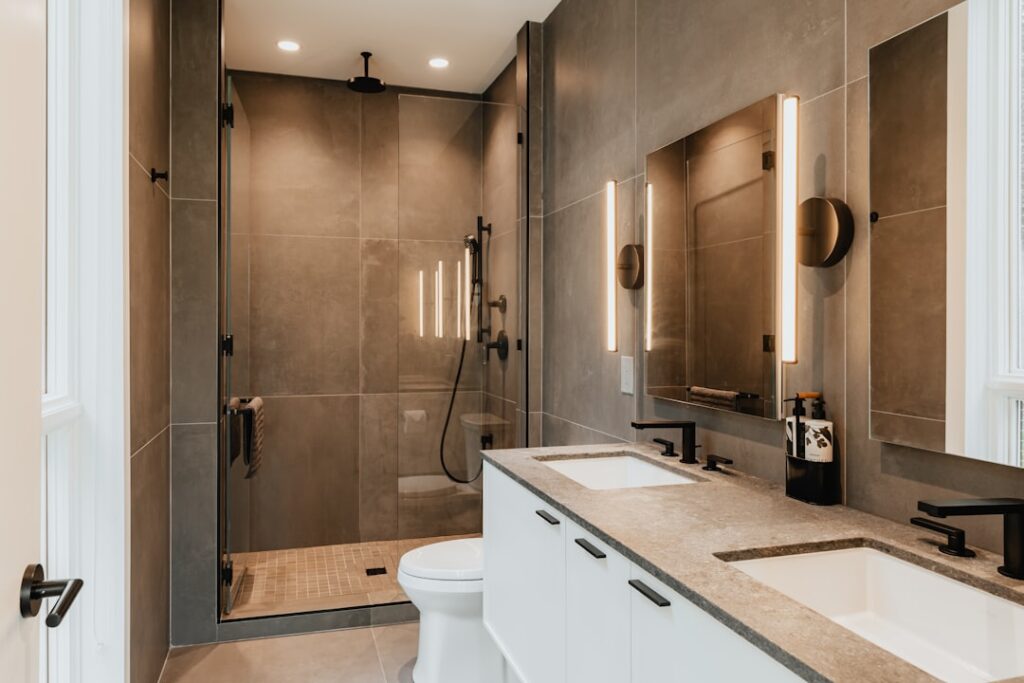
Beyond the practical benefits, quartz shower panels open up design possibilities that small tile struggles to match. Because the panels are large and seamless, a single dramatic marble-look slab can wrap an entire shower wall in one continuous sweep of veining, creating the kind of high-end statement usually reserved for luxury hotels. Running the same quartz from the shower into a bench, niche, or curb ties the whole enclosure together for a built-in, custom feel.
Panel color and finish set the mood of the bathroom. Bright white and light gray quartz make a small shower feel larger and cleaner, while deep charcoal and bold veined patterns add drama and warmth. A popular approach pairs a patterned feature wall behind the fixtures with quieter solid panels on the side walls, giving you a focal point without overwhelming the space. Coordinating the shower panels with the vanity top in the same quartz creates a cohesive, designed-together look.
Built-in niches and shelves are worth planning for during the templating stage, since cutting them cleanly into large panels takes precision. A recessed niche lined in the same quartz keeps shampoo and soap organized without breaking up the seamless surface. Frameless glass enclosures pair especially well with quartz panels, letting the uninterrupted stone show through and reinforcing that open, spa-like feel that makes these showers so appealing.
Are Quartz Shower Panels Right for You?
Quartz shower panels make the most sense for homeowners who want a luxurious, low-maintenance shower and are willing to pay a premium up front to avoid grout headaches later. If you love the specific look of small mosaic tile or you are remodeling on a tight budget, traditional tile may still be the better call. But if a clean, seamless, easy-to-wipe surface sounds like your idea of a good bathroom, panels deliver exactly that. Get quotes from local fabricators, ask to see full-size samples in your lighting, and confirm the product is rated for your shower type before you commit. Done right, a quartz-paneled shower looks like a hotel spa and cleans like a kitchen counter.