The most-hated chore in any bathroom is scrubbing grout lines, and that single frustration is driving a fast-growing trend. Porcelain shower wall panels are large-format slabs, often 4 or 5 feet wide and up to 10 feet tall, that cover a shower wall in one or two pieces instead of dozens of small tiles. The result is a nearly seamless, waterproof, grout-free surface that looks like continuous marble or stone but never needs the maintenance of a tiled wall. This guide explains how these panels work, what they cost, how they compare to tile, and what installation really involves.
Part of our Bathroom Remodeling & Flooring guide — explore the full guide →
What Are Porcelain Shower Wall Panels?
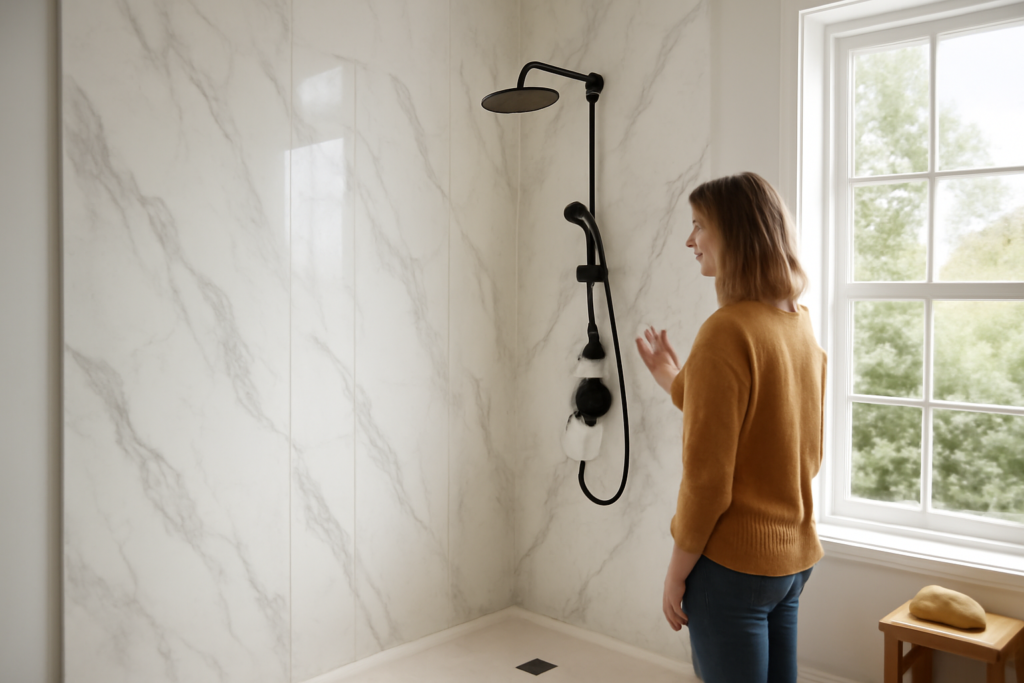
These panels are essentially oversized porcelain tiles, sometimes called porcelain slabs or gauged porcelain panels, manufactured in large sheets and cut to fit your shower walls. Instead of a wall built from hundreds of 12-by-12 or subway tiles, you install two or three large panels that meet in just a few tight seams. Many are printed with high-resolution marble, concrete, or stone patterns that carry the veining continuously across the panel, giving you the luxury look of a slab wall at a fraction of natural stone’s price.
Porcelain is dense, non-porous, and fired at extreme temperatures, which makes it inherently waterproof and stain-resistant, exactly the qualities you want surrounding a shower. Because there is so little grout, there is far less surface for mold and soap scum to colonize.
Panels vs. Traditional Tile
The choice usually comes down to maintenance, looks, and installation complexity. Compared with standard tile, porcelain shower wall panels offer clear advantages and a few trade-offs:
- Grout: panels have minimal seams versus a full grid of grout lines, so cleaning is dramatically easier.
- Look: continuous veining reads as high-end stone; tile reads as, well, tile.
- Waterproofing: fewer seams means fewer points for water to penetrate.
- Installation: panels are heavy, awkward to handle, and demand precise substrate prep and specialized cutting; tile is more forgiving for a DIYer.
- Repairs: a cracked tile is easy to replace; a damaged panel usually means replacing a large section.
If your top priority is a low-maintenance, seamless look and you are hiring a skilled installer, panels win. If you want maximum design flexibility, intricate patterns, or a DIY project, traditional tile still has the edge.
What They Cost
Material pricing for large-format porcelain panels typically runs $5 to $15 per square foot for the panel itself, with premium marble-look and thicker gauged slabs reaching $20 or more. A standard three-wall shower surround of roughly 90 to 110 square feet lands somewhere between $500 and $2,000 in materials.
Installation is where the budget grows, because handling and cutting large panels requires experience and specialized tools. Professional labor commonly adds $15 to $40 per square foot, so a fully installed panel shower often totals $2,500 to $6,000. That is comparable to a high-end tiled shower, but you trade the ongoing grout maintenance for a higher upfront skill requirement. Always get quotes from installers who specifically have large-format porcelain experience, not just general tile setters.
Installation Overview
This is not a typical weekend DIY project, but understanding the process helps you supervise the work and know what quality looks like. The core steps are:
- Waterproof the substrate. The wall behind the panels must be flat, plumb, and waterproofed with a suitable backer board and membrane system. Any deviation shows because the panels are so large and rigid.
- Measure and cut. Panels are cut with a rail-guided wet saw or scoring tools designed for gauged porcelain, and openings for the valve and shower head are drilled precisely.
- Apply the right mortar. Large panels require full-coverage, large-format thinset applied to both the wall and the back of the panel to eliminate voids that could crack the porcelain.
- Set and support. Because the panels are heavy, installers use suction handling frames and shims to hold position while the mortar sets.
- Seal the seams. The few seams between panels and at corners are filled with a color-matched, mildew-resistant sealant or a thin grout joint.
The critical success factor is a dead-flat substrate and full mortar coverage. Skimp there and you risk hollow spots that crack under impact.
Pros and Cons to Weigh
The upside of porcelain shower wall panels is compelling: almost no grout to scrub, a seamless slab-look surface, excellent water and stain resistance, and a genuinely premium appearance. Porcelain is also extremely durable and color-stable, so the finish holds up for decades without fading.
The downsides are practical. The panels are heavy and unforgiving to install, so labor costs and installer skill requirements are high. A damaged panel is costly to replace compared with swapping a single tile. And design options, while growing fast, are still narrower than the endless world of small-format tile. For homeowners who value a clean, maintenance-light shower above all, those trade-offs are easy to accept.
Care and Maintenance
This is where panels earn their keep. A porcelain surface wipes down with a squeegee and a mild bathroom cleaner, and because there is so little grout, mold and soap scum have almost nowhere to hide. Avoid abrasive pads and harsh acidic cleaners on any color-printed panel to preserve the finish, and periodically check the seam sealant, refreshing it if it shows wear. That is essentially the entire maintenance routine, which is exactly why so many homeowners are switching.
Are They Right for Your Bathroom?
If you dread grout scrubbing and want a high-end, seamless shower that stays clean with minimal effort, porcelain shower wall panels are a smart modern upgrade. Budget for skilled installation, confirm your installer has large-format porcelain experience, and insist on a flat, properly waterproofed substrate. In return you get a luxurious, low-maintenance shower that looks like a solid stone slab and will outlast nearly any other wet-wall finish in your home.
Design and Color Options
Part of what makes porcelain shower wall panels so appealing is the range of high-end looks they mimic without the cost or upkeep of the real material. The most popular choices reproduce dramatic marble, complete with continuous veining that flows across the entire wall the way a genuine bookmatched stone slab would. Beyond marble, you will find concrete-look panels for a modern industrial feel, travertine and limestone looks for warmth, and solid matte colors in soft whites, warm grays, and deep charcoals for a clean, contemporary shower.
Finish matters as much as pattern. A polished panel reflects light and makes a small bathroom feel brighter and larger, while a honed or matte finish reads more natural and hides water spots better. Because the veining and color are printed and then fired into the porcelain, the look is permanent and will not fade, etch, or need resealing the way natural marble does in a wet environment. Many homeowners carry the same panel from the shower onto an adjacent accent wall or even a vanity backsplash to create a seamless, gallery-like effect that ties the whole bathroom together and makes the space feel custom and cohesive.
Prefer to explore on your own?
See how new flooring looks in your actual room in seconds — free, no signup.
Try the free Floor Studio →