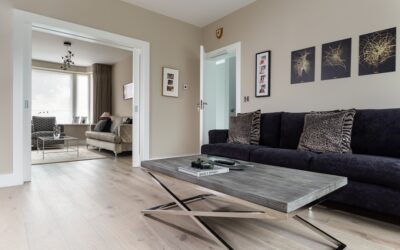
Red oak has been America’s default hardwood for a century, which is exactly why red oak laminate flooring is one of the most popular looks on the market. It captures that warm, pinkish-brown tone and the bold, open grain of real red oak at roughly a quarter of the installed cost. Before you order pallets of it, though, you should understand how laminate actually reproduces the look, where it beats solid oak, and where it will let you down.
What Red Oak Laminate Flooring Really Is
Despite the name, there is no oak tree inside the plank. Red oak laminate flooring is a four-layer composite: a clear melamine wear layer on top, a high-resolution photographic image of red oak grain beneath it, a dense high-density fiberboard (HDF) core, and a moisture-resistant backing. The photo layer is what sells the illusion, and modern printing plus embossed-in-register texturing makes premium planks genuinely hard to distinguish from wood at a glance.
Because the visual is a printed image, quality varies enormously between products. Cheap laminate repeats the same three or four board images every few rows, creating an obvious pattern. Better lines use a dozen or more unique boards, so the floor reads as natural red oak with its characteristic straight grain and occasional flake.
Reading the AC Rating and Thickness
Two specs tell you almost everything about durability. The AC rating measures abrasion resistance on a scale from AC1 to AC5:
- AC3: the minimum for any residential floor, fine for bedrooms and living rooms
- AC4: handles busy households, kids, and pets; the sweet spot for most homes
- AC5: commercial-grade, overkill for a house but bulletproof
Plank thickness, measured without the pad, ranges from 6 mm to 12 mm. Thicker planks feel more solid underfoot, quiet footsteps, and bridge minor subfloor imperfections better. For red oak looks, an 8 mm to 12 mm plank at AC4 gives you the best balance of realism, comfort, and price. Skip 6 mm bargain products unless it is a low-traffic guest room.
Pros of Red Oak Laminate
The value proposition is strong. Materials run roughly $1.50 to $4 per sq ft, versus $6 to $12 for solid red oak, and installation is cheaper because it floats. Scratch and dent resistance from the melamine wear layer beats real oak; a dropped skillet that would gouge hardwood often leaves laminate unmarked.
It also installs fast. The click-lock tongue-and-groove floats over most existing subfloors and even over old tile or vinyl, no nails or glue, which makes it a realistic weekend DIY. Colorfastness is another quiet win: real red oak ambers and darkens under UV over years, while the printed laminate image holds its tone. And because every board carries the same engineered image, you never gamble on natural color variation the way you do with a hardwood order.
Cons and Honest Limitations
Laminate cannot be refinished. When the wear layer finally dulls or a plank chips, you replace boards; you cannot sand and recoat the way you can with solid oak’s many refinish cycles. That caps its realistic lifespan at 15 to 25 years versus 50-plus for a well-maintained hardwood floor.
Water is the real enemy. Standard HDF-core red oak laminate swells and delaminates if water sits in the seams, so it is a poor choice for full bathrooms and a risky one for kitchens unless you buy a specifically water-resistant or waterproof laminate line. It also sounds hollow and feels harder underfoot than wood unless you use a quality underlayment. Finally, it does nothing for resale value the way genuine hardwood does; buyers know it is laminate.
Installation Tips for a Convincing Floor
The look lives or dies on the details. Follow these:
- Acclimate the boxes in the room for 48 hours so planks reach the home’s temperature and humidity before locking them together.
- Level the subfloor to within 3/16 inch over 10 feet. Laminate telegraphs high and low spots and can unclick over dips.
- Use a quality underlayment, ideally one with an attached moisture barrier over concrete, to kill the hollow sound and add a touch of cushion.
- Leave a 1/4 to 3/8 inch expansion gap at every wall; laminate moves with humidity and buckles if pinched.
- Stagger end joints at least 8 to 12 inches and pull boards from several boxes at once to randomize the printed images and avoid an obvious repeat.
Finish with matching quarter-round or baseboard to hide the expansion gap, and use T-molding at doorways so the floor can still move.
Care and Maintenance
Maintenance is refreshingly simple. Dry-sweep or vacuum with a hard-floor setting, and damp-mop with a barely wet microfiber and a laminate-safe cleaner. Never wet-mop, never use steam, and never apply wax or polish, which builds a cloudy film on the melamine surface. Wipe spills immediately so nothing wicks into the seams.
Put felt pads under furniture legs, use a mat at exterior doors to catch grit, and keep pet nails trimmed. Treated this way, an AC4 red oak laminate floor stays looking sharp for two decades.
Is Red Oak Laminate Right for You?
Choose it if you want the classic American red oak look on a budget, in a bedroom, hallway, living room, or home office, and you value scratch resistance and easy DIY installation over the ability to refinish. Lean toward a waterproof line if it is going in a kitchen. Skip laminate entirely and buy real hardwood if long-term refinishing, resale value, and full bathrooms are priorities.
For most homeowners chasing that warm oak aesthetic without the price or the fuss, red oak laminate flooring at 8 mm and AC4 is a genuinely smart buy. Match the product quality to your traffic, respect its dislike of standing water, and it will reward you with years of good-looking, low-maintenance floors.
Red Oak vs. White Oak Laminate Looks
Since the wood is printed, you get to choose the exact oak character you want, and the two classics look distinctly different. Red oak reads warmer, with a pinkish to reddish-brown tone and a bold, open, wavy grain full of movement. White oak leans cooler and more neutral, with a grayish-brown cast and a tighter, straighter grain that suits contemporary and Scandinavian-inspired rooms.
Red oak laminate flatters traditional and transitional homes, blends with warm wall colors and oak trim, and hides minor scuffs well thanks to its busy grain. If your existing woodwork or furniture is red oak, matching laminate ties the room together. Prefer a modern, muted palette, and you might lean white oak instead. Bring home sample boards and view them under your actual lighting, morning and evening, before committing, since undertones shift dramatically with light.
Where It Works Best in the Home
Play to laminate’s strengths. Red oak laminate excels in bedrooms, living rooms, dining rooms, home offices, and hallways, dry, high-traffic spaces where its scratch resistance and warm look shine and where refinishing is not a concern. Over concrete slabs in basements it works well too, provided you use a moisture-barrier underlayment and confirm the slab is dry.
Be cautious in kitchens and avoid standard laminate in full bathrooms, laundry rooms, and mudrooms unless you buy a waterproof-rated line with sealed edges. Radiant-heated subfloors are usually fine with laminate rated for it, kept under about 82°F at the surface. Match the product to the room’s moisture and traffic, and red oak laminate delivers hardwood looks in most of the house at a fraction of the cost and effort.
Budget realistically for the whole project, not just the planks. Beyond the $1.50 to $4 per sq ft for the flooring, plan on underlayment at $0.30 to $0.60 per sq ft, transition moldings and quarter-round, and a few basic tools if you are installing yourself: a tapping block, a pull bar, spacers, and a jigsaw or miter saw. Order 7 to 10 percent extra material for cuts, waste, and future repairs, and keep a full box in storage so you can swap a damaged plank years later with a matching batch.
If you hire out the install, laminate labor typically runs $2 to $5 per sq ft, less than hardwood because there is no nailing, sanding, or finishing. That keeps a professionally installed red oak laminate floor well under the cost of the same room in solid oak. For a durable, good-looking floor that goes down in a weekend and shrugs off kids, pets, and dropped pans, the value is hard to beat, provided you match the AC rating to your traffic and keep standing water off the seams.
Prefer to explore on your own?
See how new flooring looks in your actual room in seconds — free, no signup.
Try the free Floor Studio →