Oak is the most popular hardwood flooring species in North America, and it is not close. But within the oak family, homeowners face a choice that has meaningful design and performance implications: red oak vs white oak flooring.
These two species share a name and a general appearance, but they differ in grain pattern, color, hardness, stain behavior, and water resistance. White oak has surged in popularity over the past decade, driven by the modern design trend toward muted, neutral tones. Red oak remains a classic that dominates traditional homes. This guide covers the real differences so you can choose the species that fits your style and your home.
- Table of Contents
- Red Oak vs White Oak: Quick Overview
- Grain Pattern and Appearance
- Natural Color
- Hardness and Durability
- Staining Behavior
- Water Resistance
- Cost Comparison
- Design Styles and Trends
- Full Comparison Table
- Solid vs Engineered for Both Species
- Maintenance
- The Verdict
- Frequently Asked Questions
Red Oak vs White Oak: Quick Overview
Both red oak and white oak are domestic North American hardwoods widely available in solid hardwood flooring and engineered hardwood formats. They are the two most common hardwood flooring species sold in the United States, together accounting for the majority of all hardwood floor installations.
At a glance, they look similar. But spend time with both, and the differences become clear. Red oak has a warmer, more pronounced grain with pinkish undertones. White oak has a tighter, more subtle grain with golden-brown undertones. These differences affect not just how the floor looks in its natural state but how it accepts stain, how it ages, and how it fits into different design aesthetics.
Grain Pattern and Appearance
Red Oak Grain
Red oak has a strong, open grain pattern with prominent growth rings and sweeping curves (called cathedral patterns). The grain lines are bold and clearly visible from across a room. The pores are large and open, giving red oak a textured feel and a visual depth that is immediately recognizable.
Red oak’s grain is beautiful but busy. In large rooms with wide planks, the prominent grain creates a lot of visual movement. Some homeowners love this — it gives the floor character and presence. Others find it too active, especially in modern and minimalist interiors.
White Oak Grain
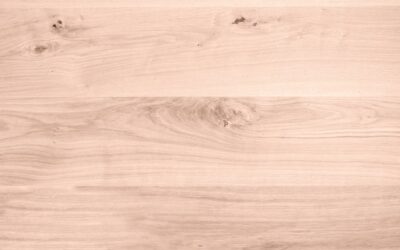
White oak has a tighter, more linear grain pattern. The growth rings are less pronounced, and the overall appearance is calmer and more uniform. White oak also features medullary rays — subtle flecks that appear as small, shimmering streaks across the grain. Rift-sawn and quarter-sawn white oak showcases these rays prominently, creating a refined, upscale look.
White oak’s subtler grain makes it more versatile in modern interiors. It serves as a neutral backdrop that lets furniture and decor stand out without competing with the floor’s pattern. This is a major reason white oak has dominated new construction and renovations since the mid-2010s.
Natural Color
Red Oak
Red oak’s natural color ranges from light tan to warm salmon-pink. The pinkish-red undertone is the species’ defining visual characteristic — and the most polarizing. Some homeowners love the warmth. Others find the pink undertone difficult to coordinate with cool-toned decor, gray walls, or modern aesthetics.
Red oak yellows and ambers slightly with age and UV exposure, but the warm undertone remains dominant. Rugs and furniture can create visible color differences as unexposed wood ages differently from exposed areas.
White Oak
White oak’s natural color is a golden tan to medium brown with no pink or red undertones. This neutral warmth coordinates easily with virtually any interior style — modern, transitional, traditional, farmhouse, Scandinavian, and more.
White oak develops a richer, more amber tone with age, deepening into a honey color that most homeowners find attractive. The aging is gradual and even, creating a patina that adds character over time.
Hardness and Durability
White oak is harder than red oak, though the difference is modest.
| Species | Janka Hardness Rating |
|---|---|
| Red Oak | 1,290 lbf |
| White Oak | 1,360 lbf |
The 70-point difference translates to roughly 5% greater hardness for white oak. In practical terms, this means white oak is slightly more resistant to dents and wear from furniture, foot traffic, and pet claws. Both species are rated “moderately hard” and suitable for all residential flooring applications, including high-traffic areas.
For comparison, hickory (1,820 lbf) is substantially harder than either oak species, while walnut (1,010 lbf) is softer. If hardness is your primary concern, both oaks are middle-of-the-pack among domestic hardwoods — perfectly adequate for residential use but not the most dent-resistant species available.
Staining Behavior
How each species accepts stain is one of the most important practical differences — and one that many homeowners do not consider until they are already committed.
Red Oak
Red oak’s large, open pores absorb stain unevenly. The porous grain lines drink up more stain than the tighter areas between them, creating a two-toned or “stripy” effect with some stain colors. This is particularly noticeable with gray, white-wash, and cool-toned stains — the warm pink undertone of the wood fights the cool stain color, producing muddy or inconsistent results.
Red oak stains beautifully in warm tones (honey, amber, golden, medium brown, dark brown) that work with its natural undertones. It struggles with cool tones (gray, espresso, black) because the pinkish-red undertone bleeds through.
White Oak
White oak’s tighter grain absorbs stain more evenly, producing a consistent color across the board. Its neutral undertone means it accepts virtually any stain color without fighting it. Gray stains, smoke stains, weathered looks, Jacobean dark, and natural oil finishes all work beautifully on white oak.
This staining versatility is arguably white oak’s single biggest advantage. If you want a specific stain color — especially a modern gray, blond, or very dark finish — white oak delivers more predictable and attractive results.
The Trend Factor
The contemporary flooring trend leans heavily toward muted, natural-looking finishes: matte oils, light Scandinavian blonds, weathered grays, and dark smoky tones. White oak handles all of these trends perfectly. Red oak’s warm grain and open pores make it a poor candidate for the most popular finish styles of 2026, which is why white oak has overtaken it in market share for new installations.
Water Resistance
Neither species is waterproof, but white oak has a meaningful structural advantage.
Red Oak
Red oak’s pores are open (not plugged by tyloses), meaning liquid can penetrate into the wood structure relatively easily. In traditional cooperage (barrel-making), red oak is never used for liquid containers because it leaks. Applied to flooring, this means spills penetrate red oak faster, and the wood is more susceptible to water staining and moisture damage.
White Oak
White oak’s pores are naturally plugged by cellular structures called tyloses. These tyloses make white oak’s cellular structure closed and much more resistant to liquid penetration. This is why white oak is used for wine barrels, whiskey barrels, and boat building — it naturally resists water.
For flooring, this means white oak handles occasional spills better than red oak. Liquid sits on the surface longer before penetrating, giving you more time to clean up. White oak is not waterproof (no hardwood is), but it is measurably more water-resistant than red oak at the cellular level.
For truly waterproof performance, LVP flooring, vinyl flooring, or other waterproof flooring options are necessary.
Cost Comparison
| Cost Category | Red Oak | White Oak |
|---|---|---|
| Solid Hardwood (unfinished) | $3.00 to $6.00/sq ft | $4.00 to $8.00/sq ft |
| Solid Hardwood (pre-finished) | $4.00 to $8.00/sq ft | $5.00 to $12.00/sq ft |
| Engineered (pre-finished) | $3.50 to $8.00/sq ft | $5.00 to $14.00/sq ft |
| Professional Installation | $3.00 to $5.00/sq ft | $3.00 to $5.00/sq ft |
White oak costs 15 to 40% more than red oak at equivalent quality levels. The premium has increased over the past decade as demand for white oak has grown while supply has remained relatively stable. Red oak is more abundant in North American forests, which keeps its price lower.
For a 500-square-foot room, the difference between mid-range red oak and mid-range white oak might be $750 to $2,000 in materials alone. That premium is meaningful for budget-conscious projects but manageable for homeowners who value white oak’s aesthetic and performance advantages.
Design Styles and Trends
Red Oak Works Best With
- Traditional and colonial interiors
- Craftsman and Arts & Crafts homes
- Warm-toned color palettes (creams, beiges, warm whites)
- Classic furniture styles (Queen Anne, Chippendale, mission)
- Honey, amber, and warm brown stain colors
White Oak Works Best With
- Modern and contemporary interiors
- Scandinavian and minimalist design
- Farmhouse and transitional styles
- Cool-toned, neutral, and dark color palettes
- Virtually any stain color, including grays, blonds, and very dark finishes
- Wide-plank formats (7 inches and wider)
- European oil finishes (Rubio Monocoat, Pallmann, Loba)
The 2026 Landscape
White oak dominates current flooring trends. The most requested flooring look in 2026 is wide-plank white oak with a matte, natural oil finish — either in a light natural tone, a warm mid-tone, or a deep smoky brown. This look is everywhere in design magazines, real estate listings, and new construction.
Red oak remains a strong choice for homeowners with traditional taste, those matching existing red oak floors in an older home, or budget-conscious buyers who prefer real hardwood over alternatives like laminate or LVP.
Full Comparison Table
| Feature | Red Oak | White Oak |
|---|---|---|
| Janka Hardness | 1,290 lbf | 1,360 lbf |
| Grain Pattern | Bold, open, cathedral patterns | Tighter, linear, medullary rays |
| Natural Color | Pinkish-tan with warm undertones | Golden-brown with neutral undertones |
| Stain Acceptance | Uneven; struggles with cool tones | Even; accepts all stain colors well |
| Water Resistance | Lower (open pores) | Higher (tyloses plug pores) |
| Material Cost | $3.00 to $8.00/sq ft | $4.00 to $14.00/sq ft |
| Availability | Abundant | Available but higher demand |
| Trend Alignment (2026) | Traditional/classic | Modern/contemporary |
| Best Stain Colors | Warm tones (honey, amber, brown) | Any tone (gray, blond, dark, natural) |
| Wide Plank Suitability | Good (busy grain in wide planks) | Excellent (calm grain suits wide planks) |
Solid vs Engineered for Both Species
Both red oak and white oak are available in solid and engineered formats. The species decision and the construction decision are independent of each other.
Solid oak (either species) is ideal for nail-down installation over plywood subfloors, offers maximum refinishing potential, and is the traditional choice for main-level living spaces.
Engineered oak (either species) is the choice for installations over concrete slabs, in basements, with radiant heat, or when floating installation is needed. Engineered white oak in wide planks is the single most popular flooring product in the premium residential market right now.
Read our full engineered wood flooring guide for more on construction differences.
Maintenance
Both species require the same care routine:
- Sweep or vacuum regularly with a hard-floor setting (no beater bar)
- Damp mop with a hardwood-specific cleaner
- Clean spills promptly
- Maintain indoor humidity between 35% and 55%
- Use felt pads under furniture
- Place mats at exterior doors to catch grit and moisture
- Refinish when the finish shows wear (every 7 to 15 years, depending on traffic and finish type)
White oak’s tyloses give it a slight edge in spill tolerance, but neither species should be exposed to standing water. Day-to-day care is identical.
The Verdict
Choose white oak if you want a modern, versatile floor that accepts any stain color, works with contemporary design trends, and offers slightly better hardness and water resistance. White oak is the safe bet for new construction, renovations, and any project where resale appeal and trend alignment matter.
Choose red oak if you prefer a warmer, more traditional look, you want to match existing red oak floors in your home, or budget is a significant factor. Red oak is a beautiful wood with decades of proven performance — it is not inferior to white oak, just different in character.
Neither choice is wrong. Both are premium domestic hardwoods that will look beautiful and add value to your home for decades. But if you are starting from scratch with no existing floor to match, white oak’s staining versatility and trend alignment make it the more flexible investment for most homeowners in 2026.
Frequently Asked Questions
Can I stain red oak to look like white oak?
You can minimize red oak’s pink undertones with specific stain techniques (water-popping, reactive stains, or dye-and-stain combinations), but the open grain pattern will still look like red oak. If you specifically want the white oak look, buy white oak. Trying to make red oak look like white oak usually produces disappointing results.
Is white oak worth the extra cost?
If you plan to stain the floor any color other than warm brown, yes. White oak’s even stain acceptance and neutral undertone save you from the frustration of inconsistent results. If you plan a natural or warm-toned finish and you like the traditional grain pattern, red oak at a lower price is a perfectly good choice.
Which oak is better for kitchen floors?
White oak, due to its closed pore structure (tyloses) that provides better moisture resistance. Spills in the kitchen penetrate red oak’s open pores faster. Both can work in kitchens with proper care, but white oak provides a small but real safety margin.
Can I mix red oak and white oak in the same house?
It is not recommended. The different grain patterns and undertones are noticeable when seen in adjacent rooms. If you need to match existing red oak, stick with red oak throughout. For new installations, choose one species and use it consistently.
Does white oak always cost more than red oak?
In the current market, yes. White oak’s higher demand and relatively lower supply keep its price above red oak’s. The gap has widened over the past decade as white oak’s popularity has grown. Budget-friendly white oak options exist (especially in narrower widths and select grades), but equivalent quality white oak will always be more than red oak.
Prefer to explore on your own?
See how new flooring looks in your actual room in seconds — free, no signup.
Try the free Floor Studio →