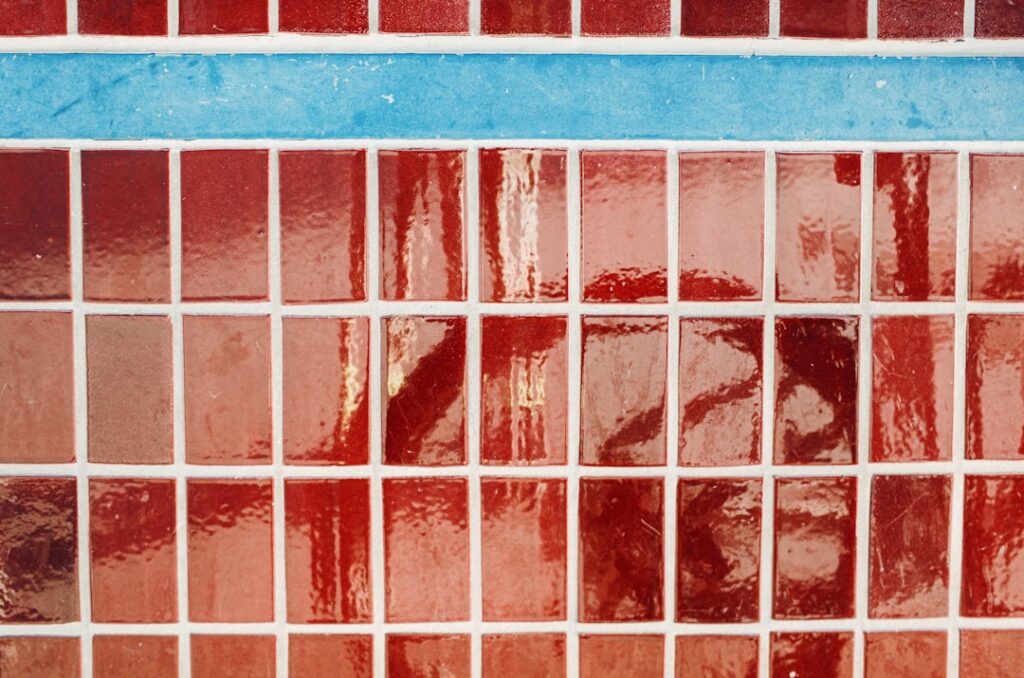
Most pools default to blue, so a red tile pool immediately stands apart, delivering a warm, dramatic look that ranges from Mediterranean terracotta to bold, jewel-toned glass. Red is a striking choice for waterline tiles, mosaic accents, or a fully tiled spa, and it pairs beautifully with natural stone coping and warm decking. But red also behaves differently underwater than it does on a showroom wall, and the wrong material or shade can look muddy or fade in the sun. Here is what you need to know to design a red-tiled pool that looks as good in five years as it does on opening day.
Part of our Tile & Grout guide — explore the full guide →
Why Choose Red Tile for a Pool
Red brings warmth and energy that cool blues cannot. Against the turquoise cast that water naturally lends, red tile creates a rich contrast that reads as luxurious and intentional. It suits Mediterranean, Spanish, and Tuscan-style homes especially well, echoing terracotta roofs and warm stone. In a spa or on a raised wall, red glass mosaic catches the light and sparkles, giving a spot of drama within an otherwise neutral pool.
Keep in mind that water shifts color perception. A tile that looks bright red on the wall may deepen toward maroon or brick once it is submerged and surrounded by water and sunlight. Always test a sample underwater or ask to see the tile in an existing pool before committing.
Where to Use Red Tile
You do not have to tile the whole pool red to make an impact. The most common and effective placements are:
- Waterline tile: a band of red tile at the waterline frames the pool and hides the scum line. The most popular use.
- Mosaic accents: red mosaics for steps, a sun shelf, or a decorative medallion on the floor.
- Spa and raised walls: fully tiling a spillover spa in red makes it a glowing focal point.
- Trim and borders: a red accent line against neutral tile for a clean, graphic edge.
For most homeowners, a red waterline band paired with neutral or blue field tile gives the drama of red without overwhelming the pool.
Material Options for Red Pool Tile
The material affects durability, color depth, and price. The main choices are:
- Porcelain and ceramic: the most common and affordable, frost-resistant grades are widely available, and glazes hold color well.
- Glass mosaic: the most vivid and light-catching, and highly durable underwater, but the priciest option.
- Natural stone and terracotta-look: warm, earthy reds for a Mediterranean feel, though true terracotta must be a pool-rated, sealed product.
For any pool tile, insist on a product rated for pool and freeze-thaw use if you live where temperatures drop. Standard indoor tile will fail underwater and in freezing conditions.
What a Red Tile Pool Costs
Pool tile pricing depends heavily on material and coverage. Porcelain and ceramic pool tile typically runs $5 to $15 per square foot for materials, while premium glass mosaics climb to $20 to $50 per square foot or more. Because the waterline is usually the only fully tiled band, many homeowners keep costs reasonable by using red just there. Installation for pool tile is specialized work, often $10 to $30 per square foot, because it demands waterproof setting materials and precise work below the waterline.
A red waterline band on an average pool might add $1,500 to $4,000 depending on the tile grade, while fully tiling a pool interior in glass mosaic can reach five figures. Get quotes from installers who specialize in pools, not general tile setters. The specialized setting materials matter here: pool tile must be installed with a modified thinset rated for continuous submersion and, ideally, over a waterproof membrane, which is why the labor commands a premium. Cutting corners on the setting materials to save money is a false economy, since tile that pops off underwater is expensive and disruptive to repair once the pool is filled.
Design Ideas That Work
Red is bold, so balance is key. Pair a red waterline with light travertine or limestone coping and warm decking for a cohesive Mediterranean look. For a modern pool, set deep red glass mosaic against gray or charcoal tile for high contrast. A red-and-white or red-and-gold mosaic pattern nods to Spanish and Moorish design and looks stunning on a spa wall. If you want subtlety, a blended red mosaic mixing several tones of red and terracotta reads richer and hides debris better than a single flat red.
Fading and Color Longevity
Red is one of the more challenging pigments to keep vivid outdoors, since UV exposure can fade lower-quality tiles over years. Glass mosaic and quality glazed porcelain hold their color far better than cheap or unrated tile. To protect your investment, choose a reputable pool-tile manufacturer, favor glass or high-fired glazed porcelain for the brightest reds, and keep water chemistry balanced, since aggressive water can etch and dull tile surfaces over time.
Care and Maintenance
Red pool tile shows calcium scale and buildup much like any other, so routine care keeps it looking sharp. Brush the tile regularly as part of pool maintenance, and keep the waterline clean to prevent the scum band and mineral deposits that dull the color. For calcium scale, a pumice stone or a tile-safe descaling product removes buildup; test in a hidden spot first. Maintaining balanced pH and calcium hardness in the water is the best long-term protection against etching and staining.
Coordinating With Coping and Decking
Red tile never lives in isolation, so the coping and deck materials around the pool make or break the look. Warm-toned natural stone coping, such as travertine or sandstone in cream and tan, complements red beautifully and reinforces a Mediterranean feel. Gray concrete or bluestone coping creates a cooler, more modern contrast that makes deep red glass mosaic pop. Avoid competing warm colors that clash with the red’s undertone; a brick-red waterline against orange-toned pavers can look muddy and busy.
Landscaping plays a role too. Green foliage is the natural complement to red, so surrounding a red-tiled pool with lush plantings makes the tile read as intentional and rich rather than loud. If your home has a terracotta roof or warm stucco walls, echoing that tone in the pool tile ties the whole property together. The goal is a palette where the red feels like a deliberate accent within a cohesive scheme, not a standalone splash of color fighting everything around it.
Sample everything together outdoors before committing. Tile, coping, and decking all shift under natural sunlight, and a combination that looked balanced indoors can read very differently in the backyard.
The Bottom Line
A red tile pool is a bold, warm alternative to the usual blue, and it can look spectacular when the material and placement are chosen with care. Use red where it counts, most often a waterline band or a mosaic accent, pick a pool-rated glass or high-fired porcelain that holds its color, and balance it with neutral coping and decking. Budget for specialized pool-tile installation, keep the waterline clean, and your red-tiled pool will stay a striking, sun-proof centerpiece for years to come.
Prefer to explore on your own?
See how new flooring looks in your actual room in seconds — free, no signup.
Try the free Floor Studio →