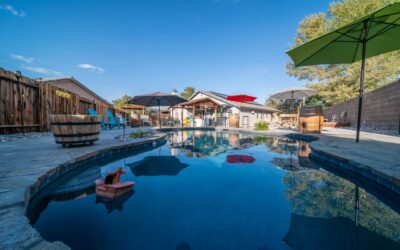
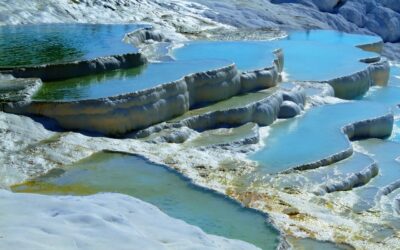
Walk any high-end residential pool deck in Florida, Arizona, or Texas and you will see travertine on roughly seven out of ten. The reason is simple: properly specified travertine tile pool decking stays 20 to 30 degrees cooler than concrete in direct sun, drains through its natural porosity, and ages into a patina that concrete pavers cannot match. The flip side is that bad travertine, bought on price from a no-name importer, etches, spalls, and grows algae within two seasons. This guide separates the genuine performers from the bargain-bin stone and explains how to plan a deck that still looks right at year 15.
Part of our Tile & Grout guide — explore the full guide →
Travertine Grades Matter More Than Color
Travertine sells in three commercial grades and a wide range of color tones, but grade drives performance far more than appearance.
- Premium grade: Tight, consistent surface, minimal natural holes filled at the quarry, uniform thickness. Best for pool decks.
- Standard grade: More holes, some color variation, occasional thickness variation. Acceptable for shaded patios.
- Commercial grade: Heavy void filling, broad color range, often the cheapest. Will spall in freeze-thaw climates.
Premium-grade Turkish and Mexican travertine runs $5 to $10 per sq ft for the stone alone. Premium Italian travertine from Tivoli quarries pushes $14 to $22 per sq ft.
Finish Options for Pool Decks
The surface finish determines slip resistance, heat reflection, and how the stone ages.
- Tumbled: Rounded edges, soft texture, DCOF 0.65 to 0.80 wet. Standard for pool decks, looks aged from day one.
- Honed and filled: Smoother surface, factory-filled voids, DCOF 0.42 to 0.55. Better for formal designs, riskier underfoot when wet.
- Brushed: Wire-brushed for natural texture, DCOF 0.60 to 0.72. Good balance of finish and grip.
- Chiseled edge: Hand-chiseled perimeter, gives the look of antique stone. Premium price, $14 to $20 per sq ft.
For coping (the edge piece around the pool), specify a tumbled or brushed finish with a bullnose edge. Square edges chip when you bump them with a pool brush.
Cost Breakdown for a Full Pool Deck
For a 600-sq-ft pool deck plus 80 linear feet of coping, here is what 2026 pricing looks like across markets.
- Premium tumbled travertine pavers (1-1/4 inch thick): $7 to $11 per sq ft material, $5 to $9 per sq ft labor. Total $4,200 to $6,000.
- Coping pieces with bullnose edge: $14 to $24 per linear foot installed. Total $1,120 to $1,920.
- Polymeric sand and base prep: $2 to $4 per sq ft. Total $1,200 to $2,400.
- Sealer (initial application): $0.75 to $1.50 per sq ft. Total $450 to $900.
Expect $7,000 to $11,000 fully installed for this footprint in most US markets. Premium Italian stone or custom patterns push that to $15,000.
Installation Method Drives Longevity
Pool decks can be installed dry-set on a compacted base or wet-set on a concrete substrate.
Dry-set on aggregate base: 4 to 6 inches of compacted crushed stone, 1 inch of bedding sand, pavers butted tight, polymeric sand swept into joints. Allows drainage, individual paver replacement, and movement without cracking. Best for sandy soils and freeze-thaw climates.
Wet-set on concrete slab: 4-inch concrete slab with rebar, thin-set mortar, 1/4-inch tile spacers, sanded grout. More expensive, but provides a rigid surface that does not shift. Best for elevated decks or formal designs.
Sealing Schedule That Actually Works
Travertine is calcium carbonate, which means chlorine, acid rain, and pool chemicals etch it. A penetrating sealer protects the stone from staining but does not change the surface finish.
- Apply initial seal 30 days after install, once efflorescence has cleared.
- Reseal every 18 to 24 months in full sun.
- Use a penetrating siloxane or fluorinated polymer sealer like Stone Pro Penetrator Plus or Aldon Same Day Sealer. Skip topical wax sealers; they yellow and trap moisture.
- Test absorption annually with a few drops of water. If they bead, the sealer is intact. If they soak in within 60 seconds, reseal that season.
Climate Considerations
Travertine works in almost every US climate but the specifications change.
In freeze-thaw climates from Kansas City north, specify pavers with under 4 percent water absorption and install dry-set with 4 inches or more of free-draining aggregate base. Wet-set installations crack within 5 years above 30 degrees north latitude.
In Sun Belt markets, surface heat is the bigger concern. Light-colored travertine stays 15 to 25 degrees cooler than darker stone like noche or chocolate variants. Stick with ivory, walnut, or silver tones for barefoot comfort.
Coping Profiles Worth Knowing
The pool’s edge piece is the most-stepped-on stone in the project. Three coping profiles dominate residential design:
- Bullnose: Half-round edge, classic, easy on bare feet. Standard 12-by-24-inch piece runs $14 to $20 each.
- Square edge: Crisp line, modern look. Watch for chipping over time.
- Eased edge: Slight radius on top corner, hybrid of bullnose and square.
Match coping to the deck pavers from the same lot. Color variation between batches creates a visible line where the pool meets the deck.
Maintenance and Algae Prevention
Two enemies attack travertine over time. Algae thrives in the natural pores, and pool chemical splashout etches the surface. Brush the deck weekly with a stiff bristle broom, rinse with garden hose pressure (under 1,500 psi for pressure washers). Apply diluted oxygen bleach (sodium percarbonate) twice a year to kill algae spores without damaging stone.
Skip muriatic acid and bleach. Both etch travertine permanently and dissolve sealer.
When to Pick Something Else
If your budget caps at $5 per sq ft installed, concrete pavers like Belgard Mega-Arbel or Pavestone Anchor outperform cheap commercial-grade travertine. If you want zero maintenance, large-format porcelain pool deck tiles from Florim or Marca Corona deliver the stone look without sealing. A genuine travertine tile pool deck rewards homeowners willing to invest in premium grade material and stick to a sealing schedule, with a surface that ages beautifully across two decades.
Prefer to explore on your own?
See how new flooring looks in your actual room in seconds — free, no signup.
Try the free Floor Studio →