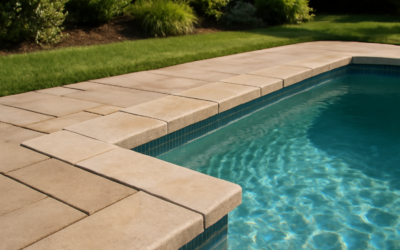
Travertine pool coping has become a go-to choice for pool edges because it solves two problems at once: it looks beautiful and it stays comfortable to walk on even when the sun is blazing. Travertine is a natural stone whose dense yet porous structure reflects heat and wicks moisture, so it rarely gets scorching like concrete or dark pavers, and it offers natural slip resistance around wet decking. It does need sealing and care to handle the harsh poolside environment. This guide covers why it works, what it costs, and how to keep it looking great.
What Pool Coping Is and Why Travertine Excels
Coping is the capping material that finishes the top edge of a pool wall, bridging the pool shell and the surrounding deck. It protects the pool structure, provides a finished edge to grip, and channels splashed water away from the pool. Travertine coping comes in shaped pieces, often with a bullnose or rounded edge, designed specifically for this transition.
Travertine excels here for a handful of practical reasons. Its light, earthy tones reflect sunlight rather than absorbing it, so the surface stays noticeably cooler underfoot than concrete or dark stone on hot days. The naturally textured, slightly porous surface provides traction when wet and absorbs splashed water quickly, reducing standing puddles and slip risk.
Key Benefits
- Stays cooler: reflects heat and resists getting too hot to walk on barefoot in direct sun.
- Slip-resistant: the textured, tumbled surface grips even when wet.
- Natural beauty: warm beige, ivory, walnut, and silver tones with organic variation that suits many home styles.
- Durable: a hard natural stone that withstands years of outdoor exposure when properly sealed.
- Comfortable underfoot: smooth-tumbled edges feel pleasant for bare feet at the pool’s edge.
What Travertine Pool Coping Costs
Travertine coping material commonly runs about $4 to $12 per linear or square foot depending on the grade, color, and edge style, with premium walnut and silver tones at the higher end. Professional installation adds labor that varies with the pool’s size and shape, and the total project depends heavily on how much linear footage your pool perimeter requires. Get quotes that specify the stone grade, edge profile (such as bullnose), setting materials, and sealing, so you are comparing complete installed prices.
Sealing for the Pool Environment
Sealing is critical for poolside travertine because the stone faces constant water, splashing, and in many pools, chlorine or salt. Travertine is porous and can absorb water and pool chemicals, which over time can lead to staining, etching, or surface breakdown if left unsealed. A penetrating, breathable stone sealer rated for outdoor and wet areas protects the stone while still allowing trapped moisture to escape.
Seal travertine coping after installation and reseal periodically, often every one to two years depending on sun exposure, chemical contact, and the product used. Because salt water is especially aggressive on stone, salt pool owners should be diligent about sealing and rinsing. Test by dripping water on the stone; if it absorbs and darkens quickly, it is time to reseal.
Installation Overview
Travertine coping is set on the pool bond beam with a mortar bed, leveled carefully, and finished with the appropriate joint and caulk between the coping and the deck to allow for movement. A flexible expansion joint between the coping and the pool deck is important because it absorbs the slight movement and thermal expansion that would otherwise crack a rigid joint. The bullnose or eased edge is oriented toward the water to give swimmers a comfortable, safe grip. Because precise leveling and proper joint detailing matter for both looks and longevity, most homeowners hire an experienced installer for coping work.
Heat and Comfort in Practice
One of travertine’s biggest selling points is that it remains cooler than many alternatives in direct sun, which is why barefoot swimmers gravitate to it. Lighter colors like ivory and beige stay the coolest, while darker walnut tones absorb a bit more heat. If your pool gets relentless full-sun exposure, leaning toward a lighter travertine maximizes the cool-underfoot advantage on the hottest afternoons.
Cleaning and Ongoing Care
Keeping travertine coping in good shape is straightforward.
- Rinse regularly with fresh water to wash away pool chemicals, salt, and debris, especially after heavy use.
- Clean with a pH-neutral stone cleaner and a soft brush; avoid acidic cleaners and vinegar, which etch the stone.
- Address algae or mildew in shaded, damp spots promptly with a stone-safe cleaner.
- Reseal on schedule to maintain stain and chemical protection.
- Fill and repair any pitting or open holes that develop, since travertine naturally has small voids that can widen if neglected.
Color and Edge Options
Travertine coping comes in several tones and edge profiles that shape both the look and the function of your pool surround. Ivory and beige are the most popular for their cooling, bright appearance, while walnut and noce bring richer, darker warmth, and silver and gray tones lean modern. For edges, a bullnose (rounded) profile is the most common and comfortable choice for swimmers gripping the pool’s edge, while a square or eased edge gives a more contemporary, clean line. Matching the coping color to your travertine deck pavers creates a seamless, resort-like look, or you can contrast the coping against the deck to frame the water and define the pool’s shape.
Travertine vs. Other Coping Materials
Compared with the alternatives, travertine offers a distinctive blend of comfort and looks. Poured or precast concrete coping is cheaper but gets hotter underfoot and lacks travertine’s natural character. Brick coping is durable and classic but can also heat up and offers less traction. Porcelain pavers resist staining and need no sealing, making them lower-maintenance, but many homeowners still prefer the authentic texture and cool feel of natural stone. Travertine’s main trade-off against these options is the sealing and care it requires, which is the price of its natural beauty and barefoot comfort.
Is Travertine Right for Your Pool?
Choose travertine pool coping if you want a natural, elegant edge that stays cool and slip-resistant and you are willing to seal it and rinse off chemicals to protect the stone. It is a particularly smart pick in hot, sunny climates where concrete and dark pavers become uncomfortable. With proper sealing and routine care, travertine coping delivers comfort, safety, and timeless looks around the pool for many years.