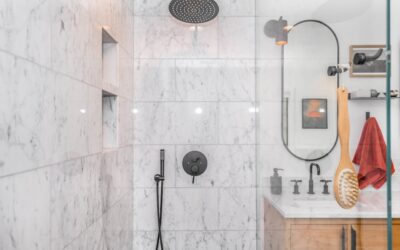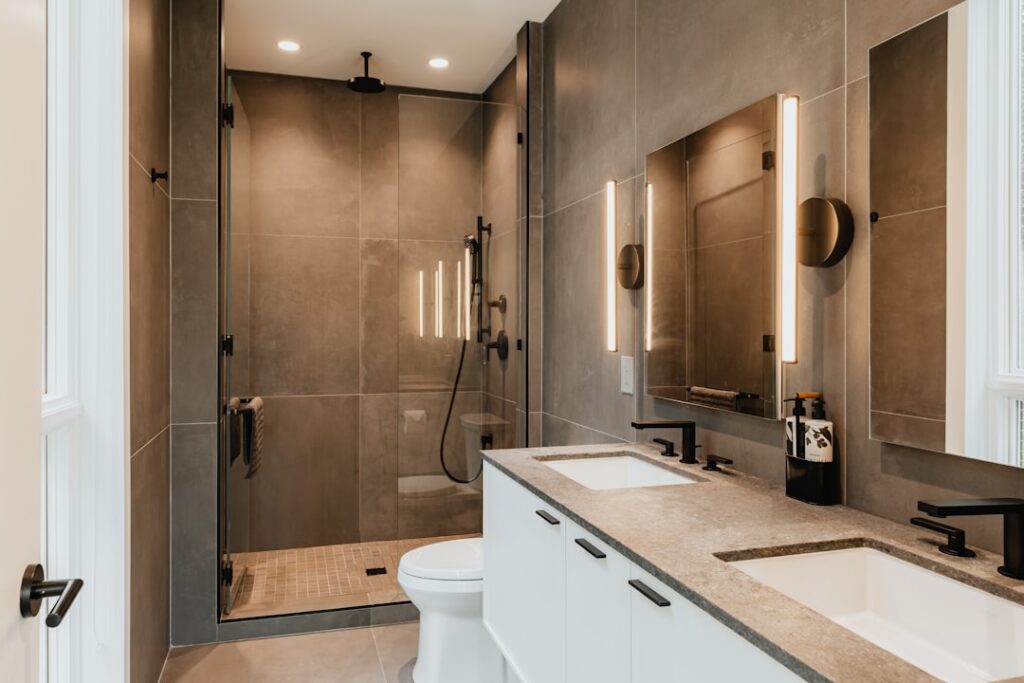
Few materials make a bathroom feel like a spa the way natural stone does, and a travertine shower is one of the most popular ways to get that look. Travertine is a form of limestone with a soft, earthy palette of creams, tans, and warm browns, often shot through with subtle veining. It’s beautiful and timeless. But it’s also a natural, porous stone, and that means it asks more of you than a porcelain tile shower does. Sealing, the right cleaners, and a little ongoing care are the price of admission. Understand what you’re signing up for and travertine will reward you with a surface that looks expensive because it is.
Part of our Bathroom Remodeling & Flooring guide — explore the full guide →
What Makes Travertine Different
Travertine forms around mineral springs, which leaves it riddled with natural voids and pits. In tile, those pits are often filled at the factory, but the stone remains porous and absorbent at heart. That porosity is the central fact to remember in a shower, the wettest room in the house. Water and minerals can soak in, and acids will eat away the surface. Travertine is composed largely of calcium carbonate, which reacts with acid — the same chemistry that makes vinegar fizz on a limestone countertop. This is why a travertine shower needs to be sealed and why your cleaner choice is not a minor detail. It’s the whole game.
Honed vs. Polished Finishes
Travertine comes in a few finishes, and for a shower the choice affects both looks and safety.
- Honed — a smooth, matte surface with no shine. This is the most common pick for shower floors and walls because it offers better traction underfoot and hides etching better than a glossy finish. Honed stone reads soft and natural.
- Polished — buffed to a glossy shine that shows off the stone’s color and movement. Stunning on walls, but it can be slick when wet and it shows etch marks and water spots more readily, so most installers keep it off the shower floor.
- Tumbled — given a worn, rounded, old-world texture. Great grip and rustic charm, with more grout lines and more surface to seal.
A common approach is honed or tumbled travertine on the floor for grip, with polished or honed on the walls for visual richness.
Sealing — The Non-Negotiable Step
If you take one thing from this guide, make it this: a travertine shower must be sealed, and it must be resealed over time. Use a quality penetrating (impregnating) sealer, which soaks into the stone and lets it breathe while repelling water and staining liquids. Seal the tile before grouting and again after, and plan to reapply periodically — many homeowners reseal a shower every year or so, though the exact interval depends on the sealer and how heavily the shower is used. The simplest test: splash a little water on the stone. If it beads up, the seal is holding. If it darkens and soaks in, it’s time to reseal. Skipping this step invites water staining, mineral deposits, and mildew taking hold in the pores.
Cleaning: pH-Neutral Only
Here is the mistake that ruins more travertine showers than anything else — reaching for the wrong cleaner. Acidic products will etch the stone, leaving dull, rough spots that no amount of scrubbing fixes. The offenders are everywhere:
- Vinegar and lemon-based cleaners
- Most general-purpose bathroom sprays and tub-and-tile cleaners
- Bleach and ammonia-heavy products
- Acidic lime and scale removers
Instead, use only a pH-neutral cleaner formulated for natural stone. These clean effectively without etching. Wipe the walls down after showers with a squeegee to cut down on water spots and mineral buildup, run the bathroom fan to control humidity, and tackle soap scum with a soft cloth and stone-safe cleaner rather than an abrasive scouring pad. Treat the stone gently and it stays smooth and bright.
Grout and Waterproofing
A travertine shower is only as good as what’s behind it. Proper waterproofing — a membrane system or a liquid-applied waterproofing behind the tile — is essential, because water that gets past the stone and grout will rot the substrate and breed mold you can’t see. Use a quality grout, and many pros favor epoxy or urethane grout in showers for its stain resistance and minimal maintenance. Seal cement-based grout along with the stone. Keep an eye on the corners and the joint where the wall meets the pan; reseal or recaulk flexible joints with a mildew-resistant silicone as needed rather than rigid grout, which cracks at those movement points.
What a Travertine Shower Costs
Travertine tile itself is moderately priced for natural stone, commonly $5 to $15 per square foot for the material, with premium and large-format pieces running higher. Installation is where stone gets expensive: setting natural stone is slower, fussier work than ceramic, and a full travertine shower installed by a pro often lands in the range of $15 to $30 per square foot or more for labor and materials combined, depending on your region and the complexity of the layout. Budget for sealer, the right cleaners, and the occasional reseal as ongoing costs. Those are ballpark figures — get local quotes, since stone and labor pricing swings a lot by market.
Preventing Mold and Mildew
Because travertine is porous and a shower is perpetually damp, mold and mildew are the enemies you fight hardest. The pores in the stone and the grout lines give spores a foothold if moisture lingers, so your defense is moisture control. Run the exhaust fan during and for a while after every shower to pull humidity out of the room. Squeegee the walls after showering to remove standing water before it can soak in or feed mildew. Leave the shower door or curtain open between uses so the stone can dry. If you do spot mildew, treat it with a stone-safe, pH-neutral cleaner and a soft brush rather than reaching for bleach, which can damage the stone and the grout color. Staying ahead of moisture is far easier than scrubbing out established mildew, and it’s the single biggest factor in keeping a travertine shower looking fresh.
Is Travertine Right for Your Shower?
A travertine shower delivers warmth and natural beauty that manufactured tile struggles to match, and with proper care it lasts for decades. The trade-off is maintenance: you’re committing to sealing, gentle pH-neutral cleaning, and a no-acid rule for the life of the shower. If that level of care fits your routine, travertine is a genuinely lovely choice. If you want a truly set-it-and-forget-it shower, a porcelain tile that mimics travertine gives you a similar look with far less fuss. Either way, go in knowing what natural stone asks of you, and you won’t be disappointed.
Travertine Bathroom Ideas Beyond the Shower
A travertine shower often becomes the anchor for the rest of the room. Once the stone is in place, it makes sense to carry it onto the floor, the walls or the vanity so the bathroom reads as one design rather than a stone box in a tiled room. These travertine bathroom ideas cover where the stone works best, which finishes and layouts suit each surface, and how to keep it looking good.
Travertine Floors That Feel Warm and Safe
For bathroom floors, honed or tumbled travertine gives better grip than polished stone, and the soft color hides water spots and everyday dust. Larger formats such as 12 by 24 inch tiles in a straight or offset layout make a small bathroom feel wider because there are fewer grout lines. A classic French or Versailles pattern, which mixes four tile sizes, adds an old world look and suits larger rooms. If you want a warmer floor in a cold climate, travertine works well over electric radiant heat, since stone holds and spreads warmth evenly. Use a bath mat with a non-slip backing near the tub and shower exits.
Accent Walls, Wainscot and Niches
Running travertine from floor to ceiling behind the vanity or tub creates a strong focal wall without covering every surface. A wainscot about 40 to 48 inches high is a budget friendly option that protects the walls in a family bathroom and leaves the upper wall free for paint. Matching shower niches, a ledge behind a freestanding tub or a stacked mosaic strip can tie the shower to the rest of the space. Vein cut travertine, which shows long linear bands, looks modern on walls, while cross cut stone has a cloudier, more traditional pattern.
Vanity Tops, Sinks and Pairings
Travertine vanity tops and vessel sinks add a sculpted, spa feel, but they need more care than quartz. Toothpaste, mouthwash, cosmetics and many hand soaps are acidic and can etch the surface, so wipe spills promptly and use trays for toiletries. Filled and honed slabs are easier to keep clean than open pitted ones. For pairings, warm brass, aged bronze or matte black fixtures suit the creamy tones, as do white oak or walnut cabinets, linen colored walls and simple white porcelain fixtures. Keep busy patterned tile to a minimum so the stone carries the look.
Sealing and Moisture Control Room Wide
Every travertine surface in the bathroom needs a penetrating sealer, not just the shower. Floors near the toilet and tub take splashes and cleaning products, and vanity tops see daily spills, so plan to reseal these on the same schedule you use for the shower and test with the water bead method. Before installing stone over any wet area, fix leaks and confirm the subfloor and walls are dry, and use proper waterproofing behind tile near the tub. Run the exhaust fan during and after bathing, and if mold covers more than about 10 square feet or keeps returning, call a mold remediation professional to find the moisture source.