Some kitchens feel cold the moment you walk in, all hard edges and glossy surfaces. Natural stone is the antidote, and few materials warm a space like travertine. A travertine backsplash brings earthy, sun-baked color and a soft, textured surface to the wall behind your counters, lending Old World character that printed tile cannot fake. This sedimentary stone has been used in construction since Roman times, and its warm beige, cream, and golden tones remain a favorite for kitchens that want to feel inviting rather than clinical. Here is what to know before you install it.
- What Travertine Actually Is
- The Different Finishes
- Dealing With Natural Holes
- Tile Formats and Layouts
- Sealing Is Non-Negotiable
- Installation Tips
- Cleaning and Everyday Care
- Styling a Travertine Backsplash
- Cost Compared to Other Backsplash Materials
- Travertine vs. Look-Alike Tile
- Is Travertine Right for Your Kitchen?
What Travertine Actually Is
Travertine is a form of limestone that forms around mineral springs, where dissolved calcium carbonate deposits over time. This natural process traps gas bubbles, leaving the stone full of small voids and pits that give travertine its distinctive, characterful texture. Its colors come from iron and other minerals present as it formed, producing the warm range of ivory, beige, walnut, and gold that defines the look.
Because it is natural stone, every tile is unique, with subtle variations in color and the swirling, layered patterns created during formation. That organic, no-two-alike quality is a big part of why homeowners choose it over uniform manufactured tile.
The Different Finishes
Finish dramatically changes both the look and the practicality of a travertine backsplash. The same stone can read rustic or refined depending on how it is finished.
- Tumbled: Rounded edges and a soft, matte, weathered surface for a rustic, Old World feel. The most popular choice for backsplashes.
- Honed: A smooth, matte surface with crisp edges, more refined and easier to wipe clean.
- Polished: Glossy and reflective, showing off color and veining, but more prone to showing etch marks.
- Brushed: A lightly textured matte finish that splits the difference between tumbled and honed.
Dealing With Natural Holes
Those characteristic pits and voids are central to travertine’s charm, but they also need a decision. You can leave them open for maximum rustic texture, or fill them for a smoother, more practical surface. Many tiles come pre-filled at the factory with a matching resin or grout, while tumbled tiles are often left unfilled.
For a kitchen backsplash, filling the holes is usually wise. Open voids near a cooktop or sink collect grease, food splatter, and grime that is hard to clean out. You can fill remaining holes during grouting, working grout into the pits, or leave a few for texture if they are away from the messiest zones. It comes down to balancing the rustic look you want against the cleaning reality of a working kitchen.
Tile Formats and Layouts
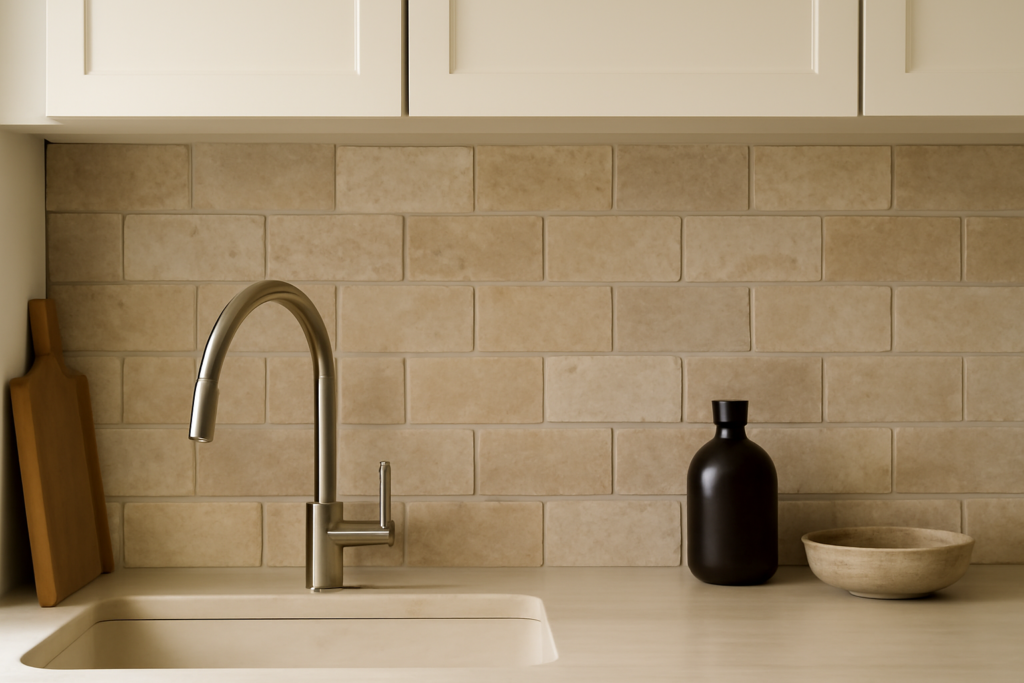
Travertine comes in many formats suited to backsplashes. Classic subway and brick-laid rectangles feel timeless, while small mosaics on mesh sheets make installation easier and add intricate texture. Tumbled square tiles in a straight or diagonal grid create a relaxed, Tuscan feel, and a herringbone layout adds movement and a more contemporary edge. Mixing a stone mosaic with a decorative inset band is a popular way to add a focal point behind a range.
Sealing Is Non-Negotiable
This is the part you absolutely cannot skip. Travertine is porous and acid-sensitive, which means it readily absorbs liquids and can etch from acidic kitchen splashes like tomato, citrus, vinegar, and wine. In a kitchen, the wall behind the stove and sink takes constant abuse, so sealing is essential.
Apply a quality penetrating stone sealer before grouting, again after the grout cures, and then on a regular schedule. To check whether resealing is due, drip water on the stone; if it soaks in and darkens within a few minutes, it needs another coat. A sealed backsplash resists grease and stains; an unsealed one will absorb cooking splatter and discolor surprisingly fast.
Installation Tips
Setting a stone backsplash follows careful tile practice with a few stone-specific notes.
- Use white thinset, since gray mortar can show through lighter, somewhat translucent stone
- Start from a level reference line rather than trusting an uneven countertop
- Cut tiles with a wet saw and diamond blade, working slowly to avoid chipping
- Seal the tiles before grouting so grout pigment does not stain the porous stone
- Choose grout color carefully; a matching warm tone keeps the look seamless, while a darker grout defines each tile
Cleaning and Everyday Care
Maintaining the warm look is easy as long as you avoid acidic and abrasive products that damage natural stone.
- Wipe regularly with a soft cloth and warm water or a pH-neutral stone cleaner
- Blot acidic splashes like citrus and tomato sauce immediately
- Never use vinegar, lemon, bleach, or abrasive scrubbing pads
- Dry the surface to prevent water spots
- Reseal on schedule to keep grease and stains from penetrating
Styling a Travertine Backsplash
The warm, neutral palette pairs effortlessly with a range of kitchen styles. It complements wood cabinetry in traditional and Tuscan kitchens, softens white or cream cabinets for a transitional look, and pairs beautifully with bronze, oil-rubbed, and brass fixtures. Granite and quartz counters in coordinating warm tones tie the whole scheme together. Because the stone already brings so much texture and natural variation, keep surrounding finishes relatively simple so it stays the focal point.
Cost Compared to Other Backsplash Materials
Travertine generally lands in the affordable-to-mid range among natural stones, typically costing less than marble while still delivering a genuine stone look. Tumbled tiles and mosaics are usually the most budget-friendly formats, while larger honed or polished tiles cost more. Compared to ceramic or glass tile, stone runs higher per square foot and adds the cost of sealer and white thinset. Still, because a backsplash covers limited square footage, even premium stone stays within reach for most renovation budgets, making it an accessible way to introduce natural material into a kitchen.
Travertine vs. Look-Alike Tile
If the sealing and acid sensitivity concern you, porcelain tiles printed to mimic travertine have improved dramatically and offer the warm, textured look with none of the maintenance. They resist acid, never need sealing, and clean easily. The tradeoff is authenticity, since real stone has genuine depth, natural pits, and one-of-a-kind variation that printing only approximates. For homeowners who love the material and accept the upkeep, real travertine rewards them with character no imitation matches. For those who want the look with minimal fuss, a quality porcelain look-alike is a smart, low-maintenance compromise.
Is Travertine Right for Your Kitchen?
A travertine backsplash rewards homeowners who love warm, natural, Old World character and are willing to seal and clean it thoughtfully. It costs more than ceramic and demands diligent sealing, particularly in a busy cooking zone, and the natural pits require a fill-or-leave decision. Choose a filled, honed or tumbled finish for easier upkeep, seal it religiously, and clean it gently, and this timeless stone will give your kitchen a warmth and depth that manufactured tile simply cannot match.