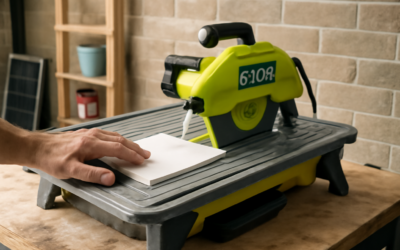
When a tile job outgrows a snap cutter, a wet saw is what gets you clean cuts through porcelain, natural stone, and thick pavers without chipping. A Ridgid wet tile saw sits in a useful middle ground: tougher and more capable than the bargain saws you’ll find near the checkout aisle, but priced and sized for a serious DIYer rather than a full-time tile setter. If you’re weighing one for a bathroom or kitchen remodel, it helps to know what the lineup offers and where each model fits.
Part of our Tile & Grout guide — explore the full guide →
Ridgid tools are sold primarily through Home Depot and carry the brand’s lifetime service agreement on registered tools, which is part of the appeal. But specs matter more than the badge, so let’s break down what actually separates a good tile saw from a frustrating one.
The Ridgid Wet Saw Lineup
Ridgid’s tile saws generally fall into a few tiers by blade size and table style. Rather than quote prices that shift with sales and season, here’s how the range is structured.
- 7-inch tabletop saws are the compact, portable options. They’re light enough to carry up stairs and store on a shelf, and they handle the majority of residential tile up to roughly 12 to 18 inches with a sliding table.
- 7-inch and 8-inch sliding-tray saws add a moving cart that carries the tile past the blade. This gives you straighter cuts on larger format tile and more consistent results than pushing tile across a fixed table.
- 10-inch saws with a sliding table and stand are the heavy end of the lineup. The bigger blade means deeper cuts for thick stone and pavers, and the extended rails let you cut large-format tile that a compact saw can’t reach.
Availability changes over time, so check current Home Depot stock, but this tiering, from portable 7-inch to full 10-inch stand-mounted, has stayed consistent across Ridgid’s tile saw generations.
Blade Size and Cut Depth
Blade diameter drives what the saw can do. A 7-inch diamond blade handles standard wall and floor tile with room to spare, and it’s the most common size for home projects. Step up to a 10-inch blade when you’re cutting thick porcelain pavers, 3/4-inch natural stone, or anything where you need extra depth in a single pass.
All of these run continuous-rim diamond blades cooled by water. The stock blade that ships with the saw is fine for softer tile, but for hard porcelain most people upgrade to a premium diamond blade for cleaner edges and faster cutting. That upgrade matters more than the saw brand on tough material.
Rip Capacity and Diagonal Cuts
Rip capacity is the widest straight cut the saw can make, and it’s the spec that quietly ruins projects when it’s too small. If you’re installing 12-inch tile, you want a rip capacity comfortably past 12 inches so you can trim a full tile. Diagonal capacity, the largest tile you can cut corner to corner, is always smaller than the straight rip number.
Ridgid’s sliding-table models generally offer more usable capacity than fixed-table saws because the cart supports the tile through the whole cut. Before you buy, measure your largest tile and confirm both the rip and diagonal numbers clear it. Nothing is more annoying than discovering mid-job that your saw can’t cut your biggest tile.
Water Management
The “wet” in wet saw is what keeps the blade cool and the dust down, and how a saw handles water separates a clean workspace from a soaked one. Ridgid saws use a reservoir and pump system that flows water onto the blade, with splash guards and trays to contain the spray.
Look for a few things here: an adjustable water flow so you can dial in just enough coolant, splash shields that actually catch overspray, and a tray that’s easy to drain and rinse. The nicer models add better containment, which is worth it if you’re cutting indoors. Even so, plan to lay down plastic and expect some mist. No wet saw stays perfectly dry.
Who Each Saw Suits
Matching the saw to the job saves money and headaches.
For the Occasional DIYer
If you’re tiling one bathroom floor or a backsplash, a compact 7-inch Ridgid wet tile saw is plenty. It’s portable, stores easily, and handles standard tile without complaint. You’ll spend more than on a throwaway saw, but the cut quality and durability are noticeably better.
For the Serious Remodeler
Renovating a whole house, working with large-format tile, or cutting thick stone calls for a 10-inch sliding-table model on a stand. The bigger capacity, deeper cut, and sturdier build pay off across multiple rooms and years of use.
For the Working Pro
Full-time tile setters often step up to dedicated pro brands, but a top-tier Ridgid saw still holds its own for a remodeling contractor who does tile occasionally rather than daily. The lifetime service coverage on registered tools is a genuine plus for anyone keeping the saw long-term.
Setup and First-Cut Tips
Getting good results from any Ridgid wet tile saw starts before the first cut. Fill the reservoir with clean water and confirm the pump is fully submerged so it doesn’t run dry and burn out. Check that the blade spins freely and that the water is actually hitting the cutting edge, not spraying past it. A blade running dry chips tile and overheats fast.
Feed tile slowly and let the blade do the work; forcing it causes chips and can bog the motor. On glazed porcelain, score the face lightly on the first pass, then complete the cut, which reduces chipping on the finished edge. Keep the water clean by changing it when it turns to slurry, because gritty water dulls the blade and clogs the pump. And always wear eye protection, since even a wet saw throws fine mist and the occasional chip.
Maintenance Between Jobs
These saws last far longer with a few minutes of cleanup after each use. Drain and rinse the water tray so mineral slurry doesn’t dry into a crust, flush the pump, and wipe down the table and rails. Dry the metal parts to prevent rust, and store the saw with the blade guard in place. Registering the tool with Ridgid activates the lifetime service agreement on qualifying models, which covers wear parts down the road; keep your receipt and register promptly after purchase.
Honest Positioning
A Ridgid wet tile saw isn’t the cheapest option and it isn’t the top-shelf pro machine that costs several times more. It lands in the value-and-capability sweet spot for homeowners and light-duty contractors. If you only cut a dozen tiles a year, you may not need one at all; a manual snap cutter or a saw rental could be smarter. But if you tile regularly, or you’re tackling a big project with hard porcelain and large tile, owning one of these saves rental trips and delivers consistent, chip-free cuts. Pair it with a quality diamond blade, set up decent water containment, and it’ll carry you through years of projects.
Prefer to explore on your own?
See how new flooring looks in your actual room in seconds — free, no signup.
Try the free Floor Studio →