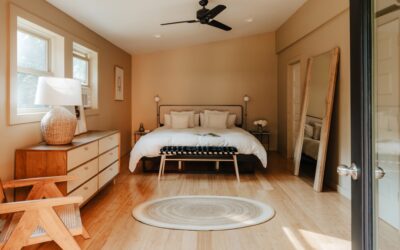
The most common decorating mistake in American bedrooms is not the wrong paint color or the wrong headboard. It is a rug that is simply too small, floating awkwardly under the foot of the bed like a postage stamp on a parcel. Getting the rug in bedroom placement right transforms the entire room, adding warmth underfoot, softening hard floors, anchoring the furniture, and pulling the design together. Get it wrong and even an expensive rug makes the space feel cheap. This guide walks you through size, placement, and material so you nail it the first time.
Why a Rug Belongs in the Bedroom
Beyond looks, a bedroom rug solves real problems. It provides a soft, warm surface for your bare feet on a cold morning, which matters enormously over tile, laminate, or hardwood. It absorbs sound, cutting echo and footstep noise in a room you want to feel quiet and restful. And it defines the sleeping zone, giving the bed a visual foundation that makes the whole arrangement feel intentional.
Even carpeted bedrooms benefit. Layering a rug over wall-to-wall carpet adds texture, color, and a designer touch that breaks up an otherwise flat expanse of beige.
Getting the Size Right
Size is where most people stumble, so this is the most important section. The general rule is that the rug should extend at least 18 to 24 inches beyond the sides and foot of the bed. That margin is what lets your feet land on softness when you climb out of bed, and it is what makes the room look balanced.
- Queen bed: A 8-by-10-foot rug is the sweet spot, placed under the bed.
- King bed: Go with a 9-by-12-foot rug to maintain those margins.
- Twin or full bed: A 6-by-9-foot rug usually works, or a 5-by-8-foot in a small room.
When in doubt, size up. A rug that is slightly too large reads as luxurious, while one that is too small looks like an afterthought.
Placement Options That Work
There is more than one correct way to position a rug, and the best choice depends on your room size and furniture.
Under the Bed, Fully Centered
The classic approach. The rug sits under the bed and most of the way under the nightstands, extending out the foot and both sides. This works beautifully in medium to large rooms and gives the most generous soft landing.
Under the Lower Two-Thirds
A smart way to save money on a large room. Position the rug starting just below the nightstands so it covers the lower two-thirds of the bed and extends past the foot. The nightstands sit on the bare floor, and you still get softness where you step out of bed.
Runners on Each Side
For a king bed in a tight room, two matching runners flanking the bed deliver function and symmetry without the cost of one enormous rug. This is also a great look over existing carpet.
Choosing the Right Material
Bedrooms are low-traffic and barefoot-friendly, so you can prioritize softness over the bulletproof durability a hallway demands. Wool is the premium choice, naturally soft, resilient, and stain-resistant, though it costs more. Plush synthetics like polyester and nylon offer comfort at a friendlier price and clean up easily.
For barefoot luxury, look at high-pile or shag options near the bed. If you have pets or allergies, a low-pile flatweave or a washable rug is easier to keep clean. Natural fibers like jute and sisal look great but feel rough underfoot, so they are better suited to a reading corner than the spot where you step out of bed.
Color, Pattern, and Layering
A bedroom rug can either calm the room or energize it. Soft neutrals, muted blues, and gentle earth tones reinforce a restful mood, which is why they dominate bedroom design. If your bedding is busy, choose a quieter rug, and if your bedding is plain, a patterned rug adds the interest the room needs.
Layering is a designer trick worth knowing. Place a smaller, textured or patterned rug at an angle over a larger neutral one, or layer a sheepskin at the foot of the bed for a cozy accent. Over wall-to-wall carpet, choose a rug with enough contrast in color or pile height that it does not visually disappear.
Practical Tips and Common Mistakes
A few details separate a polished result from a sloppy one. Always use a rug pad. It keeps the rug from sliding, adds cushioning, protects your floor, and extends the life of the rug. For hard floors, a non-slip pad is essential; over carpet, a thin gripper pad prevents shifting.
- Do not buy a rug smaller than 5-by-8 feet for anything larger than a twin bed.
- Center the rug on the bed, not the room, so it looks intentional.
- Vacuum regularly and rotate the rug every six months for even wear.
- Let new rugs air out for a day or two to release any factory odor before sleeping in the room.
Treat the rug as the foundation of the room rather than an accessory tacked on at the end. Choose the size first, get the placement right, then pick a material and color that match how you actually use the space. Do that, and a well-placed rug in bedroom design becomes the single best upgrade for comfort and style you can make.
Matching the Rug to Your Floor
The flooring underneath should inform your rug choice as much as the bed does. Over dark hardwood, a lighter rug provides contrast and keeps the room from feeling heavy, while over light floors a deeper-toned rug grounds the space. With patterned tile or busy floors, choose a calmer rug so the two surfaces do not compete.
Texture plays a role here as well. Over a hard, cool surface like tile or polished concrete, a thicker, plusher rug delivers the warmth and insulation those floors lack, which is exactly why a rug matters most in bedrooms with hard flooring. Over existing carpet, a flatter, lower-pile rug layers cleanly without creating an unstable, mushy stack underfoot.
Budget and Where to Spend
Bedroom rugs span an enormous price range, so it helps to know where your money goes. A basic synthetic 8-by-10 rug can run as little as $100 to $250, a quality machine-made wool blend lands around $300 to $700, and a hand-knotted wool rug can climb well past $1,500. The bedroom is one room where you can often go mid-range, since it sees less traffic than entryways or living rooms.
Spend where it shows and lasts. A good rug pad, often just $30 to $60, protects the rug and floor and dramatically improves how the rug feels underfoot, making it one of the highest-value parts of the whole purchase. If you are watching the budget, choose a slightly larger synthetic rug with a great pad over a tiny premium rug; the size and placement do more for the room than the fiber alone.