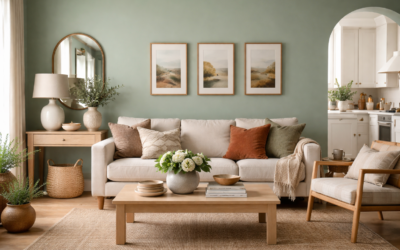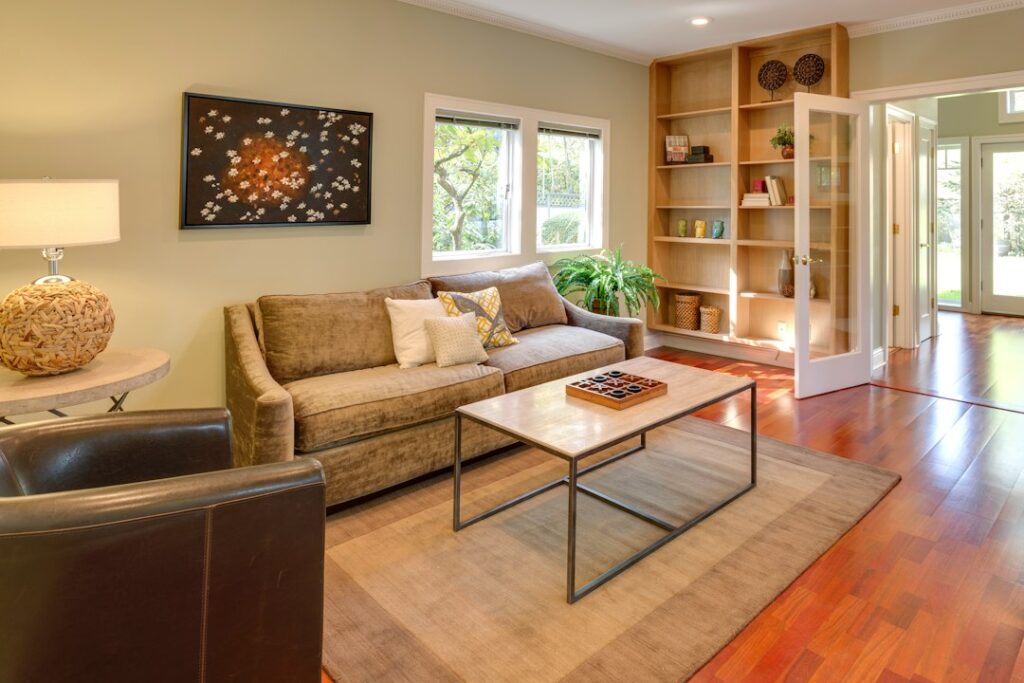
Muted blue-greens are some of the hardest colors to judge from a chip, because they slide between green, blue and gray as the light changes. Halcyon Green Sherwin Williams (SW 6213) is a classic example: a soft, gray-softened green with a cool blue undertone that can feel like sea glass in a bright room and a deeper spruce-gray in shade. It is dark enough to make a statement on cabinets or an accent wall, yet muted enough to work on all four walls of a well-lit room.
The quick facts: Sherwin-Williams lists Halcyon Green as SW 6213 in its Green color family, with an LRV of about 38.5 (38.535 on the color page), hex 9BAAA2 and RGB 155, 170, 162. It is available for interior and exterior use. The manufacturer’s coordinating colors are Window Pane (SW 6210), Kestrel White (SW 7516) and Henna Shade (SW 6326).
- Halcyon Green Sherwin Williams: Swatch and Spec Table
- Undertones: Blue, Green or Gray?
- Comparing Halcyon Green With Nearby Shades
- Coordinating Colors and Palette Ideas
- Best Rooms and Surfaces
- Step-by-Step: Testing and Painting
- Floors, Counters and Metals That Work With It
- Troubleshooting
- General Costs and When to Hire a Pro
- Frequently Asked Questions
An LRV in the high 30s means it reflects a bit more than a third of the light that hits it. That is a true mid-tone, so lighting and sheen choices matter. The sections that follow cover how it shifts with light, the rooms and surfaces it suits, and how it compares with nearby shades such as Rainwashed, Sea Salt and Silvermist.
Halcyon Green Sherwin Williams: Swatch and Spec Table
These figures come from the manufacturer’s color pages. Paint data is occasionally updated, so confirm against the current color page or fan deck before ordering.
| Spec | Value | What it means |
|---|---|---|
| Color number | SW 6213 | Order by code to avoid confusion with similar names. |
| Color family | Green | A gray-green base with a blue lean. |
| LRV | About 38.5 (38.535) | Medium: noticeably colored, darkens small dim rooms. |
| Hex / RGB | #9BAAA2 / 155, 170, 162 | Green channel highest, blue close behind: blue-green, cool side. |
| Interior / exterior | Both | Walls, cabinets, doors, siding and shutters. |
| Fan deck location | Strip 218 (218-C3) | Shares a strip with Rainwashed and Quietude. |
| Coordinating colors | Window Pane, Kestrel White, Henna Shade | Manufacturer-suggested trim and accent partners. |
| Best rooms / sheen | Bright bedrooms, baths, kitchens; eggshell walls, satin or semi-gloss cabinets | Higher sheen deepens and cools the look. |
Undertones: Blue, Green or Gray?
Halcyon Green Sherwin Williams has three ingredients you can see on the wall. Green is the base. A blue undertone keeps it cool and gives the sea-glass quality. A good dose of gray softens it so it never reads as bright mint or teal. Which one dominates depends on the light.
- North-facing rooms: the cool, indirect light strengthens the blue and gray. It reads deeper and moodier, closer to a slate blue-green.
- South-facing rooms: warm light balances the cool undertone and brings out the green. Expect a soft eucalyptus look.
- East-facing rooms: clear and fresh in the morning, grayer in the evening.
- West-facing rooms: cooler until afternoon, then warmer and greener as the light turns golden.
- Bulbs: warm white (around 2700K) keeps it cozy and green; daylight bulbs (5000K) push it bluer.
Because the color is a mid-tone, small rooms with one window can feel enclosed. That can be intentional, a cocooning powder room or a reading nook, but if you want airy, consider a lighter strip mate.
Comparing Halcyon Green With Nearby Shades
People often weigh Halcyon Green against a handful of popular soft blue-greens. The biggest difference is depth: most of the well-known names are much lighter.
- Rainwashed (SW 6211): LRV about 59. The lightest step on the same strip. It reads as a pale, airy blue-green, ideal for bathrooms and bedrooms that need brightness. Think of Halcyon Green as Rainwashed with much more depth and gray.
- Quietude (SW 6212): LRV about 47.6. The step between Rainwashed and Halcyon Green on the strip and the closest in character. Choose it when Halcyon Green feels a little too deep.
- Sea Salt (SW 6204): LRV about 63. A pale green-gray that shifts blue in some light. It is far lighter and reads closer to a tinted neutral, while Halcyon Green clearly reads as a color.
- Silvermist (SW 7621): LRV about 47. A soft blue-gray-green with more gray than Halcyon Green. It suits people who want the mood without as much green.
- Underseas (SW 6214): LRV about 25. A deeper color two steps down the same strip for doors, islands or lower cabinets when you want contrast against Halcyon Green walls.
A tonal scheme using Rainwashed on upper walls, Halcyon Green on cabinetry and Underseas on an island or door creates depth without introducing a new hue.
Coordinating Colors and Palette Ideas
The manufacturer’s coordinating picks show three ways to style it:
- Window Pane (SW 6210): LRV about 72. A very light, airy tint for ceilings or trim when you want a soft, cool look rather than plain white.
- Kestrel White (SW 7516): LRV about 68. A warm, creamy off-white that offsets the cool undertone and makes the room feel cozier.
- Henna Shade (SW 6326): LRV about 20. A dark terracotta red from the red family. Used sparingly on a front door, accessories or a single accent piece, it creates a complementary pop against the blue-green.
Beyond those, Halcyon Green pairs well with white oak and walnut, brushed nickel or aged brass, white marble, and natural fibers. Avoid pairing it with stark bright white trim in a north-facing room, where the contrast can make the green look cold.
Best Rooms and Surfaces
Kitchen cabinets
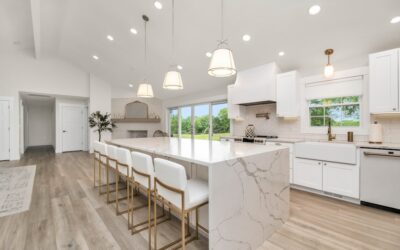
Many people first notice Halcyon Green Sherwin Williams on painted kitchens, and it is a strong cabinet color. On satin or semi-gloss enamel it reads slightly darker and richer than on a flat wall. Pair it with warm white walls and brass hardware for a soft vintage look, or with black hardware for something more modern.
Bathrooms
It looks calm with white tile and chrome or nickel fixtures. Use a moisture-resistant bath paint in satin for easier cleaning.
Bedrooms and offices
The muted, cool tone feels restful. It works best in rooms with decent natural light or layered lamps.
Exteriors
On siding, sun will wash it lighter and grayer. It suits coastal, cottage and craftsman styles with creamy trim. Test a large sample board in full sun and shade before committing.
Step-by-Step: Testing and Painting
- Sample big. Paint or stick swatches of at least 12 by 12 inches on two different walls.
- Compare finishes. If you plan cabinets in satin, test a satin board as well as a wall sample.
- View through the day. Check morning, afternoon and evening with your actual bulbs on.
- Prep. Clean, fill, sand glossy surfaces and spot-prime. Cabinets need degreasing and a bonding primer.
- Roll two coats. A quality roller kit with a 3/8-inch nap cover handles smooth drywall; use a fine foam or microfiber roller for cabinet doors.
- Allow cure time. Walls can be touched within hours, but cabinets need days before heavy use.
Floors, Counters and Metals That Work With It
Cool blue-greens can turn cold if every surface around them is also cool. Balance Halcyon Green with at least one warm material. White oak, natural walnut and honey-toned vinyl plank flooring all soften it, while very gray floors make the room feel more like a coastal palette. Terracotta or warm-toned tile in a bathroom repeats the complementary warmth of the coordinating Henna Shade.
On counters, white quartz with soft gray veining keeps things clean, and butcher block adds warmth in a kitchen. Brushed brass and aged bronze hardware look rich against painted cabinets, and polished nickel or chrome fits a crisp, cooler bathroom. Textiles in cream, sand, rust and soft navy layer well with it.
If the room has a lot of existing cool gray, such as gray tile or a gray sofa, test a sample beside it first. The combination can drift toward a dull blue rather than the fresh blue-green you saw on the chip.
Troubleshooting
- Looks too blue: cool light or daylight bulbs. Switch to warmer bulbs, add warm white trim and wood tones.
- Looks too dark: the room is dim. Step lighter to Quietude or Rainwashed.
- Looks muddy: competing warm beige finishes. Pair with cleaner whites and cool metals.
- Cabinets show brush marks: use a self-leveling cabinet enamel and a fine roller.
General Costs and When to Hire a Pro
Quality interior paint generally runs about $40 to $90 per gallon, covering roughly 350 to 400 square feet per coat. A standard bedroom usually takes about two gallons for two coats. Professional interior wall painting often costs $2 to $6 per square foot of wall area, and cabinet painting is typically priced per door and drawer front, often several thousand dollars for an average kitchen. Hire a pro for cabinets if you want a sprayed finish, for exteriors above one story, and for homes built before 1978 where old paint should be tested for lead before sanding.
Frequently Asked Questions
Is Halcyon Green blue or green?
Sherwin-Williams places it in the green family, but it has a clear blue undertone and a lot of gray. Most people describe it as a muted blue-green.
What is the LRV of Halcyon Green?
The manufacturer’s color page lists 38.535, so about 38.5. It is a mid-tone that reads noticeably colored on the wall.
What white goes with Halcyon Green?
Kestrel White (SW 7516) is a warm, creamy option suggested by the manufacturer. For a cooler, airier look, Window Pane (SW 6210) works on ceilings and trim.
Is Halcyon Green darker than Sea Salt?
Yes, much darker. Sea Salt has an LRV around 63 and reads as a pale tinted neutral, while Halcyon Green sits around 38.5.
Can Halcyon Green be used outside?
Yes. It is offered for interior and exterior use. Expect it to look lighter in direct sun, so test on the siding first.