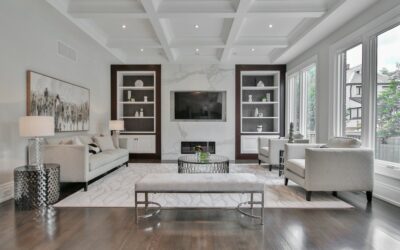
Plenty of people pick a gray from a tiny chip, roll it on, and discover the room is darker and bluer than they pictured. Morning Fog Sherwin Williams (SW 6255) is a classic case. On the manufacturer’s color page it carries a light reflectance value (LRV) of 41.6, which puts it squarely in medium territory, and its RGB mix (168, 174, 177) leans slightly toward blue. On the wall that adds up to a cool, misty mid-tone gray with real presence, not a pale wash of color.
That depth is the point. Morning Fog gives walls definition against white trim, holds its own in bright south or west light, and looks calm rather than stark in a bedroom or office. It is rated for both interior and exterior use, so it also shows up on siding and shutters. The trade-off is that dim, north-facing rooms can push it toward a heavy blue-gray, and it will never read as an “almost white” neutral.
- Morning Fog Sherwin Williams Specs at a Glance
- Undertones: How Blue Is Morning Fog?
- Best Rooms and Uses for Morning Fog
- Coordinating Colors and Pairings
- Morning Fog vs Light French Gray, Passive and Repose Gray
- How to Test Morning Fog Before You Commit
- Painting Tips, Tools and Coverage
- Troubleshooting Common Morning Fog Problems
- Cost and When to Hire a Painter
- Frequently Asked Questions
Specs, undertones, the best rooms and sheens, coordinating colors, and how it compares with three popular lighter grays (Light French Gray, Passive and Repose Gray) are what decide whether it suits your house. Each section answers a question people ask right before ordering paint.
Morning Fog Sherwin Williams Specs at a Glance
These figures come from Sherwin-Williams’ own color page for SW 6255. LRV runs from 0 (black) to 100 (pure white); a reading in the low 40s means the color reflects a little under half the light that hits it, so expect noticeable depth on four walls.
| Spec | Value | What it means |
|---|---|---|
| Color number | SW 6255 | Order by this number to get the exact formula in any sheen |
| LRV | 41.6 | Medium value; clearly a gray, not an off-white |
| Color family | Neutral | Sold as a gray neutral, though it carries a cool cast |
| Undertone | Cool, slightly blue | Looks bluer in north light, cleaner gray in warm light |
| Hex / RGB | #A8AEB1 / 168, 174, 177 | Blue channel is the highest, which explains the cool lean |
| Use | Interior and exterior | Works on walls, cabinets, siding and shutters |
| Best rooms | Bright bedrooms, offices, baths, accent walls | Needs good light to stay airy |
| Typical sheens | Matte or eggshell walls, satin or semi-gloss trim | Lower sheens soften the blue; gloss sharpens it |
Sheen availability depends on the product line you choose, so confirm the options on the current product sheet before you order.
Undertones: How Blue Is Morning Fog?
Morning Fog is a cool gray. In side-by-side comparisons with warmer grays and greiges, its blue cast becomes obvious, while on its own in a sunny room it can read as a fairly true, crisp gray. Light direction does most of the work:
- North-facing rooms: the cool, indirect light amplifies the blue undertone. Expect a moody blue-gray, especially on cloudy days.
- South-facing rooms: warm daylight neutralizes the blue, so the color looks like a clean mid-gray for most of the day.
- East and west rooms: the color shifts through the day, warmer during direct sun and cooler in the opposite half of the day.
- Artificial light: warm white bulbs (around 2700K) soften it; cool daylight bulbs (5000K and up) push it toward steel blue.
Surroundings matter as well. Orange-toned oak floors exaggerate the blue by contrast, while gray-washed or walnut floors let it sit quietly. Crisp white trim reinforces the clean, cool feel; creamy trim can make the wall look slightly bluer and dirtier, so pick trim carefully.
Best Rooms and Uses for Morning Fog
Because it has depth, Morning Fog shines in rooms that already get decent light and benefit from a calm, enveloping color.
Bedrooms and offices
A cool mid-gray is restful and works well behind white bedding or light wood furniture. In a home office it cuts screen glare compared with a bright white wall and gives video calls a neutral backdrop.
Bathrooms
With white tile, chrome or brushed nickel fixtures and a white vanity, Morning Fog gives a clean, spa-like look. Use a satin or bathroom-rated finish for humidity resistance, and make sure there is enough vanity lighting so it does not turn gloomy.
Living rooms and accent walls
In a sunny living room it works on all four walls. In a dimmer space, try it on one feature wall or a fireplace surround and keep the remaining walls lighter.
Cabinets and exteriors
On lower kitchen cabinets or an island, Morning Fog pairs neatly with white uppers and quartz counters. Outdoors, it reads lighter than indoors because of full sun, and it makes a soft, coastal body color with bright white trim and a deeper door.
Coordinating Colors and Pairings
Sherwin-Williams lists three coordinating colors on the SW 6255 page, which form an easy starting palette:
- Extra White (SW 7006): a clean, bright white (LRV about 85.9) for trim, ceilings and doors. It keeps Morning Fog looking crisp rather than muddy.
- Ice Cube (SW 6252): a crisp, bright white with a blue undertone (LRV about 77.5, filed in the white family), useful for ceilings or adjoining hallways when you want a cool, lighter partner.
- Sedate Gray (SW 6169): a lighter, restful gray with a soft green undertone (LRV about 60.8, filed in the yellow color family) that works as a counterpoint if you want a softer room next door. Check the swatch in person, since it reads very differently from cool grays.
Beyond paint, Morning Fog looks good with navy textiles, white oak or ash wood, black or brushed nickel hardware, marble-look surfaces, and greenery. Avoid pairing it with strongly yellow creams or orange woods unless you want a clear warm-cool contrast.
Morning Fog vs Light French Gray, Passive and Repose Gray
These four grays come up together constantly, but they are not interchangeable. Morning Fog is the darkest and coolest of the group by a clear margin. All LRVs are from the Sherwin-Williams color pages.
| Color | LRV | Temperature | How it compares |
|---|---|---|---|
| Morning Fog (SW 6255) | 41.6 | Cool, blue lean | Deepest of the four; strong contrast with white trim |
| Light French Gray (SW 0055) | 52.6 | Balanced, slightly cool | Lighter, softer gray with less obvious blue |
| Passive (SW 7064) | 59.9 | Cool | Shares the cool feel but much lighter and airier |
| Repose Gray (SW 7015) | 58.2 | Warm-leaning, greige | Warmer and lighter; easier with oak and beige finishes |
Side by side, Morning Fog Sherwin Williams looks noticeably deeper than the other three. Choose Morning Fog if you want a gray with clear depth and a cool, coastal mood. Choose Light French Gray if Morning Fog swatches look too dark or too blue in your light. Choose Passive for the same cool character in a much lighter value, especially in north-facing rooms. Choose Repose Gray if your home has warm wood floors, tan tile or beige carpet that would clash with a cool gray.
Note that people sometimes search for “Passive Gray”; the official color name is simply Passive, SW 7064.
How to Test Morning Fog Before You Commit
Because a medium-value cool gray shifts so much, testing saves a repaint. Follow these steps:
- Get a large sample. Use a peel-and-stick sample sheet or paint a piece of white poster board with two coats. Small chips mislead on medium grays.
- Place it on several walls. Put one on the wall facing the window and one on the window wall, since those see very different light.
- Look at it three times a day. Check morning, midday and evening, plus once under your actual lamps at night.
- Compare against your fixed finishes. Hold the sample next to the floor, countertop, tile and trim color you will keep.
- Test an alternative next to it. Put Light French Gray or Passive beside it. The contrast tells you quickly whether Morning Fog is too dark or too blue.
- Decide on sheen with the sample. A matte sample looks softer than the same color in satin, so test the sheen you plan to use if you can.
Painting Tips, Tools and Coverage
Morning Fog covers well over a primed or light-colored wall. Over a much darker or strongly colored wall, use a tinted primer first. A typical gallon covers roughly 350 to 400 sq ft per coat on smooth, sealed drywall, and most rooms need two coats for even color.
A good paint roller kit makes a real difference with a medium gray, because thin spots and lap marks show more on mid-tones than on whites. Look for a kit with a 9-inch frame, a 3/8-inch nap cover for smooth walls (1/2-inch for light texture), a sturdy tray and an extension pole. Add an angled 2 to 2.5-inch sash brush for cutting in, painter’s tape and drop cloths.
- Keep a wet edge and roll floor to ceiling in sections to avoid lap marks.
- Box multiple gallons together (mix them in one large bucket) so every wall matches.
- Let the first coat dry fully per the label before recoating.
- Ventilate while painting and while it dries.
Troubleshooting Common Morning Fog Problems
The walls look too blue. Switch to warmer bulbs (2700K to 3000K), add warm wood or brass accents, or step to a softer gray such as Light French Gray.
The room feels dark or closed in. The LRV of 41.6 is the cause. Keep Morning Fog on one or two walls, paint the ceiling a bright white, or choose Passive for a similar mood with far more reflected light.
Touch-ups look blotchy. Touch-ups flash more on mid-tones, especially in higher sheens. Use the same batch, the same applicator and feather the edges, or repaint the full wall section corner to corner.
The color clashes with the floor. Orange-toned wood fights with blue-gray. Add a large rug in neutral or navy tones to break the contrast, or choose a warmer greige.
Cost and When to Hire a Painter
For a DIY job on an average 12 by 12-foot bedroom, plan on roughly two gallons of quality interior paint plus a gallon of primer if needed, along with a roller kit, brush, tape and drop cloths. Paint for the room usually lands in the low hundreds of dollars depending on the product line, and supplies add a modest amount on top.
Professional interior painting commonly runs in a broad range of a few dollars per square foot of wall area, depending on prep, ceiling height, trim work and region. Hire a painter if you have tall stairwells, extensive patching, high-gloss cabinet work, or exterior siding over one story. Older homes built before 1978 may have lead paint under the existing layers; have it tested before sanding or scraping, and use lead-safe practices or a certified contractor if it is present.
Before ordering, confirm the current color details and available sheens on the manufacturer’s color page, since formulas and product lines are updated over time.
Frequently Asked Questions
Is Morning Fog a warm or cool gray?
Morning Fog (SW 6255) is a cool gray. Its blue component is slightly higher than its red and green, so it leans blue, especially in north-facing rooms and under cool daylight bulbs.
What is the LRV of Morning Fog?
Sherwin-Williams lists the LRV at 41.6, which makes it a medium gray. It reflects a little less than half the light that hits it, so it reads noticeably darker than popular light grays.
What trim color goes with Morning Fog?
Extra White (SW 7006) is the white Sherwin-Williams lists as a coordinating color. It is clean and bright, so it sharpens the contrast and keeps the gray from looking muddy.
Is Morning Fog darker than Repose Gray?
Yes. Morning Fog has an LRV of about 41.6 while Repose Gray is about 58.2, and Repose Gray also leans warmer. Morning Fog reads deeper and bluer side by side.
Can Morning Fog be used outside?
Yes. The manufacturer rates it for interior and exterior use. Outdoors in full sun it tends to look lighter than it does inside, so test a sample board on the actual siding.