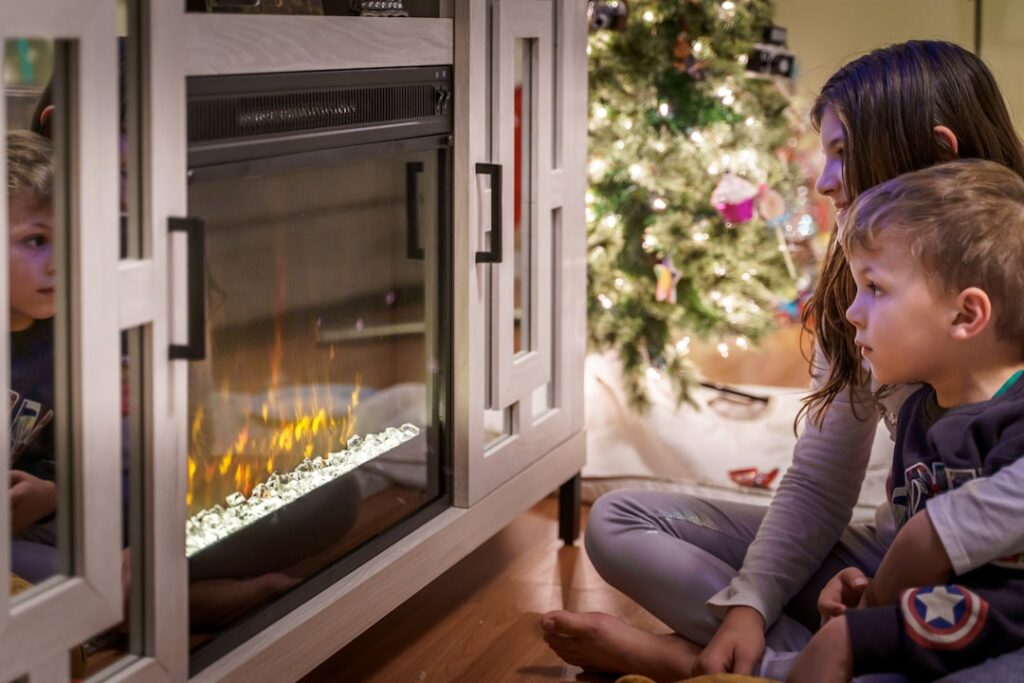
A small electric fireplace is the easiest way to bring warmth and firelight into an apartment, bedroom, office, or any space where a full fireplace makes no sense. There is no venting, no gas line, and no chimney — you plug it in and you have flames. This guide breaks down the types, how to size one, what it costs to run, and how to buy the right compact unit for your room.
- What Counts as a Small Electric Fireplace
- The Main Types
- How Much Heat You Get
- What It Costs to Run
- Sizing for Your Space
- Installation: Truly Plug-and-Play
- Features Worth Looking For
- Safety Considerations
- Price Ranges
- Best Rooms for a Small Electric Fireplace
- How to Choose the Right One
- Maintenance
- The Bottom Line
What Counts as a Small Electric Fireplace
“Small” generally means a unit under about 30 inches wide, or a compact freestanding piece with a footprint that fits a corner, a tabletop, or a narrow wall. These are designed for spaces from 150 to 400 square feet — bedrooms, home offices, dorm rooms, apartments, RVs, and reading nooks. They deliver the same core appeal as a large electric fireplace in a package you can often move yourself or hang on a single stud bay.
The Main Types
Compact electric fireplaces come in several formats, each suited to a different spot:
- Freestanding stoves: Small stove-style units, often 12 to 24 inches wide, that sit on the floor and plug into any outlet. Fully portable — move one from the bedroom to the office as needed.
- Wall-mount panels: Slim units 20 to 30 inches wide that hang like a picture frame. Great for saving floor space in a tight room.
- Tabletop and cube units: Tiny decorative fireplaces for a desk, mantel, or shelf, usually for ambiance with little or no heat.
- Corner and mantel units: Small furniture-style pieces that tuck into a corner and double as a shelf or media stand.
- Inserts: Compact firebox inserts (18 to 28 inches) that drop into an existing small opening or a built cabinet.
How Much Heat You Get
Almost every plug-in small electric fireplace runs on a standard 120-volt outlet and produces up to about 5,000 BTU, or roughly 1,500 watts — the same ceiling as full-size plug-in units, because a 15-amp household circuit caps near 1,500 watts. That heats 150 to 400 square feet comfortably as supplemental warmth.
Some very compact or tabletop models use a smaller 750-watt element (about 2,500 BTU) with a low/high switch, which is fine for a small bedroom or office. Tabletop decorative units may produce almost no heat at all — buy those for looks, not warmth. Always check the wattage and BTU rating, not just the size, so you know what heating job the unit can actually do.
What It Costs to Run
Running cost is easy to figure. At the full 1,500-watt setting, the unit uses 1.5 kilowatt-hours per hour. At the U.S. average of about $0.17 per kWh, that is roughly 25 cents an hour with heat on. A 750-watt low setting halves that to about 13 cents an hour. Flame-effect only, with the heater off, costs a penny or two an hour since the LEDs draw just a few watts. Run one for three or four evening hours a day and you will spend $20 to $30 a month in peak season — and you can often turn the central thermostat down to offset it.
Sizing for Your Space
Match the heat output to the room, remembering these are zone heaters:
- Up to 150 sq ft (small bedroom, office): a 750-to-1,500-watt compact unit is plenty.
- 150 to 300 sq ft: go with a full 1,500-watt (5,000 BTU) small fireplace.
- 300 to 400 sq ft: a 1,500-watt unit works but will be at its limit on the coldest days.
- Ambiance only: a tabletop or cube unit, no heating expectations.
For width, measure the wall or floor space first. A 23-to-28-inch wall panel centers nicely over a dresser or desk, while a 16-to-20-inch stove tucks into a corner without crowding the room.
Installation: Truly Plug-and-Play
The biggest advantage of a small electric fireplace is how little installation it needs:
- Freestanding units require zero installation — set it down and plug it into a grounded 120V outlet.
- Wall-mount panels hang on a bracket screwed into studs, then plug into a nearby outlet. Thirty minutes with a drill and a level.
- Keep the unit on a circuit that is not shared with other heavy loads, since a 1,500-watt heater pulls about 12.5 amps.
- Avoid extension cords and power strips — plug directly into a wall outlet. Space heaters overload thin cords and strips, which is a fire risk.
Features Worth Looking For
- Adjustable thermostat so the heater cycles to hold a set temperature instead of running flat out.
- Flame-only mode to enjoy the glow in summer without heat.
- Multiple flame colors and brightness for adjustable ambiance.
- Remote control and timer for convenience from the couch or bed.
- Overheat auto-shutoff and cool-touch glass — important safety features in a small room where the unit sits close to people, pets, and furniture.
- Tip-over shutoff on freestanding stoves, especially if kids or pets are around.
Safety Considerations
Electric fireplaces are among the safest heating options — no flame, no combustion, no carbon monoxide — but a small unit sits close to its surroundings, so basic care matters:
- Keep at least 3 feet of clearance between the heat outlet and curtains, bedding, and furniture.
- Plug directly into a wall outlet, never an extension cord or power strip.
- Choose a model with overheat protection and tip-over shutoff.
- Do not leave a heater running unattended overnight; use the timer.
- Keep the intake and outlet vents clear of dust and lint.
Price Ranges
- Tabletop / cube decorative units: $40 to $120
- Compact freestanding stoves: $80 to $300
- Small wall-mount panels: $120 to $400
- Small inserts: $200 to $600
- Corner mantel / media pieces: $250 to $700
Best Rooms for a Small Electric Fireplace
Because they’re compact and need no venting, these units fit places a real fireplace never could:
- Bedrooms: a slim wall panel above a dresser adds warmth and a soft glow for winter evenings.
- Home offices: a freestanding stove takes the chill off a converted spare room without heating the whole house.
- Apartments and condos: renters get fireplace ambiance with zero installation and can take it when they move.
- Basements and bonus rooms: a 1,500-watt unit warms a chilly finished basement zone.
- RVs and tiny homes: compact stoves suit small square footage and run off standard outlets.
- Bathrooms: only with a model rated for damp locations — check the spec before installing near a tub or shower.
How to Choose the Right One
Narrow your options with a short checklist. First, decide whether you want heat or just ambiance — that sets whether you need a full 1,500-watt unit or a decorative tabletop piece. Second, measure the space and pick a format: freestanding for portability, wall-mount to save floor space. Third, confirm the wattage and BTU match your room size rather than judging by looks alone. Fourth, prioritize safety features — overheat shutoff, cool-touch glass, and tip-over protection matter more in a small room where the unit sits close to people and furniture. Finally, check for a thermostat and remote if you want set-and-forget convenience. Nail those five and you’ll buy the right unit the first time.
Maintenance
Upkeep is nearly nothing. Wipe the glass with a dry microfiber cloth, and vacuum the heater vents a few times a season to keep airflow clear. LED flame sources last tens of thousands of hours and rarely fail. There are no filters, no fuel, and no venting to service — one more reason a small electric fireplace suits renters and low-maintenance households.
The Bottom Line
A small electric fireplace is the simplest way to add warmth and firelight to a bedroom, office, or apartment: plug it in, get up to 5,000 BTU of zone heat for about a quarter an hour to run, and enjoy year-round flame effect with no venting or gas. Pick a freestanding stove for portability or a slim wall panel to save floor space, size the wattage to your room, plug it straight into the wall, and choose a model with overheat and tip-over protection for worry-free warmth.