Buy a rug online without checking its dimensions and you risk one of two disappointments: a postage stamp that looks lost on your floor, or a rug that swallows a doorway. Knowing the standard throw rug sizes before you shop takes the guesswork out and helps you match a small accent rug to the exact spot you have in mind. Throw rugs are the smaller, more affordable pieces used to add warmth, color, and comfort in targeted areas rather than to cover a whole room. This guide lays out the common sizes and exactly where each one works.
What Counts as a Throw Rug
A throw rug, sometimes called an accent rug or scatter rug, is a small rug generally under about 4 by 6 feet, used to define a small space or add a decorative touch rather than anchor a full room. Think of the rug by a kitchen sink, the runner in a hallway, the soft landing beside a bed, or the welcome mat inside a front door. Because they cover less ground, throw rugs let you experiment with bold colors and patterns that might overwhelm a large area rug, and they cost far less to swap out seasonally.
The distinction matters when shopping, since area rugs start around 5 by 8 feet and go up from there, while throw rugs occupy the smaller end of the spectrum. Getting the category right narrows your search immediately.
The Standard Throw Rug Size Chart
While rugs come in countless dimensions, a handful of sizes appear over and over because they suit the most common uses. Here are the standard throw rug sizes you will find at nearly every retailer.
- 2×3 feet: The smallest common size. Perfect for entryways, in front of a kitchen sink, or beside a bed as a soft step-out.
- 2.5×4 or 3×4 feet: A slightly larger accent, good for bathrooms, small entries, and beside furniture.
- 2×6 or 2.5×8 feet (runners): Long, narrow rugs for hallways, galley kitchens, and along the side of a bed.
- 3×5 feet: A versatile mid-size accent that works in entryways, small seating nooks, and beside a crib or reading chair.
- 4×6 feet: The largest throw size, bridging into small-area-rug territory, good for anchoring a small seating group or a compact bedroom.
Keep in mind that listed sizes are nominal. A rug sold as 3×5 may actually measure a couple of inches under or over, and handmade rugs vary more than machine-made ones. Always check the exact listed dimensions, not just the rounded size name.
Matching Size to Room and Purpose
The right throw rug size depends entirely on the job it needs to do. Here is how the common sizes map to real spaces.
Entryways and Doorways
A 2×3 or 3×5 rug greets guests and catches dirt at the front door. For a wide entry, a 2.5×8 runner spans the space and guides foot traffic inward. Choose a low pile and a washable material here, since this is the dirtiest spot in the house.
Kitchens
A 2×3 in front of the sink cushions your feet while you wash dishes, and a runner, typically 2×6 or 2.5×8, softens a galley kitchen or the length of an island. Look for stain-resistant, easy-clean fibers given the spills and traffic.
Bathrooms
Bath mats in the 2×3 to 3×4 range absorb water outside the tub or shower. Cotton and quick-drying microfiber are the practical picks.
Bedrooms
Runners placed on each side of the bed, usually 2×6, give a warm landing for bare feet without the cost of a room-size rug. A 3×5 works at the foot of a smaller bed.
Placement Tips for a Polished Look
Size is only half the equation; placement determines whether the rug looks intentional. Center a throw rug on the feature it serves, whether that is a sink, a doorway, or the side of a bed. In an entry, leave a few inches of floor between the rug and the walls or door swing so the door clears the pile. For runners, keep 4 to 5 inches of bare floor on each side so the rug does not look crammed wall to wall.
Because throw rugs are small and often land in high-traffic areas, a non-slip rug pad is close to essential. It keeps the rug from sliding, prevents dangerous bunching, and protects your floor. A thin gripper pad costs just $10 to $20 and dramatically improves both safety and how the rug lies.
Material and Care Considerations
Small rugs in busy spots take a beating, so material matters. Cotton and synthetic throw rugs are usually machine washable, making them ideal for kitchens, bathrooms, and entries where spills and dirt are constant. Wool throw rugs feel more luxurious and last longer but cost more and need gentler care. For a scatter rug that will see heavy use and frequent washing, a durable, washable synthetic or cotton blend is the practical choice.
Layering Throw Rugs Over Larger Rugs
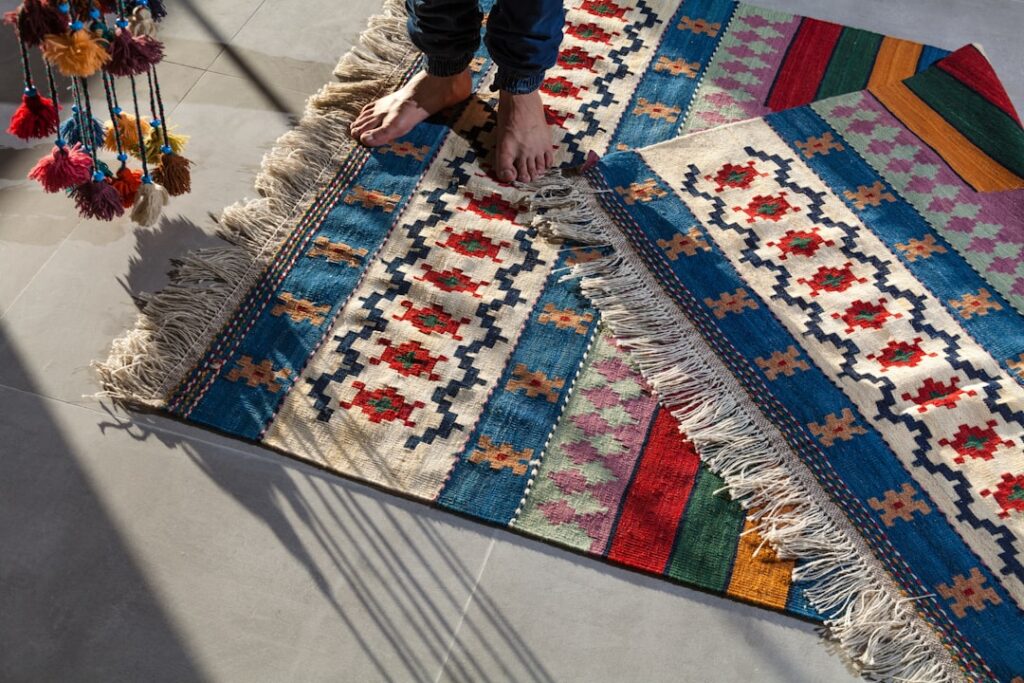
One design move that instantly elevates a room is layering a small throw rug over a larger area rug or over carpet. This trick adds texture, defines a zone within a bigger space, and lets you introduce a bold pattern in a manageable dose. A common approach places a 2×3 or 3×5 patterned throw at an angle over a large neutral jute or sisal rug, drawing the eye to a reading chair or the foot of a bed. The contrast in scale and texture makes both rugs look more intentional than either would alone.
When layering, keep the proportions deliberate. The throw rug should be clearly smaller than the base rug so the layering reads as a choice rather than a mistake, and the two should share at least one color to feel connected. A grippy rug pad or a few rug-tape strips keeps the top rug from sliding around, which is especially important when the base is a smooth low-pile rug. Done well, layering turns two affordable rugs into a custom, designer-looking floor treatment.
Final Takeaways
Understanding standard throw rug sizes, from the tiny 2×3 up to the 4×6, lets you shop with confidence and pick a rug that fits its spot perfectly instead of looking stranded or oversized. Match the 2×3 to sinks and doorways, runners to hallways and bedsides, and the 3×5 or 4×6 to small seating nooks. Always double-check the exact listed dimensions rather than trusting the rounded size name, since a couple of inches either way can change how a rug fits a tight spot. Add a non-slip pad, choose a washable material for high-traffic zones, and your throw rugs will deliver comfort, color, and function exactly where you need them.