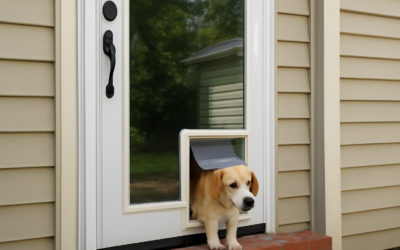
Cutting a pet door into your expensive entry door feels irreversible, which is exactly why so many pet owners choose to put it in the storm door instead. A storm door with doggie door gives your dog independent access to the yard while leaving your main entry door untouched, and it lets you swap glass for screen with the seasons. Choosing the right storm door with doggie door comes down to a few key decisions: built-in versus retrofit, the correct flap size for your dog, and how much you care about insulation and security. This guide walks through all of it.
Part of our Windows & Doors guide — explore the full guide →
- Built-In vs. Retrofit Pet Door
- Sizing the Flap to Your Dog
- Where the Pet Door Goes on a Storm Door
- Coordinating With Your Main Entry Door
- Insulation and Energy Considerations
- Security and Locking Flaps
- Installation Overview and Costs
- Choosing Between Manual and Electronic Flaps
- Climate and Draft Management
- Helping Your Dog Learn the Door
- Maintenance and Common Repairs
- Alternatives Worth Considering
Built-In vs. Retrofit Pet Door
You have two paths, and each suits a different situation.
Factory Built-In
Some manufacturers sell storm doors with the pet door already integrated into the lower panel, engineered and weather-sealed from the factory. These look the cleanest and carry a warranty that covers the whole door. The trade-off is a higher price and limited size and style choices.
Retrofit Kit
The more common route is buying a standard storm door and installing an aftermarket pet door kit, like the ones from PetSafe or Ideal Pet Products, into the lower glass or kick panel. This gives you far more flexibility to match the flap to your specific dog and is often cheaper, though the cut must be done carefully.
Sizing the Flap to Your Dog
Getting the opening size right is the single most important decision, because a flap that is too small will stop your dog from using the door and one that is too large wastes energy and weakens the panel.
- Measure your dog’s width at the shoulders and add about 2 inches for clearance.
- Measure height from the floor to the top of the shoulders to size the flap opening.
- Measure step-over height; the bottom of the flap should sit no higher than the lowest point your dog can comfortably lift a paw over, typically a third of their leg height.
Manufacturers publish size charts by weight class, which are a good starting point.
- Small (up to 15 lbs): flap around 5 by 7 inches.
- Medium (15 to 40 lbs): flap around 8 by 12 inches.
- Large (40 to 100 lbs): flap around 10 by 15 inches.
When you are between sizes, go up. A slightly larger flap is far less of a problem than one your dog refuses to squeeze through.
Where the Pet Door Goes on a Storm Door
Most storm doors have a solid lower kick panel or a second glass panel below the main viewing glass, and that is where the pet door installs. A kick panel is easier and safer to cut than glass, so if you are buying new, choose a storm door with a solid or ventilating lower panel rather than one with full-length glass.
Cutting into the tempered glass of a full-view storm door is not a DIY job; tempered glass shatters into fragments if scored, so it must be ordered pre-cut. This is a major reason retrofitters favor kick-panel storm doors.
Coordinating With Your Main Entry Door
Remember that a storm door sits in front of your regular entry door, so your dog needs a path through both. That means you will typically also install a pet door in the main door directly behind the storm door’s opening, or leave the main door open with just the storm door closed during nice weather.
Many owners run a matched pair, aligning a pet door in the storm door with one in the entry door so the dog passes straight through. Line them up carefully during installation so there is no offset that traps your pet between the two doors.
Insulation and Energy Considerations
Any opening in an exterior door is a potential energy leak, so flap quality matters, especially in cold or hot climates. Look for these features:
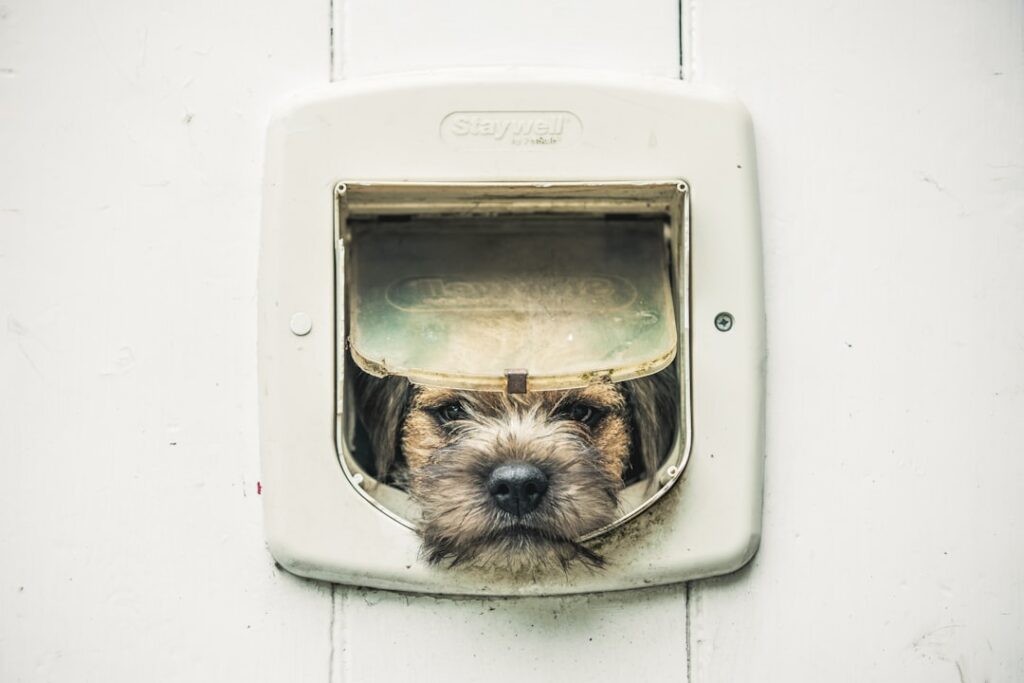
- Dual-flap designs that trap an insulating air pocket between two layers.
- Magnetic closures along the flap edges that pull it shut and seal against drafts.
- Weatherstripping around the frame for a tight fit.
- Rigid vinyl flaps in warm climates or soft flaps with strong magnets for cold ones.
Since the storm door adds a second thermal barrier in front of your main door, the combination can actually perform well when both openings use quality insulated flaps.
Security and Locking Flaps
A pet door is also a potential entry point, so plan for security. Most quality kits include a sliding lock-out panel, a rigid slide-in cover you drop into the frame at night or when you travel to seal the opening completely.
For higher security, electronic pet doors read a chip on your dog’s collar and only unlock for your pet, keeping out raccoons, stray animals, and prevents a small child from crawling through. These cost more but eliminate the biggest downside of a simple flap.
Installation Overview and Costs
A retrofit into a kick panel is a realistic weekend project for a handy homeowner. You trace the template, drill starter holes, cut with a jigsaw, and mount the frame with the included fasteners and gaskets.
- Storm door: $150 to $400 depending on quality.
- Retrofit pet door kit: $30 for basic small flaps up to $250 for electronic models.
- Professional installation: $100 to $300 if you hire out both the door and the cut.
- Total DIY: commonly $200 to $500 all in.
Choosing Between Manual and Electronic Flaps
The flap technology you choose shapes the daily experience more than almost any other decision. A simple manual flap is cheap, reliable, and has nothing to break, but it lets any animal push through and leaks more air. An electronic flap reads a sensor on your dog’s collar and unlocks only for your pet.
- Manual flap: lowest cost, works in a power outage, but offers no selectivity or security.
- Magnetic-collar electronic: a magnet on the collar triggers a latch, keeping out raccoons and neighborhood cats.
- Microchip or RFID electronic: reads your dog’s existing microchip or a collar tag, the most selective option.
If you live where raccoons, opossums, or stray cats roam, an electronic flap quickly justifies its higher cost by keeping wildlife out of your home. For a fenced yard with a single trustworthy dog, a quality insulated manual flap is often all you need.
Climate and Draft Management
A pet door is a permanent opening in your building envelope, so think about how it behaves in your local weather. In cold northern winters, a single thin flap will feel like a small open window; look for a dual-flap design with strong magnetic seals, and consider adding the rigid lock-out panel on the coldest nights when your dog is settled inside.
In hot, humid climates, the concern flips to keeping conditioned air in and insects out, so a tight-sealing flap and intact weatherstripping matter just as much. Positioning the pet door on a shaded or leeward side of the house, when you have a choice of doors, reduces the wind and sun load on the flap and helps it seal better year-round.
Helping Your Dog Learn the Door
Even a perfectly sized door means nothing if your dog is afraid of the flap. Introduce it gradually by taping the flap up so the opening is clear, then luring your dog through with treats. Over several sessions, lower the flap partway, then fully, rewarding each pass. Most dogs learn within a few days.
Chosen and sized correctly, a storm door with a doggie door gives your pet freedom, spares your main entry door, and keeps your home comfortable. Measure your dog carefully, favor a solid kick panel over glass, and pick an insulated, lockable flap, and both you and your dog will be happier for it.
Maintenance and Common Repairs
A pet door sees hundreds of cycles a month, so a few parts wear over time. The flap itself is the most common replacement; the plastic or vinyl can crack, tear, or lose its flexibility after a few years in the sun, and manufacturers sell matching replacement flaps for $10 to $40.
- Weak seal or draft: the flap magnets have weakened or the weatherstripping compressed; replace them to restore the tight closure.
- Sticking flap: clean the track and hinge of dirt and pet hair that builds up at the top.
- Electronic door not unlocking: replace the batteries in the flap and the collar sensor first before assuming a fault.
Wipe the flap and frame down every few weeks, since a buildup of grime and hair is the most common cause of a flap that no longer seals or swings freely.
Alternatives Worth Considering
A pet door in a storm door is not the only option, and it helps to know the alternatives before committing. A wall-mounted pet door installs through an exterior wall rather than a door, giving a permanent, well-insulated opening independent of your doors, though it is a bigger, more invasive project.
A sliding-glass-door pet panel is a popular renter-friendly choice, a full-height insert with a built-in flap that drops into the track of a patio door with no cutting at all. For homeowners who want the flexibility of a storm door plus seasonal screen swapping, though, the storm-door route remains the most versatile, letting you keep your main entry door intact while giving your dog reliable access to the yard.