A tiled shower is the centerpiece of any bathroom renovation. The right tile selection, pattern, and layout transform a basic shower into a spa-like retreat that elevates the entire room. Whether you prefer clean modern lines, rustic texture, or bold patterns, these tiled shower ideas cover every style and budget to help you design your perfect shower.
Part of our Bathroom Remodeling & Flooring guide — explore the full guide →
- Why Tile Is the Best Shower Material
- 1. Large Format Marble-Look Tile
- 2. Subway Tile with a Twist
- 3. Herringbone Pattern
- 4. Floor-to-Ceiling Natural Stone
- 5. Geometric Accent Wall
- 6. Vertical Stacked Tiles
- 7. Mosaic Shower Floor
- 8. Zellige Tile
- 9. Niche and Shelf Accents
- 10. Dark and Moody
- 11. Wood-Look Porcelain Plank Tile
- 12. Cement Tile Patterns
- 13. Penny Round Tile
- 14. Slab-Style Porcelain
- 15. Two-Tone Tile Combination
- Shower Tile Design Tips
- Final Thoughts
Why Tile Is the Best Shower Material
Tile remains the gold standard for shower surfaces because of its combination of water resistance, durability, and design versatility. Properly installed tile flooring and wall tile with quality grout and waterproofing creates a surface that lasts decades. Unlike acrylic or fiberglass shower inserts, tile allows complete customization — every surface, niche, bench, and accent can be tailored to your exact vision.
1. Large Format Marble-Look Tile
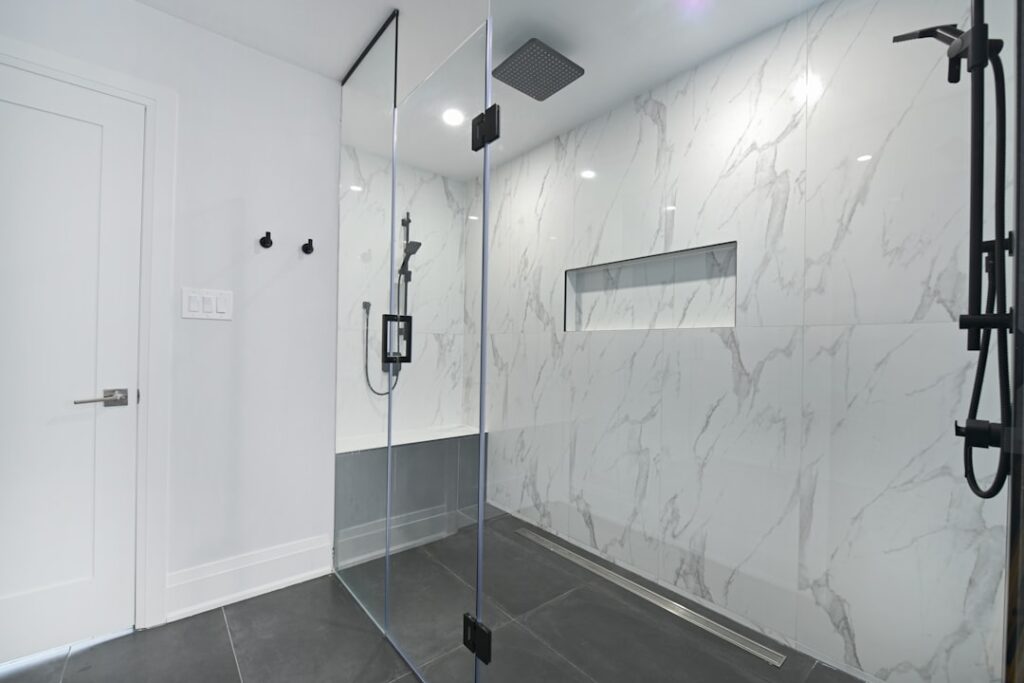
Oversized porcelain tiles (24 x 48 inches or larger) in Carrara or Calacatta marble patterns create a seamless, spa-like shower. Fewer grout lines mean a cleaner look and less maintenance. Use bookmatched or vein-matched tiles where the pattern flows continuously across adjacent tiles for maximum realism.
Best For
Modern, transitional, and luxury bathrooms. This look works in both walk-in showers and standard shower enclosures.
2. Subway Tile with a Twist
Classic 3 x 6 subway tile never goes out of style, but contemporary variations keep it fresh. Try stacked vertical orientation instead of the traditional horizontal brick pattern. Use elongated subway tiles (4 x 12 or 4 x 16) for a more modern proportion. Choose colored subway tile — sage green, navy blue, or blush pink — for personality.
Best For
Any bathroom style. Subway tile adapts to traditional, farmhouse, modern, and eclectic spaces depending on the color, grout, and layout you choose.
3. Herringbone Pattern
Herringbone arranges rectangular tiles at alternating 45-degree angles to create a dynamic zigzag pattern. It works on shower walls, floors, or as a featured accent wall behind the shower head. The pattern adds visual movement and energy to the shower.
Best For
Transitional and classic bathrooms where you want visual interest without bold color. Herringbone elevates simple tiles — even basic white subway tile becomes a design feature in herringbone.
4. Floor-to-Ceiling Natural Stone
Full-height natural stone tile — marble, travertine, or slate — creates an immersive, grotto-like shower experience. The natural variation in stone ensures no two showers look alike. Honed or tumbled finishes provide slip resistance on shower floors while maintaining the stone’s beauty.
Best For
Luxury master bathrooms with a spa or resort aesthetic. Natural stone showers require sealing and more maintenance but deliver unmatched beauty.
5. Geometric Accent Wall
Designate one shower wall as a feature wall with geometric tiles — hexagons, arabesques, fish scales, diamonds, or Moroccan-inspired shapes. Keep the remaining walls in a simple complementary tile to let the feature wall shine.
Best For
Eclectic, bohemian, and contemporary bathrooms. Geometric accents add personality without overwhelming the space.
6. Vertical Stacked Tiles
Stacking rectangular tiles vertically draws the eye upward and makes showers (and entire bathrooms) feel taller. This layout works with subway tiles, skinny tiles (2 x 8 or 3 x 12), and even large format tiles. The straight vertical grout lines create a modern, orderly appearance.
Best For
Modern and minimalist bathrooms, especially those with lower ceilings where the vertical emphasis creates a sense of height.
7. Mosaic Shower Floor
Small mosaic tiles on the shower floor provide excellent slip resistance (more grout lines equal more traction) while adding visual interest at your feet. Penny round, hexagon, and pebble mosaics are the most popular choices. Choose a mosaic that contrasts with or complements your wall tile.
Best For
Any shower style. The mosaic floor can be subtle (white hexagons with gray grout) or bold (black penny rounds with gold grout).
8. Zellige Tile
Zellige tiles are handmade Moroccan tiles with a distinctive glazed surface that varies in color, sheen, and texture from tile to tile. The imperfect, undulating surface catches light beautifully and creates a textured, artisanal look. They come in dozens of colors, from classic white to vivid blues and greens.
Best For
Bohemian, Mediterranean, and design-forward bathrooms. Zellige tiles are a statement material that adds handcrafted character.
9. Niche and Shelf Accents
Use contrasting or complementary tile inside shower niches, on shelving ledges, and on the shower bench to create purposeful accents. A marble mosaic inside a niche framed by porcelain wall tile, for example, creates a jewelry-box effect that draws the eye.
Best For
Any shower design. Niches are practical for storing shampoo and soap, and the accent tile turns function into a design feature.
10. Dark and Moody
Black tile, dark charcoal, deep navy, or forest green create a dramatic, enveloping shower experience. Large format tiles minimize grout lines for a seamless dark surface. Matte finishes prevent the space from feeling too stark. Add warmth with brass or gold fixtures and wood-tone accents.
Best For
Modern, industrial, and luxury bathrooms. Dark showers work best in larger bathrooms with good lighting — they can feel oppressive in very small spaces.
11. Wood-Look Porcelain Plank Tile
Wood-look porcelain planks on shower walls create a warm, organic spa feel. The porcelain is completely waterproof, so you get the beauty of wood without any moisture concerns. Pair wood-look planks on the main wall with a stone-look floor tile for a natural, cohesive design.
Best For
Spa-inspired, Scandinavian, and rustic-modern bathrooms. This look brings warmth to a space that is usually dominated by cool, hard surfaces.
12. Cement Tile Patterns
Bold, patterned cement tiles create show-stopping shower floors or accent walls. Geometric patterns in black and white, blue and white, or multicolor make the shower the undeniable focal point of the bathroom. Cement tiles need sealing but deliver a handcrafted, artistic look that mass-produced tile cannot match.
Best For
Eclectic, Mediterranean, and maximalist bathrooms. Best used on one surface (floor or accent wall) to avoid visual overload.
13. Penny Round Tile
Penny rounds — small circular tiles on mesh backing — create a playful, textured surface. Classic white penny rounds offer a timeless look. Mixed-color penny rounds (combining whites, grays, and blacks) add dimension. Metallic or glass penny rounds bring sparkle.
Best For
Retro, mid-century, and contemporary bathrooms. Penny rounds are especially effective as shower floor tile because their shape and grout lines provide excellent traction.
14. Slab-Style Porcelain
Ultra-large porcelain slabs (up to 5 x 10 feet) create virtually seamless shower walls. These massive panels can be cut and installed with minimal grout lines, mimicking the look of solid stone or concrete. They are available in marble, concrete, and metallic finishes.
Best For
Ultra-modern and luxury bathrooms. Slab installation requires experienced professionals and careful handling but delivers a clean, contemporary result that is unmatched.
15. Two-Tone Tile Combination
Use two complementary tiles to create visual interest and define zones within the shower. For example, a darker tile on the lower third of the wall with a lighter tile above creates a wainscot effect. Or use a different tile on the shower head wall than the side walls to create a focal point.
Best For
Traditional, transitional, and creative bathrooms. Two-tone combinations add sophistication and allow you to mix materials without overwhelming the space.
Shower Tile Design Tips
Start with the Floor
Choose your shower floor tile first and build the wall design from there. The floor sets the practical requirements (slip resistance, drainage slope compatibility) while the walls offer more creative freedom.
Consider Grout Color
Grout color dramatically affects the final look. Matching grout to tile creates a seamless appearance. Contrasting grout (white tile with dark grout, or dark tile with light grout) emphasizes the pattern and each individual tile.
Plan the Focal Point
Every shower design benefits from a clear focal point — usually the wall directly facing the bathroom or the wall behind the showerhead. Place your most interesting or expensive tile on this wall.
Sample in Your Bathroom
View tile samples in your actual bathroom under natural and artificial lighting. Tiles look very different on a showroom wall versus your bathroom, and the scale of samples versus an installed wall is hard to visualize without seeing them in context.
Budget the Waterproofing
The most important part of any tiled shower is the waterproofing behind the tile — not the tile itself. Budget for quality waterproofing membrane (like Schluter Kerdi or RedGard) and experienced installation. A beautiful tile job over poor waterproofing leads to mold, rot, and costly failure.
Final Thoughts
The best tiled shower ideas combine aesthetics, function, and proper waterproofing into a cohesive design that elevates your daily routine. Take time to explore patterns, materials, and combinations before committing. Visit showrooms, save inspiration images, and work with a skilled tile installer who can bring your vision to life. For more on tile options and installation, explore our tile flooring guide, or consider waterproof flooring options for the rest of your bathroom.
Prefer to explore on your own?
See how new flooring looks in your actual room in seconds — free, no signup.
Try the free Floor Studio →