If you are weighing a low-maintenance deck that looks like real wood without the annual sanding and staining, TimberTech composite decking is one of the two or three names you will keep running into, alongside Trex and Fiberon. Owned by parent company AZEK, TimberTech makes both capped composite and capped polymer (all-PVC) boards engineered to resist rot, fading, staining, and scratching. This guide breaks down the product lines, realistic costs, how the warranties compare, and the installation details that determine whether your deck looks flawless or shows telltale gaps and fasteners.
Part of our Decks & Outdoor guide — explore the full guide →
- Composite vs. Polymer: The Two TimberTech Families
- The Product Lines at a Glance
- What TimberTech Decking Costs
- The Warranty Advantage
- Installation Essentials
- Living With Composite Decking
- Common Mistakes to Avoid
- Color and Style Selection
- Comparing TimberTech to Wood and Other Composites
- Is TimberTech Worth It?
Composite vs. Polymer: The Two TimberTech Families
TimberTech splits its boards into two broad categories, and understanding the difference guides your budget and expectations.
Capped composite boards, sold under the TimberTech PRO and EDGE lines, have a wood-and-plastic core wrapped on the top and sides with a hard protective polymer shell, or “cap.” The cap is what fights fading and stains, while the composite core keeps costs moderate. These boards look and feel much like premium wood and suit most residential decks.
Capped polymer boards, sold under the TimberTech AZEK line, contain no wood at all; they are entirely PVC with a protective cap. This makes them the lightest, most fade- and moisture-resistant, and most premium option, with the longest warranties. If your deck sits in blazing sun, near a pool, or in a coastal, high-humidity climate, the all-polymer AZEK boards resist the elements best.
The Product Lines at a Glance
- TimberTech EDGE: The entry-level capped composite line, offering a solid value with good looks and a shorter but still strong warranty. Good for budget-conscious projects.
- TimberTech PRO: Mid-to-upper capped composite (Reserve and Premier collections) with richer, multi-tonal wood-grain looks and 360-degree capping on some boards for extra protection.
- TimberTech AZEK (Vintage, Landmark, Harvest collections): The top-tier all-polymer boards, lightest weight, best fade and stain resistance, and the longest warranty, at the highest price.
What TimberTech Decking Costs
Composite decking is a premium product, and TimberTech sits at the higher end of quality and price. Expect rough material costs of:
- EDGE composite: roughly $4 to $7 per linear foot of board.
- PRO composite: roughly $6 to $10 per linear foot.
- AZEK polymer: roughly $9 to $15 per linear foot.
For a typical 300-square-foot deck, materials for the decking boards alone often land between $2,500 and $6,000, and that is before the substructure, railing, fasteners, and labor. Fully installed by a contractor, a mid-size TimberTech deck commonly runs $30 to $60 per square foot all-in, so a 300-square-foot deck often totals $9,000 to $18,000 depending on line, railing, and site complexity. It costs more upfront than pressure-treated wood, but eliminates the yearly staining and the board replacement that wood eventually demands.
The Warranty Advantage
One of TimberTech’s strongest selling points is its warranty coverage. The composite and polymer lines carry limited lifetime structural warranties against rot and material defects, plus fade-and-stain warranties that range from 25 years on the composite lines to 30 or even 50 years on the premium polymer AZEK boards. Fade-and-stain coverage matters because sun bleaching and stubborn stains are the flaws most likely to show on any deck over time; a long fade warranty signals the manufacturer’s confidence in the cap. Always register your warranty after installation and keep the receipts, since coverage is not automatic without documentation.
Installation Essentials
Composite boards install much like wood but with a few critical differences that make or break the finished look.
- Solid substructure: The frame still uses pressure-treated lumber or steel. Joist spacing is typically 16 inches on center for standard installs, and closer (12 inches) for diagonal board patterns. Too-wide spacing lets composite boards feel bouncy or sag.
- Gapping: Composite expands and contracts with temperature. Leave the manufacturer-specified end and side gaps, usually around an eighth to a quarter inch, so boards do not buckle in heat or leave wide gaps in cold.
- Hidden fasteners: Many TimberTech boards have a grooved edge that accepts hidden fastener clips, so no screw heads show on the surface. This is the key to that clean, screw-free look, and clips also set the side gap automatically.
- Ventilation and drainage: Keep airflow under the deck and follow spacing rules so water drains and the boards stay cooler.
A confident DIYer can install TimberTech decking over an existing sound frame, but the substructure work and railing are where most homeowners hire out. Following the fastener and gapping specs exactly is essential, since deviating from them can void the warranty.
Living With Composite Decking
The whole point of composite is minimal upkeep, and TimberTech delivers. There is no staining, sealing, or sanding, ever. Maintenance is simply periodic cleaning: sweep off debris, and wash the boards with soap and water or a composite-safe cleaner a couple of times a year. Remove leaves and standing organic debris promptly, since a wet pile of leaves can leave surface mildew on any decking. For tough spots, a gentle scrub handles most messes; avoid harsh solvents that can dull the cap.
Composite does get warmer underfoot than wood in direct sun, especially darker colors, so if barefoot comfort in full sun matters, lean toward lighter tones. The capped surface resists scratches from furniture and pet claws far better than uncapped older composites did, but sliding heavy metal furniture can still mark it, so use furniture pads.
Common Mistakes to Avoid
The most damaging installation error is ignoring the expansion-gap and joist-spacing specs, which leads to buckling, sagging, or unsightly gaps that no amount of later adjustment fixes cleanly. Another is skimping on the substructure to save money after buying premium boards; a beautiful deck surface over an undersized or under-ventilated frame will still fail. Homeowners also sometimes choose a very dark board for a deck in full southern sun and are surprised by how hot it gets, so weigh color against your climate and exposure.
Finally, forgetting to register the warranty is a costly oversight, since the long fade-and-stain coverage that justifies the premium price is only enforceable with proof of purchase and registration.
Color and Style Selection
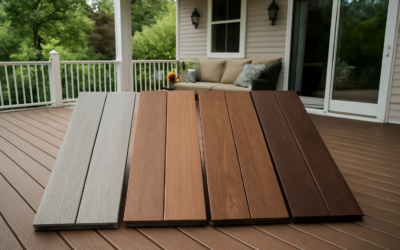
TimberTech offers an unusually wide palette, from cool weathered grays and driftwood tones to warm browns and deep espresso, many with multi-tonal streaking and realistic wire-brushed grain that reads convincingly as hardwood. When choosing, look at large samples in your own outdoor light rather than a small chip in the store, since color reads very differently in full sun. Consider the color of your home’s siding and trim, and remember that lighter boards stay cooler underfoot and hide pollen and dust better, while darker boards look dramatic but run hotter in direct sun.
Beyond the boards themselves, TimberTech sells coordinating railing, fascia, and riser components so the whole deck reads as a designed system. Mixing a picture-frame border in a contrasting color around a field of a primary tone is a popular way to add a custom, high-end look, and pairing a composite deck with a matching or complementary railing pulls the design together. Planning the color scheme up front, boards, border, and railing, produces a far more polished result than choosing pieces one at a time.
Comparing TimberTech to Wood and Other Composites
Against pressure-treated wood, TimberTech costs more upfront but eliminates the recurring expense and labor of annual staining, sealing, and periodic board replacement, and it will not splinter, cup, or rot. Over a 25-year horizon, the higher initial price often evens out once you account for the maintenance and replacement wood demands. Against other composites like Trex and Fiberon, TimberTech competes closely on quality, and its all-polymer AZEK line is frequently cited as a leader for fade and moisture resistance in harsh environments.
The honest trade-offs versus wood are heat retention in dark colors under full sun and a look that, while excellent, some purists still distinguish from real hardwood up close. For the large majority of homeowners who value weekends free of deck maintenance and decades of consistent appearance, those trade-offs are easy to accept. Matching the product line to your climate and budget, EDGE or PRO for most decks, AZEK for punishing sun or coastal exposure, gets you the best value.
Is TimberTech Worth It?
TimberTech composite decking earns its premium for homeowners who want a beautiful, wood-look deck and refuse to spend weekends sanding and staining. The capped composite PRO and EDGE lines offer excellent value for most decks, while the all-polymer AZEK boards are the top pick for harsh sun, poolside, or coastal settings. Pair the boards with a properly sized, well-ventilated substructure, follow the gapping and fastener rules to the letter, register the warranty, and you get a low-maintenance deck backed by decades of fade protection that keeps looking new while wood decks around it are peeling.