Roughly one in three modified bitumen roofs installed on low-slope homes in the U.S. goes down with an open flame. Torch down roofing is not a material in itself — it is the application method where a roofer uses a propane torch to melt the underside of a modified bitumen sheet so it fuses to the layer below. Done right, the result is a monolithic, waterproof membrane that shrugs off ponding water for 20 years. Done wrong, it burns houses down: torch-applied roofing is consistently among the leading causes of construction fires. This guide covers the equipment, the layer sequence, the safety protocol, and when you should choose a flameless alternative instead.
- What Torch Down Actually Means
- The Equipment on a Torch Crew's Truck
- Base Sheet and Cap Sheet: The Layer Sequence
- Open-Flame Safety: Where Torch Jobs Go Wrong
- Torch Down vs. Self-Adhered vs. Cold-Process
- What Torch Down Roofing Costs
- Lifespan and Maintenance
- Hiring Checklist for a Torch Down Job
- Bottom Line
What Torch Down Actually Means
Modified bitumen sheets come in three attachment flavors: torch-applied (heat-weld), self-adhered (peel-and-stick), and cold-process (troweled or squeegeed adhesive). Torch down uses APP-modified bitumen almost exclusively. APP (atactic polypropylene) gives the asphalt a plastic-like character that melts smoothly at around 300°F and re-hardens into a stiff, UV-stable surface. SBS-modified sheets — the rubberized cousin — can be torched, but they are more often mopped in hot asphalt or self-adhered because SBS scorches more easily under direct flame.
When the installer plays the torch across the back of the roll, the polyethylene burn-off film melts away and the compound turns glossy. Rolling the sheet forward into that molten bead creates a welded bond with no separate adhesive layer. That is the whole appeal: the seams are not glued, they are fused, and a fused seam is the strongest seam in low-slope roofing short of a hot-air-welded TPO lap.
The Equipment on a Torch Crew’s Truck
- Roofing torch kit: A Red Dragon or Sievert-style torch with a 20-24 inch neck, squeeze valve, and 350,000-500,000 BTU burner head. Kits run $150-$350.
- Propane: 20 lb or 100 lb cylinders with a high-pressure regulator (0-60 PSI adjustable) and a 25 ft hose rated for LP gas. A crew burns through a 20 lb tank in roughly 2-4 squares of cap sheet.
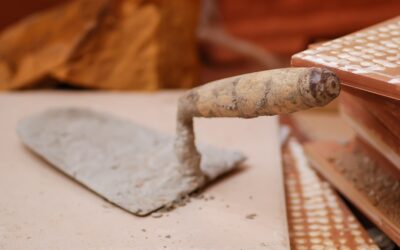
- Seam roller and trowel: A 75-100 lb steel lap roller presses seams while the compound is still molten; a rounded trowel tools the bleed-out at laps.
- Fire watch gear: ABC extinguishers (minimum two on the roof), a water can, and an infrared thermometer to scan decking after shutdown.
- Utility knife with hook blades: Modified bitumen dulls straight blades in minutes.
Base Sheet and Cap Sheet: The Layer Sequence
A torch down roof is a two-ply or three-ply system, never a single sheet nailed to the deck. The sequence matters because you should never torch directly against bare wood.
- Deck prep: The plywood or plank deck gets swept, loose boards refastened, and rotted sections replaced. Gaps over 1/4 inch are covered so flame cannot reach the attic.
- Base sheet: A fiberglass base (Type G2, such as GAF GAFGLAS #75) is mechanically fastened with cap nails on a 9 inch grid in the field. This nailed ply is the fire break — the torch flame works against it, not the wood.
- Interply (three-ply systems): A smooth-surfaced torch ply, roughly 130 mils, welded to the base with 3 inch side laps and 6 inch end laps.
- Cap sheet: A granule-surfaced APP cap sheet (Polyglass Polyflex, GAF Ruberoid Torch Granule, Firestone APP 180) is torched over the field. Laps are staggered so no seam stacks on the seam below. Proper welding shows a consistent 1/8 to 3/8 inch bead of compound bleeding out at every lap — no bleed-out means a cold, leak-prone seam.
- Flashings: Walls, curbs, and pipes get torch-applied flashing plies extending 8 inches up vertical surfaces, with metal counterflashing above.
Open-Flame Safety: Where Torch Jobs Go Wrong
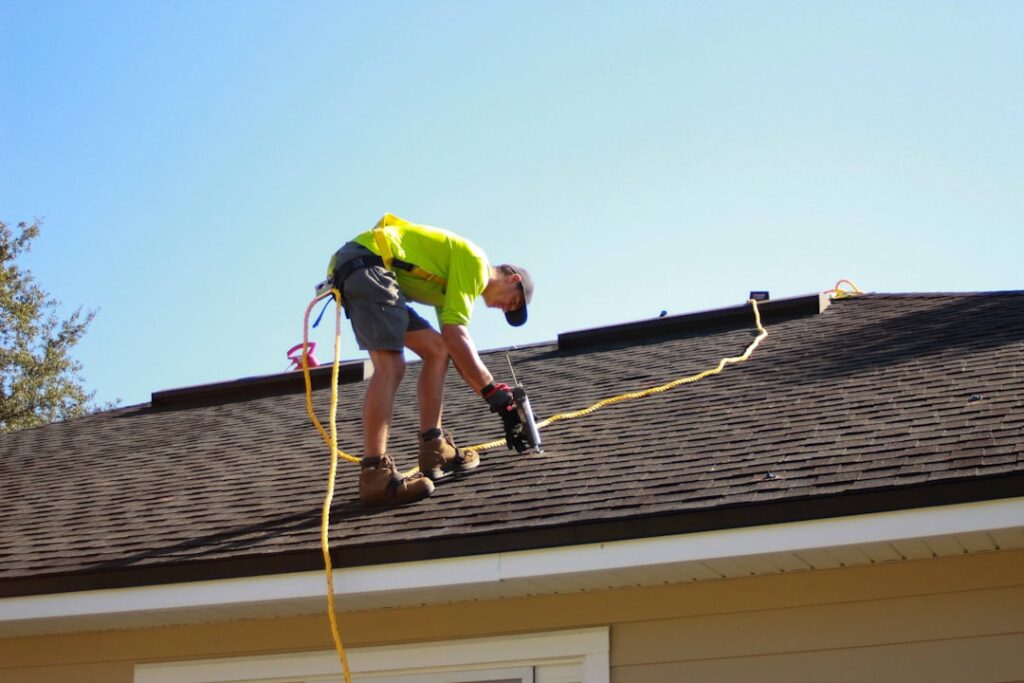
Insurers and the NRCA track torch fires closely, and the pattern is consistent: fires rarely start where the roofer is looking. Flame licks into a hidden cavity — a wall junction, an overhang soffit, a gap around a pipe — and smolders in dust or insulation for hours before flaming up after the crew leaves. That is why the industry standard is CERTA certification (a Midwest Roofing Contractors Association program) and a mandatory two-hour fire watch after the last torch is shut off, with an infrared scan of decking and cavities. Other non-negotiables: never torch directly to wood or over combustible cavities (use the torch-and-flop technique — heat the sheet away from the wall, then press it into place), keep tanks upright and 10 feet from the working flame, and stop torching in winds above roughly 20 mph. If your bids include a contractor who shrugs at the fire-watch question, keep shopping.
Torch Down vs. Self-Adhered vs. Cold-Process
Flame is a liability, so when does torching still earn its place? A quick comparison:
- Torch-applied: Strongest seams, workable down to about 40°F, tolerant of slightly dusty decks. Downsides: fire risk, insurance surcharges, and some municipalities restrict open flame on occupied buildings.
- Self-adhered (SA): No flame, fast, ideal over homes and near flammable walls. But SA adhesives want 50°F and rising, a primed and spotless substrate, and their seams — while good — depend on pressure and temperature rather than fusion. Expect a modest lifespan discount in hot climates.
- Cold-process adhesive: No flame and works on large commercial fields, but it is slow to cure (days of odor), weather-sensitive during application, and messy.
Practical rule: torch down wins on detached garages, commercial buildings with non-combustible decks, and cold-weather installs. Self-adhered wins on occupied houses, additions tied into living space, and anywhere the deck is wood with open cavities.
What Torch Down Roofing Costs
Installed prices in 2026 typically run $4 to $8 per square foot for a two-ply torch system, so a 1,000 sq ft flat garage roof lands between $4,000 and $8,000. A three-ply build adds $1.00-$1.50 per square foot. Tear-off of an old built-up roof adds $1-$2 per square foot depending on the number of plies and dumpster costs. Materials alone are cheap — a 1-square roll of APP cap sheet costs $70-$110 — which is why labor and insurance drive the quote. Contractors carrying torch endorsements on their liability policies pay meaningfully higher premiums, and that shows up in your bid. If a torch quote comes in suspiciously low, ask directly whether the crew is CERTA-trained and whether their insurance covers open-flame work; uninsured torching puts the fire risk on your homeowner’s policy.
Lifespan and Maintenance
A properly welded two-ply torch down roof lasts 15 to 20 years; a three-ply system with a granulated cap can push 25. The failure points are predictable. Seams that were under-torched open first, usually within five years — look for laps you can slip a putty knife into. Granule loss accelerates after year 10, exposing the compound to UV; an aluminized or acrylic reflective coating at the 10-12 year mark ($1-$1.50 per sq ft) buys another five years and knocks summer surface temperatures down 40-60°F. Ponding areas should be checked annually, since standing water finds any pinhole. Repairs are the method’s strong suit: a torch patch welded over a split becomes part of the membrane, unlike glued patches on single-ply roofs that peel at the edges.
Hiring Checklist for a Torch Down Job
Vetting a torch contractor takes five questions: Are your torch operators CERTA-certified, and can you show the cards? Does your liability policy specifically cover hot works or open-flame application (many general roofing policies exclude it)? Who performs the fire watch, for how long, and with what — a two-hour watch with an infrared thermometer is the correct answer. What system are you quoting — two-ply or three-ply, and which manufacturer’s base and cap sheets? And will you pull a permit where hot-works permits are required? Get the layer schedule in writing, including base-sheet fastening pattern and lap dimensions, so the finished roof can be checked against the promise. A conscientious torch crew will answer all five without flinching; hesitation on any of them is your cue to take the self-adhered bid instead.
Bottom Line
Torch down remains the strongest way to install APP modified bitumen, with fused seams and cold-weather workability that peel-and-stick cannot match. But the flame demands a certified crew, a fire watch, and the right building — non-combustible or well-protected decks, ideally detached structures. Over an occupied home, self-adhered modified bitumen gives up a little seam strength in exchange for eliminating the single biggest risk on the job. Choose the method to fit the building, and insist on the safety protocol either way.