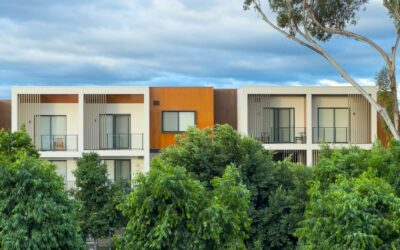

Most homeowners assume a townhouse roof is cheaper to replace than a detached home simply because it looks smaller from the curb. That is often true, but the townhouse roof replacement cost carries a few wrinkles that a single-family estimate never does. Shared walls, party-line ownership, and HOA rules can swing the final bill by thousands. A typical townhouse roof replacement cost lands between $4,500 and $12,000 for a standard asphalt-shingle job, though narrow three-story units and premium materials push well past that.
Part of our Roofing guide — explore the full guide →
- What Drives Townhouse Roof Replacement Cost
- Material Choices and Their Price Ranges
- The Shared-Wall Factor Nobody Warns You About
- Line Items in a Full Replacement Quote
- Regional and Seasonal Price Swings
- How to Budget and Protect Yourself
- When Repair Beats Replacement
- Insurance, Financing, and Paying for the Job
- Choosing a Contractor for Attached Housing
What Drives Townhouse Roof Replacement Cost
Roofing is priced by the “square,” a unit equal to 100 square feet of roof surface. A modest townhouse roof runs 8 to 15 squares, compared with 22 to 30 squares on an average detached home. That smaller footprint is the main reason your quote is lower, but per-square pricing on a townhouse can actually be higher because crews spend more time on setup relative to the small work area.
Expect installed pricing of roughly $350 to $700 per square for architectural asphalt shingles. Steep pitches above 7/12 add 10 to 20 percent for safety staging. Three-story units, common in urban rows, add access charges because ladders and dumpsters are harder to position. Tear-off of an existing layer costs $1 to $2 per square foot on its own, and a second layer that must come off adds another $1,000 to $2,500.
Material Choices and Their Price Ranges
Your material selection is the single biggest lever you control. Here is how the common options compare on an installed basis for a typical townhouse:
- 3-tab asphalt shingles: $4,000 to $6,500. Budget grade, roughly 20-year life.
- Architectural (dimensional) shingles: $5,500 to $9,000. The default choice, 25 to 30-year life, better wind rating.
- Standing-seam metal: $10,000 to $18,000. Fifty-year lifespan, excellent for low-slope sections.
- Synthetic slate or composite: $12,000 to $22,000. Premium look, common in historic HOA districts.
- Flat-roof membrane (TPO or EPDM): $6 to $12 per square foot for rear or rooftop-deck sections.
Many townhouses built after 1990 mix a sloped front face with a flat or low-slope rear, so your quote may combine two systems. Do not let a contractor shingle a slope under 2/12; water will find the seams. That section needs a membrane instead.
The Shared-Wall Factor Nobody Warns You About
The defining complication of a townhouse is the party wall you share with neighbors. Where your roof meets theirs, flashing and a firewall parapet often sit on the property line. Replacing your section alone means the crew must tie new flashing into old neighboring shingles, which can void warranties if done poorly. Coordinate with adjoining owners when possible; a shared crew replacing three or four units in one mobilization often cuts each owner’s price by 15 to 25 percent through shared dumpster, permit, and setup fees.
Read your HOA or condo declaration before signing anything. In many attached-housing communities the roof is a “common element,” meaning the association owns it and a special assessment, not your personal check, pays for replacement. In others the roof deck is yours but the association dictates approved colors and materials. Getting this wrong can mean paying for work you did not owe or installing a shingle the board later forces you to redo.
Line Items in a Full Replacement Quote
A complete, honest estimate should itemize far more than shingles. When you read a proposal, look for each of these:
- Tear-off and disposal: $1,000 to $3,000 depending on layers and dump fees.
- Underlayment: synthetic felt at $0.15 to $0.30 per square foot, plus ice-and-water shield in valleys and eaves ($1 to $2 per linear foot) required by most northern codes.
- Decking repair: $70 to $100 per sheet of 4×8 plywood if rot is found after tear-off.
- Flashing: new step and counter-flashing at walls and chimneys, $300 to $800.
- Ventilation: ridge vent or box vents, $300 to $600, critical on attached units with limited soffit.
- Permit: $150 to $500 depending on jurisdiction.
Be suspicious of a bid that folds everything into one lump sum with no breakdown. That is how surprise “rotten decking” charges balloon a $6,000 job to $9,000 after the crew is already on the roof.
Regional and Seasonal Price Swings
Location changes your bottom line more than most homeowners expect. Labor in the Northeast and West Coast metros runs 30 to 50 percent higher than in the Southeast or Midwest. A 12-square architectural job that costs $6,500 in Atlanta can hit $10,000 in Boston or San Francisco, driven almost entirely by labor rates and permit complexity.
Timing matters too. Late fall and winter are the slow season in cold climates, and many contractors discount 5 to 10 percent to keep crews busy. Avoid emergency replacement after a storm, when demand spikes and prices climb. If your roof is nearing the end of its life, plan the work in the off-season rather than waiting for the first leak in a February thaw.
How to Budget and Protect Yourself
Set aside a contingency of 10 to 15 percent above the quoted price for hidden decking damage, which is the most common overrun. Collect at least three written estimates and confirm each contractor carries current liability insurance and workers’ compensation; on attached housing, a fall onto a neighbor’s property is a real liability risk.
Ask for the manufacturer’s warranty in writing and confirm the installer is certified by that brand, since GAF, Owens Corning, and CertainTeed offer enhanced 50-year coverage only through credentialed crews. Never pay more than a third up front, hold final payment until you have walked the finished roof, and get a signed lien waiver so a subcontractor cannot come after your home for the general contractor’s unpaid bill. With three solid bids and a clear scope, a well-planned townhouse roof job runs smoothly and lands within a predictable range.
When Repair Beats Replacement
If your roof is under 15 years old and the damage is confined to a single slope or a few dozen shingles, a targeted repair at $400 to $1,200 makes far more sense than a full tear-off. Replacement earns its keep once you see widespread granule loss in the gutters, curling or cupping across multiple slopes, or a third storm patch in as many years. Have a licensed roofer document the roof’s age and condition with photos so you can time the investment rather than react to it, and so a future buyer sees a paper trail on the newest and most expensive component of the home.
Insurance, Financing, and Paying for the Job
Before you write a check, find out whether someone else should. If a storm damaged your roof, your homeowners insurance may cover replacement minus your deductible, though carriers increasingly pay only the depreciated value on older roofs. Document damage with photos and file promptly; a reputable roofer will meet the adjuster on site. Be wary of “storm chasers” who knock on doors after hail and promise to waive your deductible, which is insurance fraud that can leave you holding the bill.
If the cost falls to you, spread it wisely. Many roofing contractors offer financing, and a home equity line of credit typically carries a lower rate than a contractor’s payment plan or a credit card. Some jurisdictions and utilities offer rebates for reflective “cool roof” shingles or metal, which can trim a few hundred dollars in hot climates. Get the financing terms in writing and compare the total cost, not just the monthly payment, since a low payment stretched over ten years can double the true price of the roof.
Choosing a Contractor for Attached Housing
Not every roofer is comfortable working on a townhouse, and the differences matter. Look specifically for a contractor experienced with attached and multi-unit housing, because tying new flashing into a shared party wall and coordinating with adjoining owners takes skills a single-family specialist may not have. Ask to see photos of recent townhouse or row-home jobs, not just detached homes.
Verify three things on every bid before signing: a current state contractor license, proof of general liability insurance of at least one million dollars, and active workers’ compensation coverage. On attached housing a worker who falls onto a neighbor’s patio, or a fire that spreads along a shared roof, creates liability you do not want landing on your policy. Confirm the crew will protect neighboring units and landscaping, provide a dumpster and daily cleanup, and run a magnetic sweep for nails afterward. Get the full scope, materials, warranty, timeline, and payment schedule in one written contract, and never rely on a verbal promise for anything that matters.