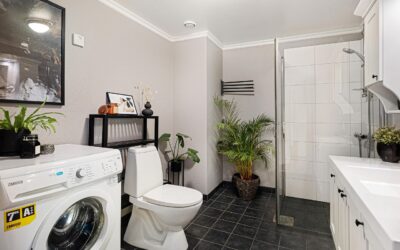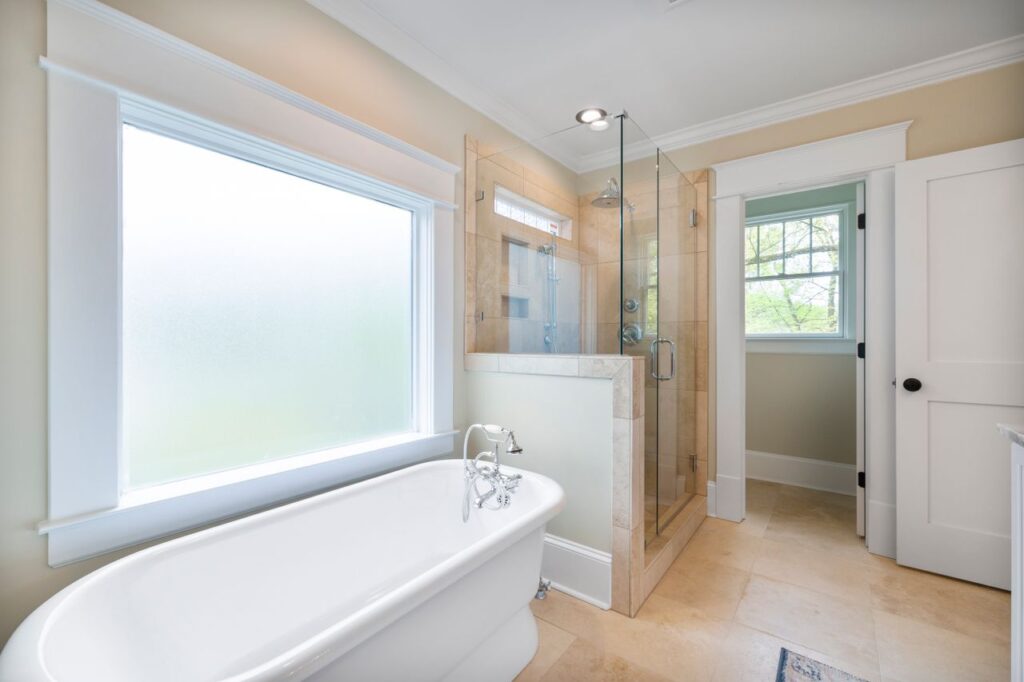
Putting the bathtub and the shower side by side delivers the spa experience most homeowners actually want without the square footage cost of a wraparound wet room. Smart tub next to shower ideas share plumbing chases, simplify waterproofing, and create a focal-point wall that anchors the entire bathroom. The layout works in a primary suite as small as 8 by 10 feet and scales up to magazine-grade installations. This guide covers the freestanding tub pairings that look best, the glass wall details that matter, and the budget reality across three quality tiers.
Part of our Bathroom Remodeling & Flooring guide — explore the full guide →
Why the Side-by-Side Layout Wins
Putting both wet fixtures on the same wall — or on adjacent walls — keeps all the plumbing in one chase. Hot water lines stay shorter, the drain stack handles both fixtures, and a single waterproof membrane (Schluter Kerdi or USG Durock) covers the entire wet zone. Construction costs drop 15 to 25 percent compared to splitting the fixtures to opposite walls.
The visual benefit is just as strong. A glass shower next to a sculptural freestanding tub reads like a hotel bathroom and photographs beautifully for resale listings.
Freestanding Tub Pairings That Work
Freestanding tubs are the visual anchor of the side-by-side layout. Match the tub shape to the shower style for a cohesive look.
- Modern rectangular tub plus frameless glass shower: Kohler Veil 60-inch acrylic ($1,200) with a 36 by 60 inch shower behind Starphire low-iron glass. Architectural and crisp.
- Slipper-style tub plus subway-tiled shower: Signature Hardware Drayton cast iron ($2,400) with classic 3 by 6 white subway tile. Traditional, suits Craftsman and Colonial homes.
- Japanese soaking tub plus body-jet shower: Kohler Underscore deep soak with a 42 by 60 shower with Hansgrohe Raindance head ($890). Spa-focused.
- Copper or stone resin tub plus dark-tile shower: Native Trails copper at $4,200 with honed slate shower walls. High-end and dramatic.
Glass Wall Details That Matter
The glass between the tub area and the shower carries the design. Skip 1/4-inch glass — it looks flimsy and rattles in the channel. Specify 3/8-inch tempered glass minimum, with 1/2-inch on shower doors over 36 inches wide.
Hardware finishes should coordinate with the faucet, not the door pulls. Matte black hardware from CRL or Coastal Shower Doors works in modern and farmhouse designs. Polished nickel and unlacquered brass suit traditional homes. Brushed gold has had a moment for five years and is starting to show its age in trend cycles — choose carefully if you plan to sell within ten years.
Cost for a fixed glass panel plus pivoting shower door from a local glazier: $1,800 to $4,500 depending on glass thickness, low-iron clarity, and hardware finish.
Plumbing Layout Considerations
Position the tub filler before you frame the wall. The most common installations are deck-mounted on the tub deck itself (only on platform tubs), floor-mounted free-standing fillers behind the tub (most popular), or wall-mounted from the adjacent wall.
Floor-mounted fillers like the Kohler Purist ($1,400 to $2,600) require a 1/2-inch supply line stubbed up through the slab exactly where the filler stands. Mis-locate the rough-in by 2 inches and the filler does not align with the tub center. Cap and re-pour costs run $1,200 to $2,800 in slab-on-grade construction.
Shower Design in the Pairing
The shower next to a freestanding tub needs to hold its own visually. A pure rectangle in subway tile looks generic when paired with a sculptural tub. Better options include the following.
- Curbless entry with linear drain (QuickDrain or Infinity) — looks modern, suits aging-in-place
- Niche or shelf carved into wet wall — Schluter pre-fab box at $85, or custom-built at $300 to $600
- Built-in bench at 18 inches off finished floor, 15 to 20 inches deep
- Single thermostatic mixing valve from Hansgrohe ($420) or Grohe ($380) for precise temp control
- Wall-mount handheld plus overhead rainhead combination on a diverter
Waterproofing the Combined Wet Zone
This is the part that fails first and costs most to repair. Specify a continuous waterproof membrane covering the shower walls, the floor below the tub, and at least 36 inches of floor extending out from both. Schluter Kerdi ($2.10 per sq ft for the orange fabric) is the industry favorite; Wedi panels ($65 per 36 by 60 sheet) replace cement board entirely with built-in waterproofing.
Floor drains in the tub zone (catching overflow) are not required but smart in homes with young kids. A 4-inch round Schluter Kerdi-Drain at $125 prevents a tub overflow from reaching the joists.
Realistic Budget Tiers
What you spend depends on tub choice, glass quality, and tile complexity.
- Builder grade: $9,500 to $14,000 — acrylic freestanding tub, semi-frameless 1/4-inch glass shower, 12 by 24 porcelain tile
- Mid-market: $18,000 to $28,000 — cast iron or quality acrylic tub, frameless 3/8-inch glass, full-height tile, branded fixtures
- High-end: $35,000 to $75,000+ — copper or stone-resin tub, low-iron Starphire glass, natural stone tile, custom millwork, smart shower controls
Lighting and Ventilation
The wet zone needs damp-rated downlights over both the tub and shower (Halo HLD405 at $52 each). Add a steam-rated fixture if you spec a steam unit. A pendant over a freestanding tub adds drama but watch the IRC R314.4 clearance — fixture bottom must be at least 8 feet above the highest tub rim or 3 feet horizontally from the tub.
Ventilation matters more in a combined wet zone. Step up from the standard 80 CFM fan to a 150 CFM Panasonic WhisperCeiling ($295) and ducted to the roof. Standing water on freestanding tub aprons does not evaporate well without strong air movement.
Floor Material Selection
The floor under a tub and shower combo sees more water than any other surface in the house. Specify a porcelain tile rated for wet areas with a wet DCOF of at least 0.42 per ANSI A326.3. Larger format tiles (24 by 24 or 24 by 48) create fewer grout lines and look more luxurious but require a perfectly flat substrate — variation greater than 1/8 inch in 10 feet causes lippage between tiles.
For curbless showers shared with the tub zone, slope the floor 1/4 inch per foot toward a linear drain. Pre-sloped foam shower pans from Schluter (Kerdi-Shower-ST at $185) take the guesswork out of slope and bond directly to the waterproofing membrane. Add a heated floor system underneath (Schluter Ditra-Heat or WarmlyYours TempZone) for $9 to $14 per square foot — one of the highest-value upgrades in a primary bathroom.