The term “vinyl carpet” covers two distinct product categories that combine elements of vinyl flooring and carpet. The first is vinyl-backed carpet tile, where a vinyl base replaces traditional carpet backing for better moisture resistance. The second is carpet-look vinyl, a textured vinyl product that mimics the soft appearance of carpet while delivering vinyl’s waterproof performance.
Both products serve specific needs that neither standard carpet nor standard vinyl can address alone. This guide covers both types, their best uses, and how to choose between them.
What Is Vinyl-Backed Carpet?
Vinyl-backed carpet uses a PVC vinyl layer as the primary backing material instead of traditional polypropylene, jute, or latex backing found in conventional carpet. The vinyl backing provides:
- Superior moisture resistance compared to standard carpet backing
- Dimensional stability that prevents stretching, buckling, and wrinkling
- A waterproof barrier that protects the subfloor from spills that soak through the carpet face
- Easy release from adhesive, making replacement simpler
Vinyl-backed carpet is most commonly sold as modular carpet tiles (typically 18×18 or 24×24 inch squares) rather than broadloom rolls. This modular format allows damaged tiles to be replaced individually without disturbing the surrounding floor.
Types of Vinyl Carpet Products
Vinyl-Backed Carpet Tiles (Modular Carpet)
These are the workhorses of commercial flooring. Carpet tiles with vinyl backing are used in offices, retail spaces, hotels, airports, and healthcare facilities worldwide. The vinyl backing may include additional cushioning layers for comfort and sound absorption.
Leading commercial carpet tile manufacturers include Interface, Shaw Contract, Mohawk Group, and Milliken. Their products feature sophisticated designs, including planks, abstract patterns, and collections designed to mix and match.
Residential carpet tiles with vinyl backing have become more popular as homeowners discover their practical advantages. Products from FLOR, Shaw Floors, and various home improvement brands offer residential-friendly styles.
Carpet-Look Vinyl Flooring
This is a luxury vinyl product with a textured surface designed to look and feel somewhat like carpet. The surface has a soft, fabric-like texture rather than vinyl’s typical smooth finish. It’s not actually carpet but offers a visual warmth closer to carpet while maintaining vinyl’s waterproof properties.
Carpet-look vinyl is available in tile and plank formats and installs like standard vinyl flooring. It’s a niche product but fills a role in spaces where carpet’s warmth is desired but its moisture vulnerability is a concern.
Vinyl Composite Carpet Tile (VCT Carpet)
Some products feature a thin carpet surface bonded to a rigid vinyl composite base. These combine the visual softness of carpet with the structural rigidity of vinyl composition tile. They’re used primarily in commercial settings like offices and retail.
Benefits of Vinyl-Backed Carpet
Moisture Management
The vinyl backing creates a waterproof layer between the carpet face and the subfloor. Spills that penetrate the carpet fibers are stopped by the vinyl, preventing subfloor damage and mold growth. This makes vinyl-backed carpet suitable for basements, break rooms, and other moisture-prone commercial areas.
Easy Maintenance and Replacement
Individual carpet tiles can be lifted, cleaned, or replaced without affecting surrounding tiles. Stained, worn, or damaged tiles are simply swapped out. This modular approach dramatically reduces long-term maintenance costs and extends the floor’s useful life.
Design Flexibility
Carpet tiles come in hundreds of colors, patterns, and textures. Different tiles can be mixed to create custom patterns, borders, and zoned designs. Planks and squares can be combined for visual variety. This level of design customization isn’t possible with broadloom carpet.
Easy Installation
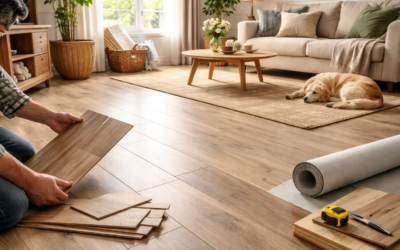
Carpet tiles install quickly over most hard subfloors using peel-and-stick adhesive, full-spread adhesive, or pressure-sensitive tabs. No stretching, no tack strips, no seaming iron. A room can be tiled in hours rather than the full day required for broadloom installation.
Sound Absorption
Carpet tiles absorb sound far better than hard-surface flooring. In open-plan offices and multi-story buildings, this acoustic benefit is a major factor in flooring selection.
Best Uses for Vinyl Carpet
Home Offices
Vinyl-backed carpet tiles provide comfort, sound absorption, and a professional appearance in home offices. Rolling office chair casters work well on firm-backed carpet tiles. If a tile gets stained or worn under the chair, just swap it out.
Basements
The vinyl moisture barrier makes carpet tiles a better choice than traditional broadloom carpet for basements, where humidity and occasional moisture are concerns. If a water event occurs, tiles can be lifted, dried, and replaced as needed. For truly wet basements, waterproof vinyl plank is still the safer option.
Children’s Rooms and Playrooms
Soft underfoot, easy to clean, and replaceable when damaged. Carpet tiles in bright colors and patterns can create fun, engaging spaces for children. If a section gets ruined with paint or permanent marker, replace those tiles and move on.
Commercial Offices
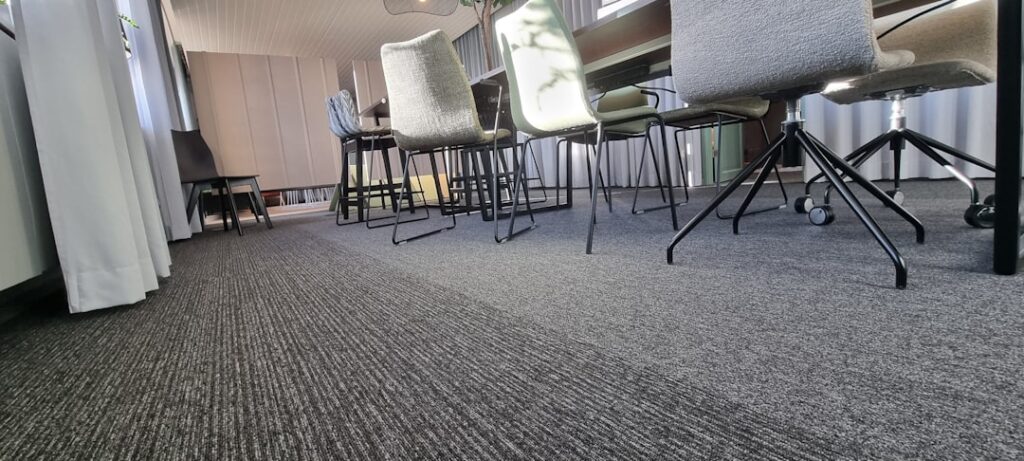
Vinyl-backed carpet tiles are the dominant flooring choice in commercial offices worldwide. They handle heavy foot traffic, office chair casters, and the electrical cabling that often runs beneath raised-floor systems.
Retail Spaces
Carpet tiles in retail provide warmth and acoustic comfort that enhance the shopping experience. The modular format allows worn sections in high-traffic paths to be replaced without redoing the entire floor.
Vinyl Carpet vs. Traditional Carpet
- Moisture resistance: Vinyl carpet (much better) — the vinyl backing blocks moisture penetration
- Repairability: Vinyl carpet tiles (much better) — individual tiles can be replaced
- Comfort: Traditional broadloom (slightly better) — thicker, softer pad underneath
- Sound absorption: Comparable — both absorb significantly more sound than hard surfaces
- Cost: Vinyl carpet tiles ($3 to $10 per sq ft) vs. broadloom carpet ($2 to $8 per sq ft installed)
- Installation: Vinyl carpet tiles (easier, faster, less skilled labor required)
- Design options: Vinyl carpet tiles (more flexible mixing and matching)
Vinyl Carpet vs. Vinyl Plank
- Comfort: Vinyl carpet (softer, warmer underfoot)
- Sound absorption: Vinyl carpet (significantly better)
- Water resistance: Vinyl plank (fully waterproof surface and core)
- Cleanability: Vinyl plank (easier to clean and sanitize)
- Allergen concerns: Vinyl plank (doesn’t trap allergens like carpet fibers)
- Aesthetics: Depends on preference — wood look vs. soft textile look
How to Install Vinyl-Backed Carpet Tiles
- Prepare the subfloor: Ensure it’s clean, dry, flat, and smooth. Vinyl-backed tiles work over concrete, plywood, and existing hard-surface flooring.
- Find the center: Snap chalk lines to find the room’s center point. Starting from the center ensures balanced, symmetrical cuts at the walls.
- Dry lay: Place tiles without adhesive from the center outward to check the layout and ensure cut tiles at the walls are at least half a tile wide.
- Apply adhesive: Use the recommended adhesive method (pressure-sensitive, peel-and-stick, or tackifier) per the manufacturer’s instructions.
- Place tiles: Set tiles firmly into position, paying attention to the directional arrow on the back. Tiles can be installed in monolithic (all arrows same direction), quarter-turn, or ashlar patterns for different visual effects.
- Roll the floor: Use a 75-to-100-pound floor roller to ensure full adhesive contact.
- Trim edges: Cut perimeter tiles to fit using a utility knife and straight edge.
Maintenance
- Vacuum regularly with a standard upright vacuum
- Spot clean spills immediately with a carpet-safe cleaner
- Schedule professional hot-water extraction cleaning every 12 to 18 months
- Rotate tiles in high-traffic areas with less-worn tiles from low-traffic zones to equalize wear
- Keep spare tiles from the original purchase for future replacements
Costs
- Residential carpet tiles (vinyl-backed): $2 to $6 per square foot
- Commercial carpet tiles: $3 to $10 per square foot
- Premium designer carpet tiles (FLOR, Interface): $6 to $15 per square foot
- Carpet-look vinyl: $3 to $7 per square foot
- Installation: $1 to $3 per square foot (often DIY-able)
Frequently Asked Questions
Is vinyl carpet waterproof?
The vinyl backing is waterproof, but the carpet face fibers are not. Liquid will soak into the fibers and sit on the vinyl backing. The backing prevents moisture from reaching the subfloor, but the carpet surface itself needs cleaning after spills.
Can I put vinyl carpet tiles in a bathroom?
It’s not recommended for bathrooms with showers or tubs. The carpet fibers will stay damp and can develop mold and odor. For bathrooms, vinyl plank or tile or ceramic tile is a better choice.
How long do vinyl-backed carpet tiles last?
Commercial-grade vinyl-backed carpet tiles last 10 to 20 years in office settings. Residential use with lighter traffic can extend that to 15 to 25 years.
Can I install carpet tiles over concrete?
Yes. Vinyl-backed carpet tiles install well over concrete. Test the slab for moisture first, and use a moisture barrier adhesive if needed.
Final Thoughts
Vinyl carpet combines the comfort and acoustic benefits of carpet with the moisture resistance and modularity of vinyl. For basements, home offices, commercial spaces, and children’s rooms, vinyl-backed carpet tiles offer a practical solution that traditional broadloom carpet can’t match. The ability to replace individual tiles, create custom patterns, and handle moisture makes vinyl carpet a smart, flexible flooring choice that serves both residential and commercial needs well.