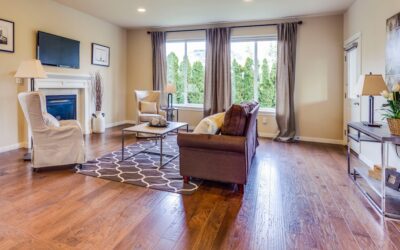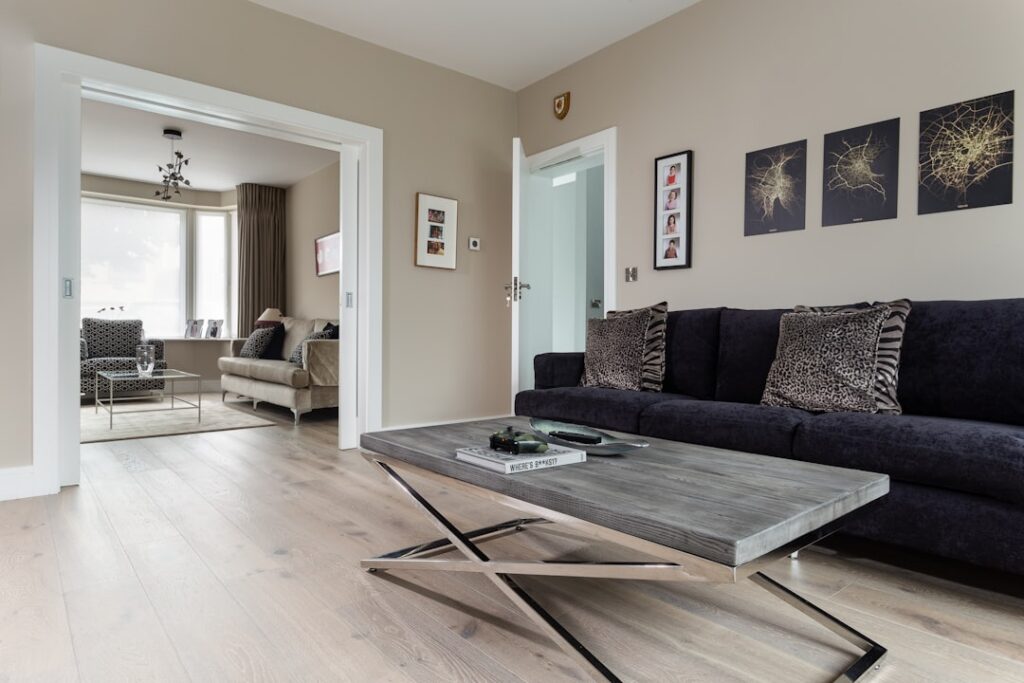
Laminate flooring sits in a confusing middle ground between hardwood and vinyl, and most homeowners shopping for new floors cannot accurately describe what laminate actually is, how it differs from LVP, or where it works best. What is a laminate floor in 2026 has evolved considerably from the rattly Pergo planks of the late 1990s, with modern products now offering waterproof cores, realistic visuals, and 25 to 30-year residential warranties. This guide breaks down exactly how laminate is built, the specs that actually matter, and where it makes more sense than the alternatives.
The Four Layers of Laminate Flooring
Every laminate plank consists of four distinct layers laminated together under heat and pressure. The wear layer is a clear melamine overlay infused with aluminum oxide that protects against scratches, stains, and fading. The decorative layer is a high-resolution photographic print of wood, stone, or tile.
The core layer is the structural heart of the plank, typically high-density fiberboard (HDF) made from compressed wood fibers. The backing layer is a balancing sheet of melamine or paper that prevents warping and adds dimensional stability. Total thickness ranges from 6mm to 12mm depending on quality tier.
AC Ratings: The Spec That Matters Most
The Abrasion Class (AC) rating measures durability and intended use. AC1 covers light residential use like bedrooms and closets. AC2 covers moderate residential use including living rooms and dining rooms. AC3 covers heavy residential use like kitchens, entries, and high-traffic areas, plus light commercial. AC4 covers heavy commercial. AC5 covers very heavy commercial like retail spaces.
For most family homes, AC3 is the practical minimum. Buying AC1 or AC2 to save money usually results in visible wear within 3 to 5 years. AC4 and AC5 cost slightly more but extend useful life to 15 to 25 years in residential settings.
How Laminate Differs from Vinyl Plank
The core material is the fundamental difference. Laminate uses HDF (wood-based), while LVP uses PVC or SPC (plastic-based). Laminate looks and sounds slightly more like real wood underfoot. LVP handles standing water and humidity better because it does not swell.
Modern waterproof laminate from brands like Pergo TimberCraft, Mohawk RevWood Plus, and AquaGuard has narrowed the moisture gap significantly. These products use water-resistant HDF cores and sealed seams, allowing limited splash exposure that traditional laminate could not handle.
How Laminate Differs from Hardwood
Hardwood is real wood throughout. Laminate is a photographic image of wood on top of compressed fiberboard. Hardwood can be sanded and refinished multiple times. Laminate cannot be refinished and must be replaced once the wear layer breaks down.
The visual gap has narrowed dramatically with modern printing technology. From 5 feet away, premium laminate is nearly indistinguishable from engineered hardwood. Up close, the repeating pattern of the photographic print becomes visible. Real wood shows natural variation that laminate cannot fully replicate.
Installation Methods
Almost all modern laminate uses click-lock floating installation. Planks lock together along the long and short edges, and the entire floor floats over a foam or cork underlayment. No glue, no nails, no tack strips. A skilled DIYer can install 400 to 600 sq ft per day with basic tools.
Subfloor preparation matters. Concrete slabs need a moisture barrier rated for the expected vapor emission. Wood subfloors must be flat within 3/16 inch per 10 feet. Underlayment with attached vapor barrier handles both moisture control and sound dampening in one product.
Pros of Laminate Flooring
Value tops the list. Quality laminate at $2 to $4 per sq ft delivers wood-look results at 40 to 70 percent below the cost of real hardwood. Installation is DIY-friendly, reducing total project costs further.
Durability is the second big advantage. The aluminum oxide wear layer resists scratches, scuffs, and fading better than site-finished hardwood. Pets, kids, dragged furniture, and beach sand all pose less threat to laminate than they do to traditional wood floors.
Cons and Practical Limits
Water remains the biggest weakness. Even waterproof laminate handles splashes better than long-term standing water. Full bathrooms with consistent moisture exposure remain better suited to LVP or tile than laminate.
Sound is another consideration. Floating laminate over thin underlayment sounds hollow and clicky underfoot. Premium underlayments like Quiet Walk Plus or QEP cork rolls dampen sound significantly but add $0.40 to $1.20 per sq ft to project cost.
Cost Tiers in 2026
Builder-grade laminate at AC3 rating runs $0.99 to $1.99 per sq ft for material. Mid-grade waterproof laminate at AC4 lands between $2.49 and $4.49 per sq ft. Premium laminate with realistic embossed-in-register textures and 30-year warranties runs $4.49 to $6.99 per sq ft.
Installation labor adds $1.50 to $3.50 per sq ft. A typical 1,000 sq ft installation lands between $3,500 and $9,500 all-in depending on product tier and labor rates. DIY installation reduces those totals by 30 to 50 percent.
Where Laminate Makes the Most Sense
Bedrooms, living rooms, family rooms, and dining rooms remain laminate’s strongest applications. These spaces benefit from the wood-look aesthetic and rarely face moisture issues. Hallways and home offices also work well.
Kitchens are now viable with waterproof laminate, though LVP still holds a slight advantage in heavy-spill households. Bathrooms, mudrooms, and basements with moisture concerns typically favor LVP or tile over even premium laminate. Match the product to the room and laminate delivers excellent long-term value in most residential settings.
For rental properties and short-term occupancy, builder-grade laminate at AC3 ratings still earns its keep. The combination of low cost, DIY-friendly installation, and acceptable wood-look aesthetics makes it the workhorse of investor renovations and flip projects across the United States.
Prefer to explore on your own?
See how new flooring looks in your actual room in seconds — free, no signup.
Try the free Floor Studio →