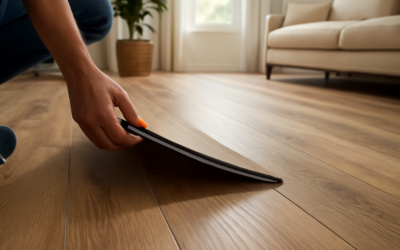
If you have been shopping for new floors, you have almost certainly encountered the term LVT. So what is LVT flooring, and why has it become the most popular flooring choice in North American homes? Luxury Vinyl Tile (LVT) is a multi-layer synthetic flooring product that realistically mimics the appearance of natural wood, stone, and ceramic tile while offering waterproof durability, easy installation, and a comfortable feel underfoot. This guide explains everything about LVT flooring, from how it is made to whether it is the right choice for your home in 2026.
What Is LVT Flooring Exactly
LVT stands for Luxury Vinyl Tile, though the term now encompasses both tile-format (square) and plank-format (rectangular, often called LVP or Luxury Vinyl Plank) products. It is an engineered flooring material constructed from multiple layers of polyvinyl chloride (PVC) and other materials, designed to replicate the look and texture of natural flooring at a fraction of the cost.
What separates LVT from standard vinyl flooring (the thin, flexible sheet vinyl your grandmother may have had) is its construction quality, realistic visual design, and superior durability. Modern LVT uses high-definition digital photography and textured embossing to create surfaces that are virtually indistinguishable from real wood or stone to the naked eye. In blind tests conducted by flooring industry groups in 2025, consumers correctly identified LVT from real hardwood only 42% of the time.
The LVT category has grown 340% since 2015 and now accounts for 36% of all residential flooring sold in the United States. Its combination of aesthetics, performance, and value makes it the single most popular flooring type in 2026.
How LVT Flooring Is Made
Understanding LVT’s layered construction explains its performance characteristics.
| Layer | Material | Function | Thickness |
|---|---|---|---|
| 1. Top Coat (UV Cure) | Aluminum oxide or ceramic bead coating | Scratch, stain, and UV resistance | 0.1 – 0.3 mil |
| 2. Wear Layer | Clear PVC or polyurethane | Primary protection against foot traffic | 6 – 28 mil |
| 3. Design Layer | High-resolution printed film | Visual appearance (wood grain, stone pattern) | 0.5 – 1 mil |
| 4. Core Layer | SPC, WPC, or flexible PVC | Structural integrity, dimensional stability | 2mm – 6mm |
| 5. Backing/Underlayment | Cork, IXPE foam, or PVC | Sound absorption, moisture barrier, comfort | 0.5mm – 1.5mm |
The design layer is created using a process called rotogravure printing, where microscopic details of real wood grain, stone veining, and natural imperfections are photographed at ultra-high resolution and printed onto the vinyl layer. Premium products use Embossed-in-Register (EIR) technology, which aligns the surface texture with the printed pattern so the texture you feel matches the grain or stone pattern you see.
Types of LVT Flooring
Glue-Down LVT
Thin, flexible tiles or planks (2mm to 3mm thick) that adhere to the subfloor with a full-spread adhesive. Glue-down LVT is the oldest format and remains popular in commercial settings because it creates the most stable bond and handles rolling loads well. It requires a very smooth, level subfloor (within 1/8 inch per 10 feet).
Click-Lock LVT (Floating)
LVT click flooring features rigid or semi-rigid planks with interlocking edges that snap together without adhesive. This is the most popular residential format in 2026 because it installs faster, requires less subfloor preparation, and can be removed and reinstalled. Click-lock LVT is typically 4mm to 8mm thick.
Loose-Lay LVT
Planks with a heavy, friction-gripping backing that holds them in place without glue or click-locks. Loose-lay LVT is the fastest to install and easiest to replace (lift individual damaged planks without affecting surrounding pieces). It works best in rooms under 400 square feet and requires a very clean, smooth subfloor.
Peel-and-Stick LVT
Budget-friendly tiles with a pre-applied adhesive backing. Simply peel the paper and press into place. Quality and longevity are lower than other LVT types, making peel-and-stick best suited for temporary applications, rental upgrades, and low-traffic areas. Prices start as low as $0.80 per square foot.
| LVT Type | Thickness | Installation Difficulty | Price/sq. ft. | Best For |
|---|---|---|---|---|
| Glue-Down | 2 – 3mm | Moderate to hard | $1.50 – $5.00 | Commercial, large open areas |
| Click-Lock | 4 – 8mm | Easy to moderate | $2.50 – $8.00 | Residential, DIY projects |
| Loose-Lay | 4 – 5mm | Easy | $3.00 – $6.00 | Quick renovations, small rooms |
| Peel-and-Stick | 1.5 – 2mm | Very easy | $0.80 – $3.00 | Temporary, budget, rentals |
SPC vs. WPC: Core Types Explained
The core layer is the most important structural component. Two core technologies dominate the rigid LVT market.
SPC (Stone Polymer Composite)
Made from limestone powder (calcium carbonate), PVC, and stabilizers. SPC cores are thinner (3.5mm to 5mm), harder, and more dimensionally stable than WPC. They resist temperature fluctuations better and are less likely to expand or contract. SPC feels firmer underfoot and produces slightly more sound when walked on without underlayment. It is the better choice for high-traffic areas, rooms with large temperature swings, and installations over radiant heating.
WPC (Wood Polymer Composite)
Made from wood flour or bamboo dust, PVC, and a foaming agent. WPC cores are thicker (5mm to 8mm), softer, and more cushioned. They provide better sound absorption and a warmer, more comfortable feel underfoot. WPC is more susceptible to temperature-related expansion and is generally not recommended for sunrooms or rooms with radiant heat above 80 degrees Fahrenheit.
| Feature | SPC | WPC |
|---|---|---|
| Core Density | Higher (heavier) | Lower (lighter) |
| Underfoot Comfort | Firmer | Softer, cushioned |
| Sound Absorption | Lower (needs underlayment) | Higher (built-in cushion) |
| Temperature Stability | Excellent | Good |
| Radiant Heat Compatible | Yes (up to 85°F surface) | Limited (up to 80°F) |
| Dent Resistance | Higher | Lower |
| Price Range | $2.50 – $6.00/sq. ft. | $3.50 – $8.00/sq. ft. |
Pros and Cons of LVT Flooring
| Pros | Cons |
|---|---|
| 100% waterproof core | Not as long-lasting as hardwood or tile (15-25 years) |
| Realistic wood and stone visuals | Cannot be refinished (must be replaced) |
| Comfortable and warm underfoot | Lower-end products can look artificial |
| Easy DIY installation (click-lock) | Heavy furniture can cause indentation |
| Budget-friendly ($2 – $8/sq. ft.) | Environmental concerns (PVC-based) |
| Low maintenance | May off-gas VOCs initially (choose FloorScore certified) |
| Works in every room including basements | Does not increase home value like hardwood |
| Wide variety of styles and colors | Susceptible to discoloration from rubber-backed mats |
LVT Flooring Cost Guide
LVT flooring costs vary widely based on quality tier, core type, and installation method.
| Cost Component | Budget | Mid-Range | Premium |
|---|---|---|---|
| Material (per sq. ft.) | $1.50 – $3.00 | $3.00 – $5.50 | $5.50 – $8.00 |
| Underlayment | $0.30 – $0.60 | $0 (attached) | $0 (premium attached) |
| Professional Installation | $2.00 – $3.50 | $2.50 – $4.00 | $3.00 – $5.00 |
| Transitions & Trim | $2 – $5/linear ft. | $5 – $10/linear ft. | $8 – $15/linear ft. |
| Old Flooring Removal | $1 – $2/sq. ft. | $1 – $2/sq. ft. | $1 – $3/sq. ft. |
For a 500-square-foot room with mid-range click-lock LVT and professional installation, the total project cost ranges from $2,750 to $4,750. Compare this with hardwood flooring at $4,000 to $9,000 or granite flooring at $6,000 to $17,500 for the same area to appreciate LVT’s value proposition.
LVT vs. Other Flooring Types
| Feature | LVT | Hardwood | Laminate | Ceramic Tile | Carpet |
|---|---|---|---|---|---|
| Waterproof | Yes | No | No | Yes | No |
| Installed Cost/sq. ft. | $4 – $12 | $8 – $18 | $3 – $8 | $8 – $20 | $3 – $10 |
| DIY Friendly | Yes | Difficult | Yes | Moderate | Moderate |
| Lifespan | 15-25 years | 25-100 years | 15-25 years | 25-50 years | 8-15 years |
| Comfort Underfoot | Good | Good | Fair | Hard, cold | Excellent |
| Refinishable | No | Yes (3-5 times) | No | No | No |
| Resale Value | Moderate | High | Low-Moderate | Moderate-High | Low |
| Pet Friendly | Excellent | Fair | Good | Excellent | Fair |
LVT occupies the sweet spot between cost and performance for most homeowners. It outperforms laminate flooring in moisture resistance, provides a more realistic look, and installs in every room of the house. Where hardwood wins on prestige and longevity, LVT wins on practicality and versatility.
Where to Install LVT Flooring
One of LVT’s biggest advantages is its versatility. It can be installed in every room of your home.
| Room | LVT Suitability | Recommended Type | Key Consideration |
|---|---|---|---|
| Kitchen | Excellent | SPC click-lock, 20 mil wear | Waterproof, stain-resistant, comfortable for standing |
| Bathroom | Excellent | SPC click-lock or glue-down | Fully waterproof; use silicone at expansion gaps |
| Basement | Excellent | SPC click-lock | Installs over concrete, handles moisture vapor |
| Living Room | Excellent | WPC or SPC, 12-20 mil wear | Warm, quiet, realistic aesthetics |
| Bedroom | Excellent | WPC (extra comfort), 6-12 mil | Soft underfoot, quiet |
| Laundry Room | Excellent | SPC click-lock, 20 mil wear | Handles water from washer and dryer sets |
| Entryway | Very Good | SPC, 20+ mil wear | Withstands dirt, grit, and temperature changes |
| Sunroom | Good | SPC only | SPC handles temperature swings; avoid WPC |
Maintenance and Care
LVT flooring requires minimal maintenance, which is a major reason for its popularity.
Daily care: Sweep or vacuum using the hard floor setting (disable the beater bar to avoid scratching). Robotic vacuums are safe for daily LVT maintenance.
Weekly care: Damp mop with a microfiber mop and a pH-neutral vinyl floor cleaner. Avoid using excessive water; a damp mop is sufficient. Do not use steam mops, wax, polish, or abrasive cleaners on LVT.
Spot cleaning: For tough stains, apply isopropyl alcohol to a soft cloth and rub gently. Melamine foam erasers (Magic Eraser) remove scuff marks without damaging the wear layer. For a comprehensive cleaning approach, see our cleaning guides.
Prevention: Place felt pads under all furniture legs and replace every 6 to 12 months. Use non-rubber-backed mats at entryways (rubber can stain LVT permanently). Avoid dragging heavy objects across the floor. Keep pet nails trimmed to prevent scratching.
Frequently Asked Questions
What is the difference between LVT and LVP?
LVT (Luxury Vinyl Tile) technically refers to square tile-format products, while LVP (Luxury Vinyl Plank) refers to rectangular plank-format products that mimic wood. In practice, “LVT” is now used as an umbrella term for both formats. When shopping, focus on the product specifications (core type, wear layer, thickness) rather than the LVT vs. LVP label.
Is LVT flooring toxic or safe for homes?
Quality LVT from reputable manufacturers is safe for residential use. Look for FloorScore or GreenGuard Gold certifications, which verify that the product meets strict indoor air quality standards for VOC (volatile organic compound) emissions. New LVT may have a slight odor during the first 1 to 3 days after installation that dissipates quickly with ventilation.
Can LVT flooring be installed over existing tile?
Yes. Click-lock LVT can be installed directly over existing ceramic or porcelain tile as long as the tile is firmly bonded, clean, and the grout lines are not deeper than 1/8 inch. For deeper grout lines, apply floor leveling compound first. This avoids the cost and mess of tile demolition ($2 to $5 per square foot for removal).
How long does LVT flooring really last?
With a 20-mil wear layer and normal residential traffic, expect 20 to 25 years. Budget products with thinner wear layers (6 mil) last 10 to 15 years in moderate-traffic areas. The core will not wear out; it is the wear layer that determines the functional lifespan. Unlike hardwood flooring, LVT cannot be sanded and refinished when the wear layer is worn through.
Does LVT flooring decrease home value?
LVT flooring does not decrease home value, but it does not increase it as much as genuine hardwood. In 2026, buyers generally view quality LVT positively because it signals a well-maintained, move-in-ready home. Premium LVT is particularly well-received in kitchens, bathrooms, and basements where buyers expect waterproof flooring.
Can you use LVT flooring in a shower?
Standard LVT is not recommended for direct shower use because water can penetrate the seams under constant exposure. However, sheet vinyl and tadelakt-look LVT specifically designed for wet areas are available. For shower floors, traditional tile remains the best option. LVT works well for the bathroom floor outside the shower enclosure.
What is the best underlayment for LVT flooring?
If your LVT does not have an attached underlayment, choose a 1mm to 1.5mm IXPE foam or cork underlayment. On concrete subfloors, use an underlayment with a built-in vapor barrier. Never use underlayment thicker than 1.5mm with LVT click flooring, as excessive cushion stresses the locking joints and causes premature failure.
Last updated: March 2026
Prefer to explore on your own?
See how new flooring looks in your actual room in seconds — free, no signup.
Try the free Floor Studio →