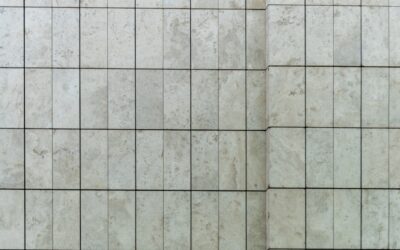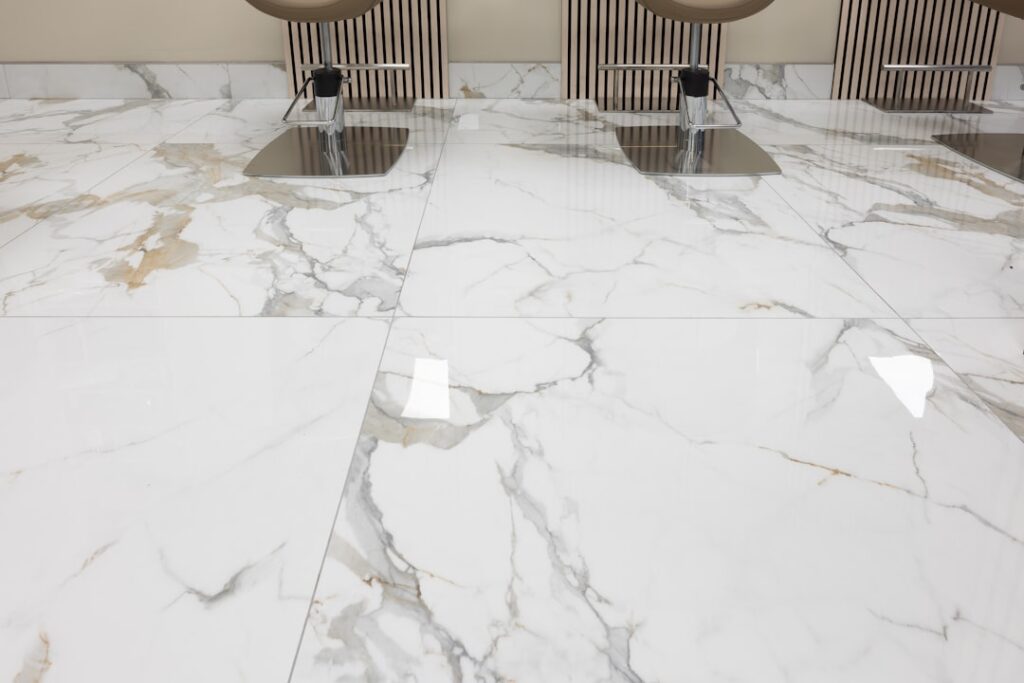
White porcelain has been the go-to tile for modern kitchens and bathrooms for nearly two decades and it hasn’t budged from the top of the spec sheets. The reason is simple: porcelain absorbs less than 0.5% water by weight (per ASTM C373), making it functionally waterproof, and white reflects more light than any other floor color, opening up small rooms instantly. White porcelain flooring spans polished marble-look tile, matte concrete-look slabs, and large-format thin porcelain panels up to 5 feet by 10 feet. The product range is huge, the pricing range is wider than buyers expect, and the wrong choice in a wet area can turn into a slip hazard the day it’s installed.
Why Porcelain Outperforms Ceramic Here
Porcelain is fired at higher temperatures (around 2,200°F) than standard ceramic and uses a denser clay body, which is why it qualifies as “impervious” under TCNA standards while ceramic is merely “vitreous.” Practically, that translates to:
- Frost resistance for outdoor and unheated spaces
- Lower water absorption: 0.5% or less for porcelain, 3% to 7% for ceramic
- Higher breaking strength: 250 lbf or higher per ASTM C648
- Color body running through the tile, not just the glaze (in most modern porcelain)
Pay the small premium for porcelain over ceramic if the floor will see any moisture, chair caster rolling, or installation in a basement or garage.
The Three Finish Categories
White porcelain comes in three primary finish types, each with different applications:
- Polished: Factory-polished face with high gloss (75+ GU). Stunning look, lowest DCOF (often 0.30 to 0.38), best for low-moisture rooms
- Matte: Unpolished, 5 to 15 GU. Highest DCOF (typically 0.50+), best for kitchens, baths, and entries
- Lappato (semi-polished): Partially polished, 30 to 50 GU. Compromise look and DCOF (0.42 to 0.50)
DCOF (Dynamic Coefficient of Friction) is the slip rating you want to verify. ANSI A137.1 requires a wet DCOF of 0.42 or higher for interior wet floors. Polished white porcelain in a master bath fails this test, which is why many municipalities flag it during inspection.
What It Actually Costs
Material pricing by size and tier, mid-2026:
- 12×24 standard white porcelain, matte: $2.50 to $5 per sq ft
- 24×24 rectified white porcelain: $4 to $7 per sq ft
- 24×48 polished marble-look (Calacatta, Statuario décors): $5 to $9 per sq ft
- Large-format 30×60 or 40×80: $7 to $14 per sq ft
- Thin porcelain panels (5 mm to 6 mm, 5×10 ft): $14 to $30 per sq ft
Add $7 to $12 per square foot for installation on 12×24 tiles, $10 to $15 for 24×48, and $15 to $25 for large-format panels that require two-person handling and specialty vacuum-suction tools.
Brand Spotlight: MSI Glazzio and Daltile Marble Attaché
For a Carrara-look white porcelain at a reasonable price, MSI’s Glazzio Statuario line in 24×48 rectified polished runs $5 to $6.50 per sq ft, with a face that genuinely passes the squint-test for natural marble at 6 feet of viewing distance. The polishing is uniform and the décor printing aligns across boxes from the same lot. Daltile’s Marble Attaché in Pietra Statuario goes a step further with embossed veining in the matte version, hitting DCOF 0.46 for wet area use. Both ship through national distribution and stock in metro markets, so lead times stay under 2 weeks.
Pros That Drive Selection
Cleanup is easier than nearly any other flooring. Spilled wine, dropped tomato sauce, even oil-based markers wipe off white porcelain with a damp cloth as long as the spill is fresh. Grout is the weak point; specify a stain-resistant urethane grout like TEC Power Grout or Mapei Flexcolor CQ instead of standard cementitious grout, and the grout joints will stay clean too.
Heat tolerance is unmatched. White porcelain is the safest hard surface to install over hydronic radiant heat because the tile expands negligibly with temperature changes (about 0.06 mm/m/°C). Most manufacturers approve installation up to 85°F surface temperature without special primers.
Long-term durability is exceptional. Porcelain installed properly will outlast any other floor type in the home, with documented service lives of 50+ years in residential settings.
Cons That Should Slow You Down
White porcelain shows grout discoloration more than any other color. Cementitious grout in standard whites and grays will yellow or gray over 2 to 3 years in kitchen and bath use. Specify epoxy or urethane grout from day one or accept the eventual color shift.
Installation precision matters. Modern rectified porcelain has tight tolerances (±0.5 mm on edge dimension), but large-format panels are unforgiving of subfloor imperfections. The TCNA standard requires subfloor flatness of 1/8 inch in 10 feet for tiles 15 inches or larger; large-format 30×60 panels need 1/16 inch in 10 feet, which usually means a self-leveling pour.
Polished white porcelain in wet areas is a real liability concern. If you’re set on the polished look, install it in the dry powder room or formal entry, not the master bath. Multiple insurance carriers now exclude or surcharge homes with sub-0.42 DCOF flooring in primary bath spaces.
Installation Method by Tile Size
Setting method scales with tile size:
- 12×24 and smaller: standard thinset, 1/4 inch notch trowel, back-buttering optional
- 24×24 to 24×48 rectified: Large and Heavy Tile (LHT) mortar like Laticrete Tri-Lite or Mapei Ultraflex LFT, 1/2 inch notch trowel, back-butter mandatory
- 30×60 and larger panels: specialty LHT mortar, vacuum lifters, lippage control rings, two installers minimum
Use a tile leveling system like Raimondi RLS or Spin Doctor for any tile 18 inches or larger. Lippage above 1/32 inch on rectified tile is unacceptable and the leveling system prevents it.
Where White Porcelain Fits Best
Best fits: kitchens, master baths (matte or lappato finish only), entries, mudrooms, sunrooms, and basement floors over properly prepped slabs. Tricky fits: dog-heavy rooms where claw scratches can dull the polished surface over time, and rooms with heavy traffic in dark socks where every speck of dust shows immediately.
If you want the white-porcelain look without the cold underfoot feel, install radiant heat under the tile. The upfront cost adds $8 to $14 per square foot but transforms how the floor feels through the winter, which is the single most common complaint from homeowners who skip it.
Prefer to explore on your own?
See how new flooring looks in your actual room in seconds — free, no signup.
Try the free Floor Studio →