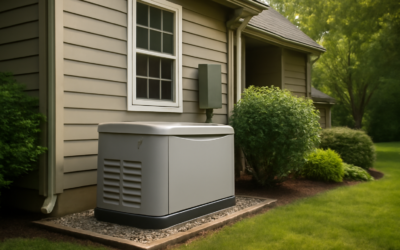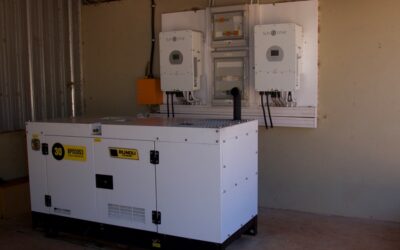
If you want every light, outlet, and appliance in your home to keep working when the grid goes down, the generator is only half the system. The other half is a whole house transfer switch, usually a service-entrance rated automatic transfer switch (ATS) installed between the utility meter and your main panel. It watches the incoming utility power, starts the standby generator when power fails, and moves the entire house to generator power in seconds, then switches back automatically when the utility returns.
Unlike select-circuit manual switches that back up a handful of essentials, a whole-house ATS covers the full panel. That convenience comes with requirements: the generator must be sized to the loads, or the switch must include load management to shed large appliances. This guide explains how service-rated switches work, how they are sized, how load management fits in, what installation involves, and what to budget.
- What a Whole House Transfer Switch Does
- Service-Entrance Rated vs Non-Service-Rated Switches
- Sizing the Switch and the Generator
- How Load Management Works
- Automatic vs Manual for Full-Panel Backup
- Installation Process
- Troubleshooting and Maintenance
- Cost Ranges
- When to Call a Licensed Professional
- Frequently Asked Questions
- Do I need a service-rated transfer switch for whole-house backup?
- What size transfer switch do I need for a 200-amp panel?
- Can a whole house transfer switch work with a portable generator?
- How long does a transfer switch take to switch over?
- Does load management mean some appliances won't work during an outage?
What a Whole House Transfer Switch Does
A whole house transfer switch sits in the path of your home’s service. In normal operation, the utility feeds through the switch to your panel. When the switch’s controller detects that utility voltage has dropped or disappeared, it waits a few seconds to rule out a momentary blip, then signals the generator to start. Once the generator reaches stable voltage and frequency, the switch transfers the load.
The key safety function is isolation. A transfer switch is built so that the house can be connected to either the utility or the generator, never both at once. That prevents backfeed, which could energize downed lines and endanger utility crews, and it protects the generator from being hit with grid power when service returns.
When the utility comes back, the controller waits for a stable supply, transfers the house back, and lets the generator run a cool-down cycle before shutting it off. Most systems also run a scheduled exercise so problems show up on a sunny day instead of during a storm.
Service-Entrance Rated vs Non-Service-Rated Switches
This distinction confuses many homeowners, and it drives cost and wiring.
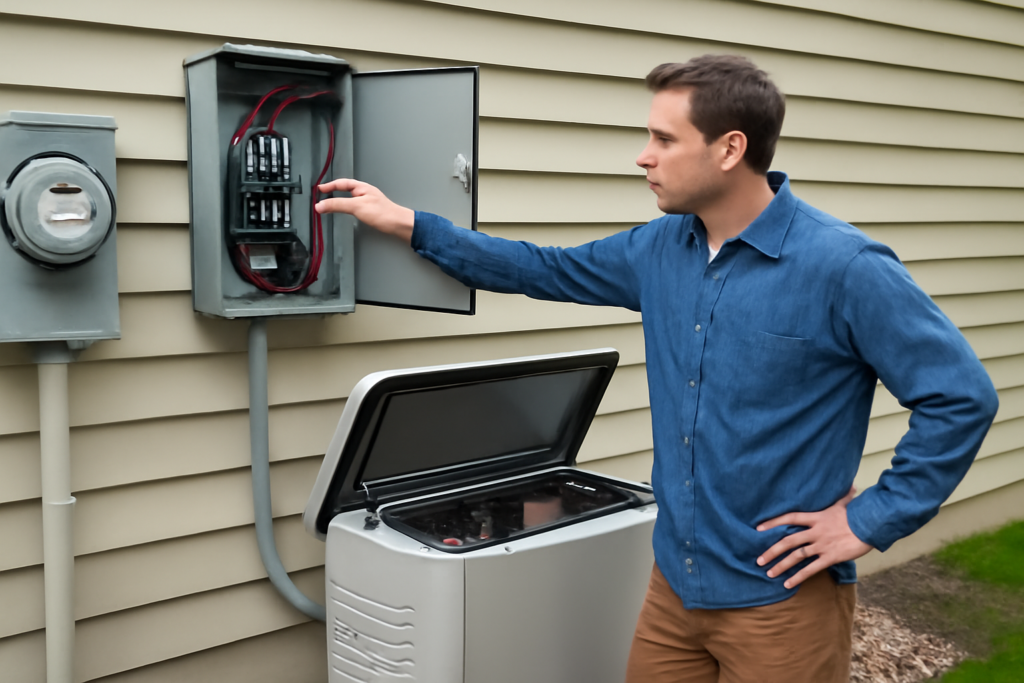
- Service-entrance rated ATS: contains its own main breaker and is listed to serve as the service disconnect. It mounts between the meter and the existing panel, often outdoors next to the meter. The existing panel then becomes a sub-panel fed by the switch. This is the most common configuration for full-panel backup because it covers every circuit without rearranging wiring.
- Non-service-rated ATS: installed downstream of the main disconnect, typically feeding a separate essential-loads panel. Circuits must be moved from the main panel into this new panel, which is how partial-home automatic systems are usually built.
Converting the existing panel into a sub-panel has code implications. Neutrals and grounds must be separated in the downstream panel, and the bonding point moves to the transfer switch. A licensed electrician handles those details and the inspection.
Sizing the Switch and the Generator
A whole-house transfer switch is sized to your service, not your generator. A 200-amp service needs a 200-amp service-rated switch, and a 400-amp service may use a switch rated accordingly or a pair of switches. The generator, however, is sized to the load you expect it to carry.
Matching generator kW to load
- Inventory the big loads. Central air conditioners, heat pumps, electric ranges, water heaters, dryers, well pumps, and EV chargers dominate the calculation.
- Account for starting surge. Air conditioner compressors draw a large inrush current when they start. Soft-start kits reduce that surge and can allow a smaller generator.
- Estimate simultaneous demand. Not everything runs at once, but electric heat and cooking can overlap on a cold holiday evening.
- Keep headroom. Running a generator near its limit shortens its life and risks overload shutdowns. Many installers target 70 to 80 percent of rated output under typical load.
For many average homes with gas heat and one central air unit, a standby generator in the roughly 18 to 26 kW range paired with a 200-amp service-rated switch covers the whole house. All-electric homes with heat pumps, electric resistance backup heat, and electric water heating may need significantly more capacity or aggressive load management.
How Load Management Works
Load management lets a smaller generator back up the full panel by controlling when the biggest appliances can run. Many modern ATS controllers support it directly or through add-on modules.
- Load shedding modules: contactors or relays wired to large 240-volt circuits, such as an electric water heater, dryer, or pool pump. If generator load gets too high, the controller switches those circuits off and restores them when capacity frees up.
- Thermostat control: a relay interrupts the low-voltage thermostat call for a second air conditioner so it can’t start while the first is running.
- Priority settings: loads are ranked so critical circuits stay on while lower-priority ones wait.
The difference between low-voltage and line-voltage control matters here. Thermostat relays work on the roughly 24-volt control wiring, while load-shed contactors switch full 240-volt power. Both are wired by an electrician, but thermostat control tends to be simpler and cheaper when an air conditioner is the main concern.
Load management is the reason a whole house transfer switch does not always require a whole-house-sized generator. You still get power everywhere, just with the heaviest appliances taking turns.
Automatic vs Manual for Full-Panel Backup
Manual whole-house switches exist, but automatic is the norm for full-panel standby systems. Here is how they compare:
| Factor | Automatic (ATS) | Manual |
|---|---|---|
| Response | Seconds, no one needs to be home | Someone must start the generator and throw the switch |
| Generator type | Permanent standby | Portable or standby |
| Load management | Often built in or available | You manage loads by hand |
| Cost | Higher | Lower |
If someone in the house relies on medical equipment, you travel often, or you have a sump pump protecting a finished basement, the automatic response is usually worth the premium.
Installation Process
Installing a service-rated transfer switch involves the utility service conductors, so it is strictly licensed work with permits. A typical project follows these steps:
- Site survey and load calculation. The contractor reviews your panel, service size, meter location, and loads, then specifies the switch, generator, and any load-shed modules.
- Permits and utility coordination. Electrical permits are pulled, and the utility schedules a disconnect so the meter can be pulled while the switch is installed between the meter and panel.
- Generator pad and fuel. The generator is set on a level pad with required clearances from windows, doors, and vents. A licensed gas fitter connects natural gas or propane with a shutoff and leak test. Call 811 before any digging.
- Switch installation. With service disconnected, the electrician mounts the ATS, reroutes service conductors through it, feeds the existing panel, separates neutrals and grounds in the downstream panel, and wires the generator and control conductors.
- Load management wiring. Shed modules and thermostat relays are installed and programmed.
- Inspection and commissioning. After inspection, the utility restores service, and the installer simulates an outage to confirm the generator starts, transfers, carries load, and returns to utility power correctly.
For homeowners doing routine checks later, any cover removal, even for a look, should only happen after turning off the breaker and confirming power is off with a non-contact voltage tester, and the service side of the switch should be treated as always energized. In practice, leave inspections inside the enclosure to the service technician.
Troubleshooting and Maintenance
- Generator starts but the house doesn’t transfer: the controller may not see stable voltage or frequency, or a setting is off. Check the controller’s display for codes and call the installer.
- Frequent overload shutdowns: the generator is undersized for the load pattern, or load management isn’t programmed correctly. Adding shed modules or a soft-start kit often helps.
- Air conditioner won’t run on generator: that may be intentional load shedding. Confirm the priority settings with your installer.
- Switch won’t return to utility: the controller may be waiting on a timer. If it stays on generator long after power returns, call for service rather than forcing anything.
- Exercise cycle fails: weak starting batteries are the usual culprit. Many owners replace them every few years.
Schedule annual maintenance for both the generator and the switch. Technicians check contacts, tighten terminations, update firmware, and test transfer under load. Keep CO alarms on every level and near bedrooms, since the generator outside still produces carbon monoxide.
Cost Ranges
As general ranges, a 200-amp service-rated automatic transfer switch alone often costs several hundred to a couple thousand dollars for the hardware. Installed as part of a standby generator package, the complete system, including generator, switch, pad, fuel connection, permits, and labor, commonly lands in the low-to-mid five figures for a typical home. Load management modules, 400-amp services, long fuel runs, meter-base changes, and utility fees raise the total. Getting at least two quotes from licensed installers is worthwhile, because site conditions change pricing dramatically.
When to Call a Licensed Professional
Every part of a whole-house transfer switch installation belongs to licensed professionals. The switch connects directly to utility service conductors that cannot be shut off at the house, so the work requires a licensed electrician, an electrical permit, inspection, and coordination with the utility to pull the meter. Fuel connections for natural gas or propane generators require a licensed gas fitter with a pressure and leak test. If you smell gas at any point, leave the area and call the gas utility. Your role is to define what you want backed up, choose a qualified installer, keep up maintenance, and keep carbon monoxide alarms working.
Frequently Asked Questions
Do I need a service-rated transfer switch for whole-house backup?
For full-panel coverage without rewiring circuits, yes, in most cases. A service-entrance rated switch installs between the meter and panel and includes the main disconnect, so every existing circuit is backed up.
What size transfer switch do I need for a 200-amp panel?
A 200-amp service typically uses a 200-amp service-rated switch. The generator can be smaller than the service rating if load management keeps demand within its capacity.
Can a whole house transfer switch work with a portable generator?
Some manual whole-house switches can, but the portable’s limited output means you must manage loads carefully. Automatic service-rated switches are designed for permanent standby generators.
How long does a transfer switch take to switch over?
Most automatic systems restore power within roughly 10 to 30 seconds after an outage, allowing time to confirm the outage and let the generator stabilize.
Does load management mean some appliances won’t work during an outage?
Large appliances may pause while the generator is near capacity, then resume when load drops. Critical circuits stay powered according to the priority settings.