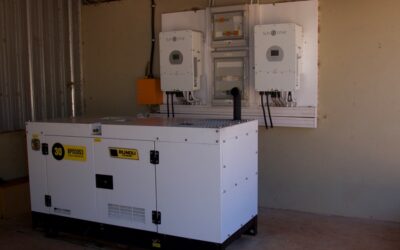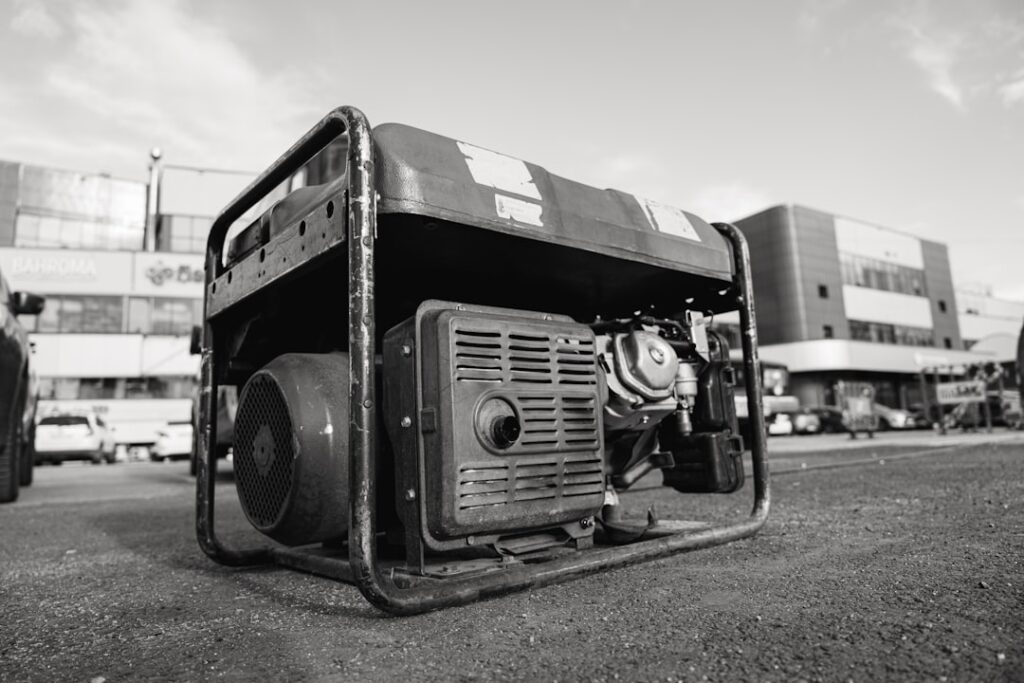
If you are searching for how to connect a generator to your house without transfer switch hardware, you are almost certainly being pointed toward backfeeding through a dryer outlet with a double-male “suicide cord.” Do not do it. That method can electrocute utility workers, burn your house down, and is illegal in most jurisdictions. This article explains exactly why it is so dangerous, and then gives you the three safe, code-compliant ways to get generator power into your home wiring, most of them for a few hundred dollars.
- Why Backfeeding Is So Dangerous
- The Real Answer: Three Safe, Legal Ways
- Option 1: Breaker Interlock Kit (Best Value)
- Option 2: Manual Transfer Switch
- Option 3: Generator Inlet Box
- What a Proper Install Looks Like
- Comparing the Three Safe Options
- Why the DIY Route Is Not Worth It
- Do Not Forget Carbon Monoxide
- The Honest Bottom Line
Why Backfeeding Is So Dangerous
Backfeeding means plugging your generator into an existing outlet, usually the 240-volt dryer or range receptacle, using a cord with male plugs on both ends. Power then flows backward through your home wiring and into every circuit. It “works,” which is exactly why it is a trap. Here is what it actually does:
- It kills utility workers. The power you feed into your panel flows back out to the utility transformer, which steps it up to thousands of volts on the lines outside. A lineman who believes the grid is dead can be electrocuted by your generator. This is the number-one reason it is illegal.
- It bypasses every safety. A double-male cord has live, exposed prongs on the end you are holding. Touch them while the generator runs and you complete the circuit yourself.
- It causes fires. Without a transfer switch or interlock, nothing stops the utility power from snapping back on while your generator is still connected. The two power sources collide, and the surge can destroy your generator, melt wiring, and start a fire in the walls.
- It voids insurance and violates code. The National Electrical Code requires a listed transfer means. A backfeed fire or injury can leave your homeowner’s claim denied.
No shortcut, cord gauge, or “I’ll be careful and flip the main first” changes this. Flipping the main breaker manually is exactly the human-error step that gets people killed when someone forgets. The whole point of the safe options below is that they make that mistake physically impossible.
The Real Answer: Three Safe, Legal Ways
Every safe method does the same critical job: it makes it impossible for your generator and the utility grid to be connected at the same time. That single feature is what protects the lineman, your house, and you. All three should be installed by or with a licensed electrician and a permit.
Option 1: Breaker Interlock Kit (Best Value)
A breaker interlock is a simple metal plate that mounts on your existing panel. It physically prevents the main breaker and the generator breaker from being on at the same time. To use it, you kill the main, switch on the generator breaker, and power flows to your whole panel from a generator inlet outside.
This is the most affordable code-compliant option, typically $150 to $400 in parts plus a few hundred in labor, so figure $500 to $900 installed depending on your area and panel. It lets you power any circuit in the house up to the generator’s capacity, and because the interlock is mechanical, you cannot accidentally backfeed. The catch is that the kit must be listed for your specific panel brand and model, which is why an electrician sizes it for you.
Option 2: Manual Transfer Switch
A manual transfer switch is a small sub-panel installed next to your main panel with switches for a set number of pre-selected circuits, usually 6, 8, or 10. During an outage you flip each circuit from “line” to “generator.” It is the classic solution for powering specific essentials like the furnace, fridge, well pump, and a few outlets.
Installed cost typically runs $500 to $1,500 depending on circuit count and complexity. The upside over an interlock is that each circuit has its own labeled switch and a built-in wattage meter on many models, so you can balance the load easily. The limitation is that you can only power the specific circuits that were wired into it, not the whole panel. For most homeowners who just want the essentials, that is plenty.
Option 3: Generator Inlet Box
An inlet box (also called a power inlet or “man box”) is the weatherproof exterior receptacle you plug the generator’s cord into. It is not a standalone solution; it pairs with either an interlock or a transfer switch so that the cord from your generator lands on a proper inlet instead of a dangerous double-male plug.
The inlet box itself is $40 to $150, and it is mounted on an outside wall near where you park the generator, then wired back to the panel. Together with an interlock kit, an inlet box gives you a clean setup: one heavy generator cord (a 30-amp L14-30 is common) runs from the generator to the inlet, and everything inside stays code-legal. This is the setup I recommend for most homes.
What a Proper Install Looks Like
Put together, the safe system is straightforward:
- A generator inlet box on the exterior wall, 20-plus feet of cord run from where the generator sits.
- A breaker interlock or transfer switch at the panel that locks out the grid whenever the generator breaker is on.
- A properly sized generator cord, typically 10-gauge for a 30-amp connection, rated for the generator’s output.
- A permit and inspection, which most towns require and which also protects your insurance.
A licensed electrician can usually complete an interlock-plus-inlet install in a few hours. The total often lands between $600 and $1,200, which is genuinely cheap insurance against a house fire, a fried generator, or a lawsuit from an injured lineman.
Comparing the Three Safe Options
Which one is right depends on your panel, your budget, and how much of the house you want to power:
- Breaker interlock + inlet box: lowest cost, powers any circuit up to the generator’s limit, cleanest whole-panel flexibility. Best for most homes. Requires a compatible panel and available breaker space.
- Manual transfer switch + inlet box: pre-selected circuits with individual labeled switches and often a load meter. Simplest to operate and idiot-proof, but limited to the wired-in circuits and usually a bit more expensive.
- Extension cords only: no panel work at all, cheapest, but cannot power anything hardwired like a furnace, well pump, or hardwired water heater. Fine as a bare-bones fallback.
If you can only do one thing, an interlock kit paired with an inlet box gives the most capability for the least money and keeps you fully code-compliant. It is the setup most electricians will steer you toward for exactly that reason.
Why the DIY Route Is Not Worth It
People search for a no-transfer-switch method to save money, so it is worth being blunt about the math. A backfeed setup risks a house fire (tens of thousands in damage, denied by insurance), your own electrocution, and criminal or civil liability if a lineman is hurt. Against that, a proper interlock-and-inlet install runs $600 to $1,200 with a licensed electrician and a permit. There is no version of this where the shortcut is the smart financial choice.
Panel work also has to match your specific equipment. Interlock kits are listed for particular panel brands and models, breaker sizing has to match the generator’s output, and the inlet and cord have to be rated for the amperage. A licensed electrician handles all of that, pulls the permit, and gets it inspected so your insurance stays valid. That inspection is not red tape, it is the paperwork that protects your claim if anything ever goes wrong.
Do Not Forget Carbon Monoxide
Wiring is only half of generator safety. Portable generators are a leading cause of carbon monoxide deaths during outages. Never run one indoors, in a garage, a carport, or a basement, even with the door open. Place it at least 20 feet from the house with the exhaust aimed away from windows, doors, and vents, and install battery-backup CO alarms on every level of your home. A unit with a built-in CO shutoff sensor adds another layer of protection.
The Honest Bottom Line
There is no safe way to connect a generator to your house without transfer switch equipment of some kind, because the entire danger comes from the missing lockout between generator and grid. If your goal is to power your furnace, pumps, and outlets during an outage, the answer is a breaker interlock kit with an inlet box, installed by a licensed electrician for a few hundred to about a thousand dollars. It is legal, it is permitted, and it means you will never have to trust your life and a lineman’s life to remembering to flip a breaker at the right moment. Spend the money once and do it right.