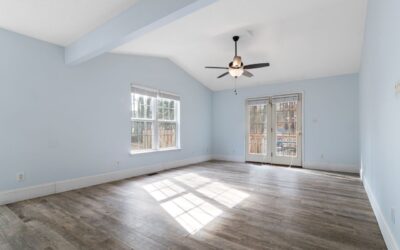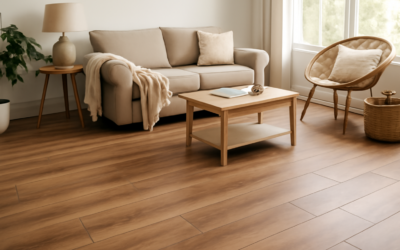
Solid hardwood looks beautiful, but it is not the right answer for every room or every budget. The best wood floor alternatives give you the warm, natural grain you want without the price, the water worries, or the constant refinishing that real oak and maple demand. After installing flooring in hundreds of homes, I can tell you the gap between “looks like wood” and “is wood” has narrowed dramatically in the last decade.
This guide walks through seven proven options, what each one actually costs per square foot, how it holds up to water and traffic, and which rooms it belongs in. Use it to match a material to your real life instead of a showroom photo.
Luxury Vinyl Plank (LVP, SPC, and WPC)
Luxury vinyl plank is the runaway favorite right now, and for good reason. It uses a high-resolution printed layer over a rigid or flexible core, topped with a clear wear layer measured in mils. A 12-mil to 20-mil wear layer handles a busy household with dogs and kids; the thin 6-mil builder-grade stuff scratches faster than you would like.
You will see three subtypes. SPC (stone-plastic composite) has a dense, rigid core that resists dents and hides subfloor imperfections. WPC (wood-plastic composite) feels slightly warmer and softer underfoot. Standard flexible LVP is the budget tier. All three are 100 percent waterproof, which is the headline feature, so they go anywhere, including bathrooms, kitchens, basements, and laundry rooms.
Expect to pay roughly $2 to $5 per square foot for the material, with premium SPC lines reaching $7. Most click-lock floating systems are genuinely DIY-friendly; a confident homeowner can do a bedroom in a weekend. The honest downside is appearance up close, where the printed grain can repeat and the surface can feel a touch plasticky against true hardwood.
Laminate Flooring
Laminate predates LVP and still has a place. It pairs a fiberboard (HDF) core with a photographic decor layer and a tough aluminum-oxide wear coat. That wear coat is its strength: high-traffic laminate shrugs off scratches better than many vinyls and resists fading from sunlight.
The catch is the wood-based core. Older laminate swells if water sits in the seams, though many newer “water-resistant” lines now survive spills wiped up within a few hours. For a true wet room, vinyl is still the safer pick. Laminate runs about $1 to $4 per square foot and clicks together over an underlayment, making it one of the easier installs for beginners.
Texture has improved enormously. Premium 12mm laminate with embossed-in-register surfaces, where the grain texture lines up with the printed grain, looks remarkably convincing and feels solid underfoot. It is a strong choice for living rooms, hallways, and bedrooms.
Porcelain and Ceramic Wood-Look Tile
If you want the look of a plank that is essentially indestructible, wood-look porcelain tile is hard to beat. Manufacturers print convincing oak, walnut, and reclaimed-barnwood patterns onto long tile planks, often 6 by 36 inches or 8 by 48 inches, and the surface is fully waterproof, scratch-proof, and fade-proof.
This is the floor for mudrooms, sunrooms, kitchens, and any home with large dogs. Pair it with radiant heat and you eliminate the one complaint people have, which is that tile feels cold and hard. Material runs $3 to $8 per square foot, sometimes more for designer lines.
Installation is the trade-off. Tile is mortar-set, requires a flat substrate, careful grout-line spacing to mimic real planks, and tools most homeowners do not own. Budget $5 to $10 per square foot for professional labor on top of materials.
Engineered Wood
Engineered wood is the closest alternative because it is real wood, just built smarter. A thin veneer of genuine hardwood sits on a plywood or HDF core that is far more dimensionally stable than a solid plank. That stability lets you install it over concrete slabs and in basements where solid hardwood would cup or gap.
You get the authentic feel and, with a thick 3mm to 6mm wear veneer, the ability to sand and refinish once or twice. Expect $4 to $9 per square foot for the material, with wide-plank European oak running higher. It is not waterproof, so keep it out of full bathrooms, but it handles normal living spaces beautifully.
Bamboo Flooring
Technically a grass, bamboo behaves like a hardwood and ships in similar tongue-and-groove planks. Strand-woven bamboo, where fibers are shredded and compressed under heat and resin, is exceptionally hard, often testing harder on the Janka scale than red oak. That makes it a durable, eco-minded option at roughly $3 to $6 per square foot.
Quality varies wildly by manufacturer, so buy from a reputable brand and check formaldehyde-emission ratings. Bamboo is sensitive to humidity swings and standing water, so it suits living areas and bedrooms rather than kitchens or baths.
Cork Flooring
Cork is the comfort choice. It is soft and warm underfoot, naturally cushioned, sound-absorbing, and a little springy, which is gentle on joints and on dropped dishes. It comes in click-together planks and looks like a textured, mottled wood when finished. Pricing lands around $3 to $8 per square foot installed.
Cork dents under heavy furniture legs and scratches from pet claws, so use floor protectors. It also needs a sealed finish to resist moisture. Bedrooms, home offices, and playrooms are its sweet spot.
Polished Concrete
For a modern, industrial look, polished concrete turns an existing slab into a finished floor with no added material at all. It is extremely durable, waterproof when sealed, and easy to mop. Polishing an existing slab runs $3 to $8 per square foot; decorative stains and overlays push it higher.
It is hard and cold underfoot, so it pairs best with rugs or radiant heat. This is not a wood look, but for open-plan main floors and basements it is a low-maintenance alternative many homeowners love.
Choosing the Right Alternative for Each Room
Match the material to the moisture and traffic. For bathrooms, laundry rooms, and busy kitchens, go waterproof: LVP/SPC or wood-look porcelain tile. For living rooms and bedrooms where you want real-wood feel, engineered wood or quality laminate delivers. For comfort underfoot in offices and nurseries, cork wins, and for basements over concrete, SPC or polished concrete are the safe bets.
Weigh total installed cost, not just the box price. A $2 vinyl you install yourself can beat a $5 material that needs $7 of labor. Whichever of these wood floor alternatives you choose, buy a sample, walk on it barefoot, and live with it under your own lighting for a few days before committing the whole house.
Prefer to explore on your own?
See how new flooring looks in your actual room in seconds — free, no signup.
Try the free Floor Studio →