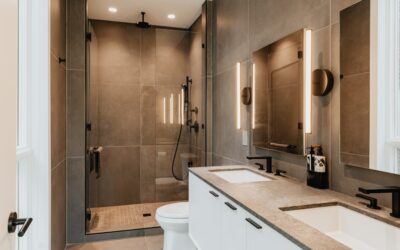
You can get the warm, organic look of a hardwood plank in the one place real wood would rot within a year, the shower. A wood tile shower uses wood-look porcelain tile, planks engineered to mimic timber grain while staying completely waterproof and durable in a wet area. It delivers the cozy aesthetic of wood with none of the moisture worries. Here is how it works, where to use it, and what to plan for.
Part of our Bathroom Remodeling & Flooring guide — explore the full guide →
- What Wood-Look Porcelain Is
- Why It Works in Wet Areas
- Slip Resistance Is Non-Negotiable
- Layout and Design Ideas
- Installation Considerations
- Cost Expectations
- Cleaning and Maintenance
- Wood Tile vs Real Wood and Other Options
- Pairing It With the Rest of the Bathroom
- Common Installation Mistakes
- Is a Wood Tile Shower Right for You?
What Wood-Look Porcelain Is
Wood tile is not actually wood. It is porcelain tile printed and textured to resemble wood planks, complete with grain, knots, and color variation. Because it is fired porcelain, it is dense, water-resistant, and impervious to the swelling, warping, and rot that would destroy real wood in a shower. That makes it ideal for shower walls, niches, and even floors when the slip rating is right.
The realism of modern wood-look porcelain is striking, and unless you touch it, many people cannot tell it apart from the real thing.
Why It Works in Wet Areas
Showers demand materials that handle constant moisture, and porcelain delivers:
- Very low water absorption, so it will not swell or rot.
- Durable, scratch-resistant surface that holds up to daily use.
- Easy to clean and resistant to mold when grout is maintained.
- Available in slip-resistant textures suitable for shower floors.
Properly installed over a waterproofed substrate, a wood tile shower is as practical as it is good-looking.
Slip Resistance Is Non-Negotiable
For a shower floor, slip resistance matters more than looks. Check the tile’s slip rating, often expressed as a coefficient of friction or a DCOF value, and choose a textured or matte finish rated for wet floors. Smooth, glossy planks may look great on walls but can be dangerously slick underfoot when wet. Smaller tiles or mosaics on the shower floor also add grout lines that improve traction and accommodate the slope to the drain.
Layout and Design Ideas
Wood plank tile opens up design possibilities a square tile cannot:
- Vertical planks: Run planks up the wall to make the shower feel taller.
- Herringbone: A classic wood pattern that adds visual interest on an accent wall.
- Continuous look: Carry the same wood tile from the bathroom floor into the shower for a seamless, spa-like flow.
- Staggered, brick-style: The most natural plank look, with offset joints like real flooring.
Keep grout lines thin and color-matched for the most wood-like appearance, since wide contrasting grout breaks the illusion.
Installation Considerations
A shower install is exacting and best handled by an experienced tile setter. The substrate must be properly waterproofed with a membrane system before tiling. Plank tiles need a correct mortar coverage and careful lippage control, since long, narrow planks can rock or sit unevenly if the offset is too aggressive. Many pros recommend keeping plank offsets to around a third rather than a full half to avoid lippage. The shower floor must slope correctly to the drain, which adds skill to a wood-look floor install.
Cost Expectations
Wood-look porcelain spans a broad price range. As a general guide, the tile itself often runs from $3 to $15 per square foot, with premium imported lines higher. Installation in a shower is more labor-intensive than a flat floor because of waterproofing, slope, and the precision plank layout requires, so installed costs climb accordingly. Budget for waterproofing materials, quality thinset, and a skilled installer, since shortcuts in a shower lead to expensive leaks.
Cleaning and Maintenance
Upkeep is simple. Wipe the tile with a pH-neutral cleaner and rinse, avoiding harsh acids that can degrade grout. Squeegee the walls after showering to reduce soap scum and hard-water spots. Seal the grout, not the porcelain, since the tile itself does not need sealing, and reseal grout periodically to keep mold and stains at bay. Run the exhaust fan during and after showers to control humidity.
Wood Tile vs Real Wood and Other Options
It helps to see where wood-look porcelain sits among the alternatives:
- Real wood: Beautiful but a non-starter in a shower, where constant moisture causes rot, warping, and mold.
- Wood-look porcelain: The warmth of wood with full waterproof durability, the best of both worlds for a shower.
- Wood-look vinyl: Fine for bathroom floors outside the wet zone, but not the right choice inside a tiled shower.
- Standard tile: Durable and waterproof but without the organic warmth of a wood grain.
For the look of wood in a true wet area, porcelain is the only option that holds up long term.
Pairing It With the Rest of the Bathroom
Wood tile in the shower looks most intentional when it relates to the surrounding bathroom. Carrying the same plank tile from the bathroom floor into the shower creates a seamless, expansive feel. Alternatively, use wood tile as a shower accent and pair it with a complementary stone or solid tile elsewhere. Warm wood tones pair beautifully with matte black fixtures, brushed brass, and natural stone vanities. Keep the overall palette cohesive so the shower reads as part of the room rather than a disconnected feature.
Common Installation Mistakes
Wood plank tile is less forgiving than square tile, and a few errors show up often. The biggest is an aggressive offset, where planks are staggered at the full half. Because plank tiles can have a slight bow along their length, a half offset places the high point of one plank against the low point of its neighbor, creating lippage you can feel and trip on. Keeping the offset to about a third minimizes this. Other common mistakes include skipping proper waterproofing behind the tile, using too little thinset coverage under long planks, and choosing a glossy plank for the floor where slip resistance is essential. Each of these is avoidable with a careful, experienced installer.
Is a Wood Tile Shower Right for You?
If you love the warmth of wood but need the bulletproof performance of tile in a wet area, a wood tile shower is an ideal compromise. Choose a slip-rated tile for floors, hire a skilled installer for the waterproofing and layout, and maintain the grout. Do that, and you get a shower that feels like a natural-wood retreat while standing up to daily moisture for decades.
Prefer to explore on your own?
See how new flooring looks in your actual room in seconds — free, no signup.
Try the free Floor Studio →