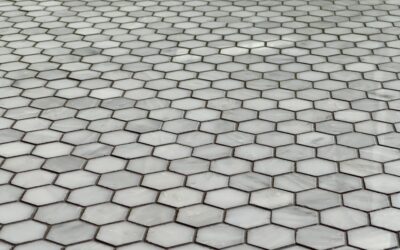
Walk into almost any beautifully restored 1920s bathroom and you will find the same floor: crisp white hexagons the size of a silver dollar, laid in a honeycomb that has never gone out of style. The 2 inch white hexagon tile is one of the few materials that reads as both vintage and modern depending on how you grout and frame it, which is exactly why designers keep coming back to it a century later. This guide covers materials, grout choices, installation quirks, and real costs so you can decide whether this classic mosaic belongs in your home.
Part of our Tile & Grout guide — explore the full guide →
Why the 2 Inch Hexagon Endures
Hexagonal tile has a practical history. In the early twentieth century, small hexagons in porcelain were the hygienic standard for hospitals and bathrooms because the tight grid was easy to clean and the many grout lines gave excellent slip resistance underfoot. That heritage gives the pattern instant period authenticity, but the shape also happens to look fresh and geometric to a modern eye, which is why you see it in both farmhouse renovations and sleek contemporary spas.
The two-inch size hits a sweet spot. Larger hexagons feel bold and modern; penny-round and one-inch hexes feel busy and very traditional. At two inches, the tile is big enough to lay quickly on mesh-backed sheets yet small enough to keep that vintage honeycomb charm and to curve gently across a shower floor without lippage. That balance is a big part of its staying power.
Materials: Porcelain, Ceramic, and Marble
The same shape comes in several materials, and the one you pick drives durability, price, and where you can use it. Match the material to the room and the traffic it will see.
- Porcelain: the most popular choice, dense, water-resistant, and rated for floors. It handles bathrooms, entryways, and even kitchens with ease and resists staining.
- Ceramic: slightly softer and cheaper, well suited to walls and low-traffic floors, though less impact-resistant than porcelain.
- Marble: Carrara or Thassos white hexagons bring natural veining and a luxe feel, but the stone is porous, needs sealing, and can etch from acidic cleaners.
- Glass: occasionally offered for accent walls and backsplashes, luminous but not suited to floors.
For a floor that gets daily use, porcelain is the safe, low-maintenance default. Save marble for a powder room or a feature wall where its beauty justifies the extra care.
Grout Color Changes Everything
Nothing transforms a 2 inch white hexagon tile installation faster than grout color, and it is the single decision homeowners underestimate most. The exact same white tile can read as three completely different floors depending on what fills the joints.
White or light-gray grout keeps the look soft, seamless, and airy, letting the honeycomb texture whisper rather than shout. This is the choice for a bright, timeless bathroom. Dark-gray or charcoal grout, by contrast, snaps each hexagon into sharp relief and gives a graphic, high-contrast, distinctly modern effect that photographs beautifully. Black grout is the boldest option and hides dirt best, but it demands precise, consistent joints because any wandering line will be obvious.
Whatever color you choose, use a quality grout and seal it if it is cementitious, especially on a floor. Epoxy grout costs more and is harder to work with but resists stains and never needs sealing, which many homeowners find worth it in a high-use bathroom.
What It Costs
Hexagon mosaic pricing depends heavily on material, and labor runs higher than for large-format tile because there are far more pieces and grout lines to manage. Here is what to expect.
- Ceramic hexagon sheets: roughly $2 to $6 per square foot for the tile itself.
- Porcelain hexagon sheets: about $4 to $12 per square foot depending on brand and finish.
- Marble hexagon sheets: $10 to $25 per square foot, sometimes more for premium stone.
- Professional installation: $8 to $18 per square foot in labor, higher than standard tile because mosaics are fussier to set and grout.
Because the tiles arrive on mesh sheets roughly twelve inches square, coverage adds up faster than you might expect, but always order ten to fifteen percent extra for cuts, breakage, and future repairs.
Installation Tips
Mesh-backed sheets make this mosaic far more forgiving to install than loose tiles, but a few details separate a crisp result from a wavy one. Lay the sheets so the seams between them disappear into the natural grout spacing; the trick is to keep the gaps between sheets identical to the gaps within each sheet. Dry-lay several sheets first to confirm the pattern flows without an obvious grid line.
Use a white or light thinset under white or marble tile so the mortar does not shadow through translucent stone. Press each sheet firmly and back-butter as needed to avoid hollow spots that crack underfoot. On shower floors, the many grout lines are an asset for grip, but slope the mortar bed properly to the drain first; the small tiles conform to the slope beautifully, which is exactly why they are the traditional choice for curbed shower pans.
Where 2 Inch White Hexagon Tile Works Best
The pattern shines almost anywhere moisture and style meet. Bathroom floors are the classic home for it, where the honeycomb grip and period charm come together. Shower floors love the small format because it curves to the drain slope without cutting. Kitchen backsplashes and mudroom floors also carry the look well, and a marble version makes a striking powder-room accent.
Open-concept floors and very large rooms are the one place to think twice, since a vast field of small hexagons can feel busy and the grout maintenance grows with the square footage. In those spaces, consider using the hexagon as an inset border or a defined zone rather than covering the entire floor. Used with intention, this tile brings texture and character that large-format tile simply cannot match.
The Bottom Line
The 2 inch white hexagon tile earns its reputation as a timeless choice because it flexes between vintage and modern with a single change of grout color. Pick porcelain for durable floors, ceramic for budget walls, and marble for a showpiece you are willing to seal and baby. Budget $2 to $25 per square foot for the tile plus $8 to $18 in labor, order extra for cuts, and choose your grout deliberately, since light grout softens the look while dark grout makes it graphic. Set the sheets with even seams and a proper mortar bed, and this century-old pattern will look right in your home for decades to come.
Prefer to explore on your own?
See how new flooring looks in your actual room in seconds — free, no signup.
Try the free Floor Studio →