A 7×11 area rug occupies an unusual and genuinely useful middle ground between the common 6×9 and 8×10 sizes, and that in-between footprint is exactly why some rooms need it. At 7 feet by 11 feet, it covers about 77 square feet, giving you more length than an 8×10 without the extra width that would crowd a narrow room. If your space is long and lean, or your standard sizes always seem to leave the rug a foot short, this is the dimension worth hunting down.
Because 7×11 is a less common size, knowing where it fits, how to lay furniture on it, and what to pay saves you from settling for a rug that is close but not quite right.
7×11 Area Rug Exact Dimensions
A 7×11 rug measures 7 feet (84 inches) on the short side and 11 feet (132 inches) on the long side, covering 77 square feet. Keep in mind that rug sizes are nominal, so a rug sold as 7×11 may actually measure 6 feet 7 inches by 10 feet 6 inches, or an even 7×11, depending on the maker. Many rugs in this range are labeled 6’7″ x 11′ or 7′ x 10′ as the closest available cut, so always check the listed dimensions in inches before you buy.
For comparison, a 7×11 is roughly 26 percent larger than a 6×9 and slightly larger in area than an 8×10, but noticeably narrower. That narrower width is the whole point: it suits rooms and layouts where an 8×10 would run too wide.
What Rooms Does a 7×11 Rug Fit?
This size shines in spaces that are longer than they are wide, where the extra length pulls a layout together without pushing the rug up against side walls.
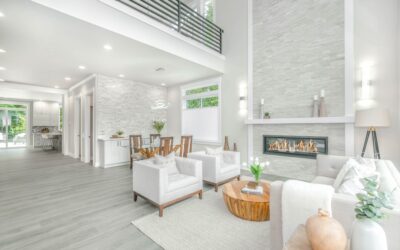
- Long living rooms: A 7×11 anchors a sofa-and-chairs grouping in a narrow living room, easily reaching under the front legs of all seating.
- Rectangular dining rooms: It comfortably fits a rectangular table seating six to eight, leaving the recommended 24 inches of rug beyond the chairs so they stay on the rug when pulled out.
- Narrow bedrooms: Placed under a queen or king bed, it extends far enough down the sides and foot for a soft landing without overwhelming a tight room.
- Open-concept zones: The length is ideal for defining a lounge area within a larger great room.
Furniture Placement on a 7×11
How you arrange furniture determines whether the rug looks intentional. Use these room-by-room rules.
Living Room
Aim for the front legs of your sofa and accent chairs to rest on the rug, with the rug sliding 6 to 12 inches under the sofa. The 11-foot length lets you run a sofa along one side and place two chairs opposite, all connected by the rug. In smaller rooms you can fit all furniture legs fully on the rug for the most unified look.
Dining Room
Center the table on the rug and confirm you have at least 24 inches of rug on every side beyond the table edge so chairs stay on the surface when guests slide back. A 7×11 handles a table up to about 84 inches long with six to eight chairs.
Bedroom
Position roughly the bottom two-thirds of the bed on the rug, leaving 18 to 24 inches of rug exposed along the sides and foot where your feet land in the morning. Nightstands can sit on or off the rug depending on your preference and the room’s width.
Choosing the Right Material
The best material depends on the room and traffic. Match the fiber to how hard the space gets used.
- Wool: Durable, naturally stain-resistant, and resilient under furniture, wool is the premium choice for living and dining rooms. Expect $600 to $1,800 in a 7×11.
- Polypropylene (olefin): Affordable, fade- and stain-resistant, and easy to clean, ideal for high-traffic and budget-conscious rooms. Typically $200 to $500.
- Polyester: Soft and rich-looking with good color depth, best in lower-traffic rooms since it crushes over time. $150 to $450.
- Natural fibers (jute, sisal): Textural and casual, great in dining or entry zones, though harder to clean and rough underfoot. $250 to $600.
For dining rooms, a low-pile or flatweave makes sweeping crumbs and sliding chairs far easier. In bedrooms, a plusher medium pile feels better underfoot.
What to Budget for a 7×11 Area Rug
Because 7×11 is a specialty size, expect slightly higher prices and fewer options than mainstream 8x10s. Machine-woven synthetics start around $200 and climb to $500 for better construction and denser weaves. Hand-tufted wool lands in the $600 to $1,200 range, while hand-knotted wool or wool-silk pieces can exceed $1,500 and become heirloom-quality investments. Washable rugs in this size, when available, run $250 to $500 and are worth it for households with kids or pets.
Always add a rug pad to your budget, roughly $50 to $90 for this size. A quality felt-and-rubber pad prevents slipping, cushions the rug, protects your floor, and extends the rug’s life by reducing fiber crushing under furniture.
7×11 Compared to Standard Rug Sizes
Understanding how 7×11 stacks up against the sizes you will see everywhere helps you judge whether it truly suits your room.
- 6×9 (54 sq ft): A full 2 feet shorter and slightly narrower. In a room that calls for 7×11, a 6×9 leaves furniture stranding off the edges and looks undersized.
- 8×10 (80 sq ft): Nearly the same area but 1 foot wider and 1 foot shorter. Choose 8×10 for square rooms and 7×11 for long, narrow ones.
- 9×12 (108 sq ft): Noticeably larger all around, better for spacious open-concept great rooms where you want all furniture legs fully on the rug.
The takeaway is that 7×11 trades width for length. If your room is longer than it is wide, or your furniture arrangement runs down the length of the space, that trade works in your favor and an 8×10 would feel too wide.
Measuring Your Room Before You Buy
Before committing to any rug near this size, measure twice. Note the full room dimensions, then mark where the rug should start and stop with painter’s tape on the floor. Live with the tape outline for a day so you can see how it interacts with doorways, traffic paths, and furniture. This five-minute step prevents the most expensive rug mistake, which is ordering a specialty size that turns out to be an inch too long for a doorway swing or too short to reach the sofa. For a 7×11, confirm you have clearance on the long walls and that the rug will not crowd a walkway to under 30 inches.
If You Cannot Find an Exact 7×11
True 7×11 rugs can be hard to source. If your search comes up short, a 6×9 will look too small in a room that calls for 7×11, so size up rather than down. Closely related dimensions to consider include 7×10, 8×10, and 6’7″ x 9′, depending on which measurement your room prioritizes. Measure your space, subtract 18 to 24 inches of border on the sides that need it, and choose the nearest available size that keeps furniture properly anchored. When in doubt, err toward the larger option, since an undersized rug is the most common and most noticeable mistake.
Final Thoughts on the 7×11 Area Rug
A 7×11 area rug is the answer for long, narrow rooms where standard sizes always seem a little off. It delivers generous length for anchoring a living room, seating a full dining set, or grounding a bed, all while keeping a slimmer width that suits rectangular spaces. Confirm the exact inches before buying, match the material to the room’s traffic, follow the placement rules so furniture stays anchored, and back it with a good pad. Do that, and this slightly unconventional size will fit your room better than any off-the-shelf standard could.