Pastel tile, polished brass faucets, almond-colored fixtures, garden tub with a tile surround, wallpaper border with pink bows. If you bought a house built between 1980 and 1992, you probably inherited a bathroom that time forgot. The 80s bathroom is one of the most recognizable and dated styles in American real estate — and also one of the easiest to transform with the right strategy. Whether you want a full gut remodel or a weekend refresh, knowing what defines the look tells you exactly what to keep, change, or cover.
Hallmarks of the Era
If you are not sure whether yours qualifies, check for these features:
- Pastel color palette: mauve, dusty rose, seafoam green, powder blue, or almond
- Polished brass fixtures: faucets, towel bars, light fixtures, cabinet hardware
- Laminate or cultured marble countertops in swirled neutral patterns
- Oak or honey-stained vanity cabinets with raised panel doors
- Hollywood bulb light bars over the mirror (4-8 round bulbs in a row)
- Large frameless mirror spanning the vanity, often clipped to the wall
- Garden tub — drop-in oval bath in a tiled surround
- Tile patterns in pink-and-grey, mauve-and-white, or seafoam-and-peach
- Wallpaper border at ceiling or mid-wall with floral, lace, or country patterns
- Carpeted bathrooms in some regions (still found in Florida, Arizona)
- Bidet or garden-style toilets in matching pastel porcelain
Almost every bathroom from this era has at least 5-6 of these. Identifying which specific elements date your space tells you where to focus remodel dollars.
Budget Tier 1: Cosmetic Refresh ($500-2,000)
If your bathroom is functional but visually stuck in 1987, you can modernize it for under $2,000 without tearing out plumbing.
Highest-impact changes in this tier:
- Paint everything: walls, vanity cabinet, trim, ceiling. Soft white (Benjamin Moore White Dove) erases 80% of the dated color instantly. Cabinet paint in Sherwin-Williams Iron Ore or a warm sage updates oak vanities.
- Swap all hardware: replace brass faucets, towel bars, TP holder, and cabinet pulls with matte black, brushed nickel, or polished chrome. Budget $300-600 for a coordinated set
- Replace the light fixture: kill the Hollywood bulb bar, install a modern sconce pair or linear LED over the mirror. $150-400
- Remove the wallpaper border: a scraper, warm water, and an afternoon. Free
- New mirror: frame the existing builder-grade mirror with a MirrorMate kit ($85-150) or install a new framed mirror
- Shower curtain, rugs, towels: modern textiles in neutrals erase the remaining 80s hangover
This tier does not touch the tile, tub, toilet, or vanity structure — but the visual transformation is often 60-70% of what a full gut would deliver.
Budget Tier 2: Mid-Range Remodel ($3,000-10,000)
If you want to push further without tearing out plumbing, this tier includes everything in Tier 1 plus:
- New vanity: modern 36-60 inch vanity with quartz or solid surface top. Home Depot or Lowe’s stock $800-1,800 options that install in a weekend
- New toilet: if the 80s toilet is almond, mauve, or seafoam, replace it with a standard white. Kohler Cimarron or American Standard Champion 4 at $200-400
- Refinish the tub and surround: professional tub reglazing ($350-600) covers pink or almond tubs with durable white finish that lasts 10-15 years
- Paint over tile: as a last resort, epoxy tile paint (RustOleum Tub and Tile Refinishing Kit) covers dated wall tile for $30 a can — looks fine for 3-5 years with careful prep
- Replace flooring: pull old tile or vinyl, install waterproof luxury vinyl plank at $3-6 per square foot installed
A mid-range remodel gets most dated baths to a sellable, modern-looking space without moving plumbing or hiring a general contractor.
Budget Tier 3: Full Gut Remodel ($12,000-30,000+)
For a complete transformation, plan on a 3-4 week project with a contractor. Full gut includes:
- Demolition of all tile, tub, toilet, vanity, and fixtures
- Re-framing for modern tub or walk-in shower geometry
- Replacing the garden tub with either a proper soaker or a large walk-in shower
- New tile floor, shower walls, and decorative accents
- New plumbing fixtures (toilet, tub, shower, sink, faucets)
- Electrical updates — GFCI outlets, modern vanity lighting, exhaust fan with timer
- New drywall, paint, trim
Labor is the biggest expense. In most US markets, a full bathroom gut runs $150-300 per square foot of bathroom. A 50 sq ft hall bath hits $10,000-15,000 with mid-range finishes; a 100 sq ft primary bath pushes $20,000-35,000.
What to Keep from the Original
Not everything from the era is bad. Some 80s features worth preserving:
- Solid cast iron tubs: the 80s had them — thick, heavy, lasting 50+ years. Reglaze instead of replace
- Large garden tubs: if the tub itself is white (or reglazable to white), modernize the surround and keep the soaking capacity
- Decent layouts: many 80s primary bathrooms have generous square footage that is hard to find in modern builds
- Real wood vanities: oak and maple cabinetry from this era is often solid wood — strip, stain or paint, replace hardware, and keep the structure
The structural bones of these bathrooms are usually solid. The visible finishes are what needs attention.
The Garden Tub Question
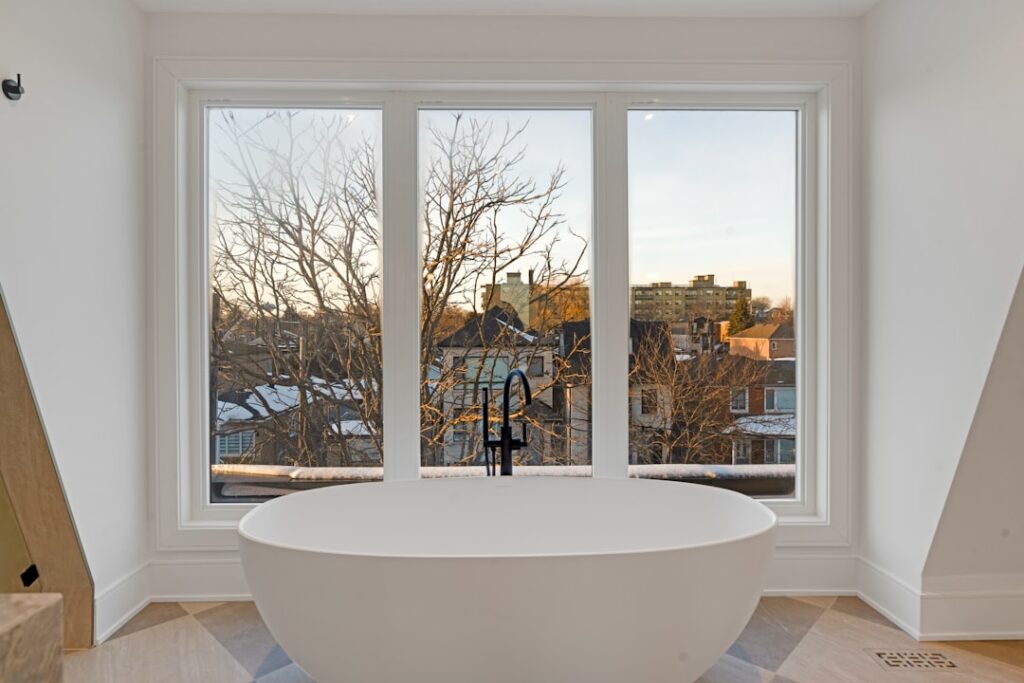
Nothing screams 80s like a drop-in oval tub in a tiled platform with a wallpaper border above. You have three options:
- Keep and refresh: reglaze the tub, re-tile or paint the surround, new faucet — $1,500-3,000
- Replace with a modern soaker: freestanding tub in the same footprint — $2,000-5,000 including plumbing adjustments
- Convert to a walk-in shower: remove tub entirely, build a tile or prefab shower in its place — $3,500-10,000
Resale data: in most US markets, at least one bathtub in the home is still expected for resale. If this is your only tub, keep a tub in the space even if you modernize the style.
Signature Modern Design Moves
When remodeling, these choices reliably update a dated space without chasing the next fad:
- Large format tile: 12×24 or larger floor tile reads as contemporary, hides grout lines
- Subway tile with dark grout: classic enough to last, fresh compared to 80s pink mosaic
- Matte black or warm brass fixtures: both have replaced polished brass as the go-to finish
- Floating vanity: wall-mounted vanity with open space below reads as modern and easier to clean
- Frameless shower glass: replaces sliding glass doors with a clean, open look
- LED mirrors and backlit vanity mirrors: eliminate need for overhead Hollywood bars
Common Mistakes When Updating
Homeowners updating these vintage spaces frequently fall into these traps:
- Chasing trends too hard: gray-and-white “farmhouse” bathrooms from 2018 already look dated. Pick classics that have held up for 30+ years
- Keeping almond or mauve fixtures: even one colored fixture (toilet, tub) drags the entire space back to 1985
- Mixing brass and chrome: commit to one metal finish throughout
- Skipping the ventilation fan: 80s fans are loud, weak, and often wired to the light switch. A modern Panasonic WhisperCeiling ($140) is quiet and prevents mold
- Painting over problems: mildew on the ceiling or behind wallpaper will come back through paint in weeks — address the water source first
Resale Value Impact
Nationwide data from Remodeling Magazine’s Cost vs Value Report shows a mid-range bathroom remodel recovers 60-72% of cost at resale. A renovated space makes the entire house show better, which often adds more to listing price than the remodel cost alone.
The 80s bathroom is a project, but it is also a clear opportunity. You know exactly what to change, the problems are predictable, and most fixes deliver visible improvement right away. Start with the paint-and-hardware tier this weekend, and decide from there how deep you want to go.