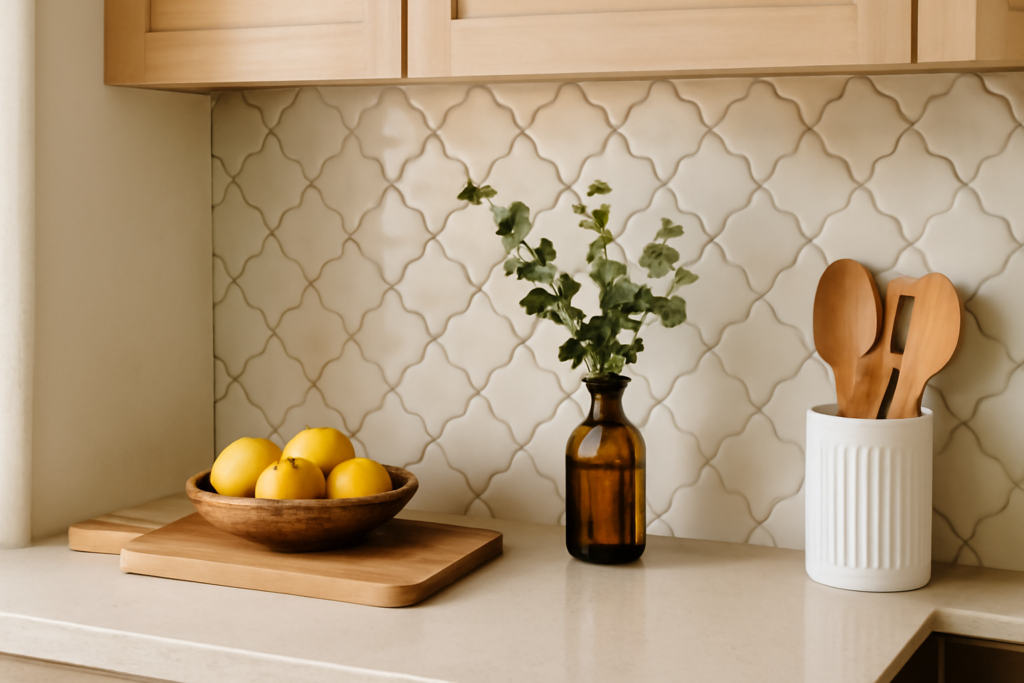
If you want a backsplash that feels both classic and distinctive, few shapes deliver like the elegant, curved silhouette of Moroccan-inspired tile. An arabesque backsplash uses interlocking lantern or ogee-shaped tiles to create a gently flowing pattern that adds movement and softness to a kitchen or bathroom. It reads as sophisticated without being fussy, and it works across many design styles. This guide is packed with design inspiration, from color and material choices to layouts, costs, and styling tips to help you plan a backsplash you will love for years.
Part of our Kitchen Remodeling guide — explore the full guide →
- What Makes an Arabesque Backsplash Special?
- Popular Colors and Finishes
- Material Options
- Design and Layout Ideas
- Where to Use an Arabesque Backsplash
- What Does It Cost?
- Styling Tips to Pull the Look Together
- Arabesque vs. Other Popular Tile Shapes
- Caring for Your Arabesque Backsplash
- Installation Considerations for Arabesque Tile
- Final Thoughts on an Arabesque Backsplash
What Makes an Arabesque Backsplash Special?
The arabesque shape, sometimes called lantern or pincushion tile, features curved sides that interlock so the tiles nest together in a continuous, rhythmic pattern. Unlike the rigid grid of subway tile, an arabesque backsplash introduces graceful curves that draw the eye and add visual interest to an otherwise flat wall. The look has roots in Moorish and Mediterranean design, which gives it a timeless, slightly exotic character that still feels fresh in modern kitchens. It is elegant enough for a formal space yet playful enough to warm up a minimalist room.
Popular Colors and Finishes
Color choice dramatically changes the mood of an arabesque backsplash:
- Classic white: Timeless and bright, letting the shape itself be the star while keeping the kitchen open and airy.
- Soft gray and greige: Neutral and versatile, pairing beautifully with both warm and cool cabinetry.
- Blue and green: From pale seafoam to deep navy, these hues add coastal or jewel-toned personality.
- Warm terracotta and blush: Nod to the pattern’s Mediterranean roots with earthy, inviting tones.
- Glossy vs. matte: Glossy finishes reflect light and feel crisp, while matte and handmade-look glazes bring artisan texture and depth.
Hand-glazed and zellige-style arabesque tiles show subtle color variation and surface imperfections that make each installation feel one-of-a-kind.
Material Options
Arabesque tiles come in a range of materials to suit different budgets and rooms:
- Ceramic and porcelain: The most common and affordable, durable and easy to clean, available in countless colors.
- Glass: Reflective and luminous, ideal for adding brightness and a contemporary sparkle.
- Natural stone: Marble and other stones bring luxury and organic veining, though they need sealing.
- Mother-of-pearl and metal: Specialty options for a glamorous, high-impact accent.
For a hardworking kitchen backsplash, glazed ceramic or porcelain offers the best balance of beauty, durability, and easy maintenance.
Design and Layout Ideas
The way you install and frame the pattern shapes the entire look. For a serene, cohesive effect, run the arabesque tile in a single soft color from countertop to upper cabinets. To make it a true feature, install the pattern only behind the range as a framed focal point, bordered by simple field tile. Contrasting grout is a powerful design lever: a white tile with light gray grout keeps the pattern subtle, while a darker grout outlines each curve and emphasizes the shape dramatically.
Carrying the backsplash all the way to the ceiling behind a stove or up a bathroom wall creates a striking statement. In smaller spaces, a glossy arabesque backsplash bounces light around and makes the room feel larger. Because the shape is naturally decorative, it pairs best with clean, simple cabinetry and countertops that let the tile shine.
Where to Use an Arabesque Backsplash
While the kitchen is the classic home for this tile, the shape works beautifully throughout the house. Use it behind a bathroom vanity for a boutique-hotel feel, in a powder room for a jewel-box moment, or as a shower accent wall. It also makes an elegant backsplash behind a wet bar or coffee station. Anywhere you want a wall to feel considered and special, the arabesque silhouette delivers.
What Does It Cost?
Pricing depends heavily on material and quality:
- Ceramic and porcelain arabesque tile: roughly $8 to $20 per square foot
- Glass and premium glazed tile: roughly $15 to $30 per square foot
- Natural stone and specialty tile: roughly $25 to $50 or more per square foot
- Professional installation: often $10 to $20 per square foot, sometimes higher for the curved shape
Because the interlocking curves require more careful cutting around edges and outlets, labor can run slightly higher than for straightforward subway tile. Most tiles come mesh-mounted in sheets, which speeds installation considerably.
Styling Tips to Pull the Look Together
- Let the tile be the focal point by keeping counters and cabinets simple.
- Choose grout color intentionally to either soften or emphasize the pattern.
- Coordinate metal finishes on faucets and hardware with the overall mood.
- Use warm tones to enhance the Mediterranean vibe or cool tones for a modern feel.
- Consider a full-height installation behind the range for maximum impact.
Arabesque vs. Other Popular Tile Shapes
It helps to see how the arabesque shape compares with the other backsplash styles you might be considering. Subway tile is crisp, affordable, and timeless, but its straight grid can feel expected and plain. Hexagon tile brings geometric, modern energy with angular lines. Fish-scale and scallop tiles offer curves too, but with a more overtly playful, mermaid-inspired vibe. The arabesque sits in a sweet spot between these: it delivers graceful movement and a touch of the exotic while remaining elegant and grown-up rather than trendy or busy.
That balance is exactly why designers reach for it when a client wants something special that will not feel dated in a few years. If you love pattern but worry about a shape feeling too bold, the arabesque is a safe yet distinctive middle ground that photographs beautifully and suits both classic and contemporary kitchens.
Caring for Your Arabesque Backsplash
Keeping the pattern looking crisp is simple with a little routine care. For glazed ceramic and porcelain, wipe the surface with a soft cloth and mild cleaner to remove cooking splatter and grease. Keep grout lines clean by scrubbing occasionally with a soft brush, and seal the grout after installation to resist staining, refreshing the sealer periodically. If you chose natural stone such as marble, use only pH-neutral cleaners and avoid acidic products like vinegar, which can etch and dull the surface. Address splatters promptly rather than letting them bake on near the range. With this easy upkeep, an arabesque backsplash keeps its elegant, hand-glazed charm for many years.
Installation Considerations for Arabesque Tile
The curved, interlocking shape that makes arabesque tile so beautiful also makes installation slightly more involved than a simple square grid. Most arabesque tile comes mounted on mesh sheets, which speeds the work considerably by keeping the spacing consistent, but you will still need to make careful cuts around the edges, outlets, and where the pattern meets cabinets. Because the tiles nest together, ending a run cleanly requires cutting partial shapes, and a wet saw with a smooth blade produces the best results on the curves.
Keep these points in mind when planning the job:
- Dry-lay a few sheets first to understand how the pattern interlocks and where cuts will fall.
- Plan the layout so partial tiles land at the least visible edges.
- Use the right thinset and a smooth-cutting blade to handle the curved cuts.
- Choose your grout color deliberately, since it dramatically changes how bold the pattern looks.
If you are a confident DIYer, a mesh-mounted arabesque backsplash is achievable, though many homeowners hire a professional for the cleanest curves and edges.
Final Thoughts on an Arabesque Backsplash
An arabesque backsplash brings graceful curves and timeless character to any room, striking a rare balance between classic and distinctive. Whether you choose crisp white ceramic, luminous glass, or veined marble, the interlocking lantern shape adds movement that a standard grid simply cannot. Play with color, grout, and layout to match your style, keep the surrounding surfaces clean and simple, and you will end up with a backsplash that feels custom, elegant, and endlessly charming.