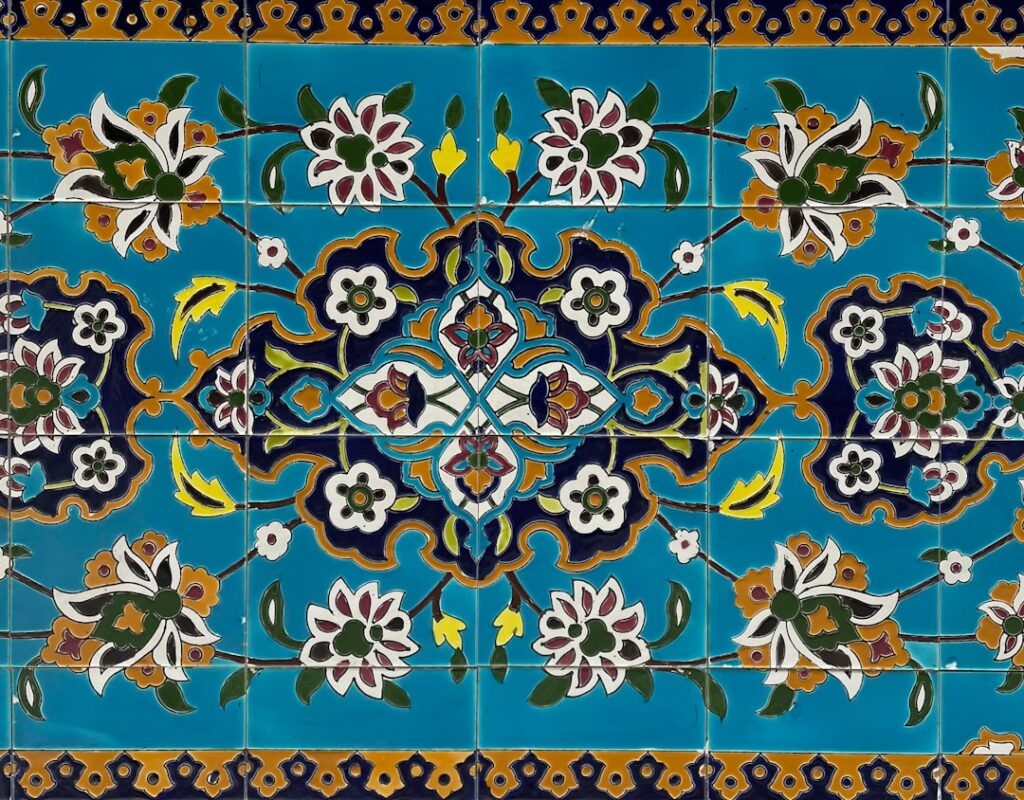
That curvy, lantern-shaped pattern you keep seeing on design blogs has a name, and you can get the look this weekend without a tile saw or a bag of thinset. Arabesque peel and stick tile brings the classic Moroccan silhouette to a kitchen backsplash or bathroom wall using nothing more than a self-adhesive backing and a pair of scissors. I’ve watched homeowners with zero tiling experience finish a full backsplash in an afternoon. It won’t fool a mason up close, but from three feet away it reads as the real thing, and the price difference is dramatic.
Part of our Tile & Grout guide — explore the full guide →
What Makes Arabesque Tile Different
The arabesque shape, sometimes called a lantern or provincial tile, is that elongated pinched oval with concave sides that interlock into a flowing repeat. Traditional ceramic versions have been around for centuries. The peel-and-stick take reproduces that outline in gel, vinyl, PVC, or thin aluminum-and-resin composites, printed and molded to mimic glazed ceramic, marble, or glass.
Because the shape is curvy rather than a simple square, look closely at how the sheets align. Good arabesque peel and stick tile comes in pre-arranged sheets, usually 9 to 12 inches, where the lantern pattern continues seamlessly across joints. That alignment is what sells the illusion.
The Main Types You’ll Find
Not all of these products are built the same, and the material drives both looks and durability.
- Gel/3D vinyl: A raised epoxy-gel surface that catches light like real glazed tile. It has genuine depth and is the most convincing type for a backsplash. Runs about $6 to $10 per sheet.
- Flat printed vinyl: A thin, flexible sheet with a printed pattern. Cheapest at $3 to $6 per sheet, but flat lighting reveals it’s a print.
- Metal-and-composite: Aluminum-faced tiles with a resin coat that feel more substantial and handle heat near a stovetop better. Around $8 to $13 per sheet.
For a kitchen backsplash I steer people toward gel or metal composite. The flat printed version is fine for a rental bathroom or a low-traffic accent wall.
Here’s where peel-and-stick earns its keep. A typical kitchen backsplash of 30 square feet done in real ceramic arabesque tile runs $12 to $25 per square foot in materials plus $8 to $15 per square foot for a pro to install, easily $700 to $1,200 total. The same area in quality peel-and-stick costs roughly $150 to $300 in materials and nothing in labor if you do it yourself. That’s a fraction of the investment for a temporary or budget-conscious refresh.
Where It Works and Where It Doesn’t
Placement makes or breaks the result. These tiles shine in dry, moderate-temperature spots and struggle where heat and standing water are constant.
Good locations
Kitchen backsplashes above the counter, bathroom accent walls, laundry rooms, and rental units where you can’t touch the real walls. Anywhere you want a design punch without permanence.
Risky locations
Avoid inside a shower enclosure or a tub surround with direct water contact; the adhesive will eventually let go. Keep them at least a few inches from the flame side of a gas range, since sustained heat above roughly 140°F softens the glue. Behind a stovetop, choose the metal composite type and leave clearance.
How to Install It Step by Step
The process is genuinely beginner-friendly, but prep is everything. Skip the cleaning and your tiles will peel within weeks.
- Clean the wall with a degreaser like TSP substitute or a mix of dish soap and water, then wipe with rubbing alcohol and let it dry fully. Adhesive needs a grease-free surface.
- Find your center point and dry-lay a few sheets to plan the pattern. Because the arabesque shape interlocks, starting square keeps the whole run aligned.
- Peel the backing halfway, position the sheet, then smooth it on from the center outward with a plastic squeegee or a credit card to push out air bubbles.
- For outlets and edges, cut with sharp scissors or a utility knife against a straightedge. The curvy edges hide small cutting errors better than square subway tile does.
- Press each sheet firmly for 30 seconds. Roll the whole surface with a hand roller for maximum bond.
A 30-square-foot backsplash takes most people 2 to 4 hours. No grout, no drying time, no wet saw.
Durability and Everyday Care
Quality gel and composite versions hold up for 3 to 5 years or longer in a dry area, while cheap flat vinyl may start lifting at the edges within a year, especially near the sink. Clean them with a soft cloth and mild soap; skip abrasive scrubbers and harsh solvents that can dull or lift the surface. Wipe up splatters promptly near the cooktop.
Heat and humidity are the main enemies. In a bathroom, run the exhaust fan to keep steam from working under the edges. If a corner ever lifts, a dab of clear silicone or a hot-glue touch-up puts it right back down.
One of the real advantages, especially for renters, is that these come off. Warm the tile with a hair dryer on low to soften the adhesive, then peel slowly at a shallow angle. Any glue residue wipes away with rubbing alcohol or an adhesive remover like Goo Gone. On painted drywall, expect to touch up the paint afterward, since some finishes lift with the glue.
Design Tips for a Convincing Look
A few choices separate a backsplash that looks custom from one that screams “peel-and-stick.” Color matters most: soft white, warm marble-look, and muted sage or navy arabesque patterns photograph and age better than loud, glossy prints. Match the tile tone to your countertop and cabinets rather than fighting them.
Pay attention to the finish edges too. Running the tile up to a shelf, cabinet, or a slim metal trim piece hides the cut ends and mimics how real tile terminates. Where the backsplash meets the countertop, a thin bead of color-matched caulk seals the seam and stops splashes from creeping behind the tile. Details like that are what make guests do a double take.
Pros and Cons at a Glance
Before you commit, weigh the honest trade-offs. This product is fantastic for some jobs and wrong for others.
- Pros: Low cost, no special tools, renter-friendly and removable, installs in an afternoon, no grout to seal or scrub, and a huge range of patterns.
- Cons: Not truly permanent, sensitive to sustained heat and standing water, flat versions look printed under bright light, and edges can lift over time in humid rooms.
If you’re staging a home to sell, refreshing a rental, or testing a look before committing to real tile, the pros win easily. For a forever kitchen where you want maximum durability, real ceramic is still the long-game choice.
Is It Worth It?
For a fast, affordable, low-commitment upgrade, arabesque peel and stick tile is one of the best-value products in home improvement right now. It delivers a high-end, designer-looking pattern for a tenth of the cost of real ceramic, installs in an afternoon, and comes off without a demolition crew. Just match the material to the location, prep the surface properly, and keep it out of direct water and heat. Do that and you’ll get years of good looks from a weekend project.
Prefer to explore on your own?
See how new flooring looks in your actual room in seconds — free, no signup.
Try the free Floor Studio →