Gray cabinets look simple until you hold a tile sample against them and the whole kitchen suddenly reads green, blue or muddy. Choosing a backsplash for gray cabinets comes down to two things: how dark the gray is and which undertone hides inside it. Get those right and almost any material works. Get them wrong and even expensive tile looks off.
Part of our Kitchen Remodeling guide — explore the full guide →
The short answer: light gray cabinets pair best with crisp white, soft marble looks and pale warm neutrals; mid gray handles more pattern and color, such as blue, sage or patterned cement-look tile; charcoal cabinets need brightness and texture, so glossy white, light marble or warm handmade tile keeps the room from feeling heavy. Match warm grays (greige, taupe-gray) with warm tile, and cool grays (blue-gray, slate) with cool or true-white tile.
- Choosing a Backsplash for Gray Cabinets: Read the Undertone First
- Light Gray Cabinets: 5 Pairings
- Mid Gray Cabinets: 5 Pairings
- Charcoal and Dark Gray Cabinets: 5 Pairings
- Coordinating With Countertops and Hardware
- Grout Color and Finish Choices
- Installation Notes Before You Start
- Common Problems and Fixes
- Cost Ranges and When to Hire a Pro
- Frequently Asked Questions
Undertones first, then fifteen pairings grouped by cabinet shade, then the practical side: grout color, countertop coordination, installation basics and budget.
Choosing a Backsplash for Gray Cabinets: Read the Undertone First
Every gray leans somewhere. Hold the cabinet door next to a sheet of plain printer paper in daylight. If the gray looks slightly brown, beige or purple beside the paper, it is warm. If it looks blue, green or steely, it is cool. That single test prevents most backsplash mistakes.
Warm grays, often called greige, sit comfortably with cream, ivory, warm white, travertine looks, terracotta accents and honey-toned wood shelves. Cool grays prefer bright white, blue-veined marble looks, slate, navy and chrome-toned metals. Mixing a strongly warm tile with a strongly cool cabinet is where the dingy look comes from: the cool cabinet makes cream tile look yellowed, and the warm cabinet makes stark white tile look clinical.
Neutral grays (true middle grays with no obvious lean) give you the most freedom. With those, decide on undertone based on your countertop and flooring instead, since those surfaces cover more area than the cabinets in many kitchens.
Quick undertone rules
- Warm gray cabinets: warm white, cream, beige stone looks, brass or bronze hardware.
- Cool gray cabinets: bright white, blue-gray, gray-veined marble looks, nickel or chrome hardware.
- Neutral gray cabinets: follow the countertop; both families can work.
Light Gray Cabinets: 5 Pairings
Light gray (dove, pale silver, mist) behaves almost like a soft white. The risk is a washed-out kitchen with no contrast, so the backsplash should add either texture or a little definition.
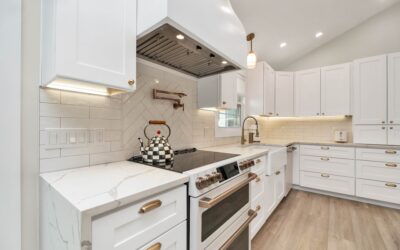
- Glossy white ceramic subway tile with light gray grout. The classic for a reason. The gloss bounces light and the grout lines echo the cabinet color, tying the room together without competing.
- White marble-look herringbone. A porcelain marble look in a herringbone layout adds movement while staying light. Gray veining picks up the cabinet shade.
- Soft blue or sea-glass tile. Cool light grays come alive with a pale aqua or powder blue, especially in a coastal or cottage kitchen.
- Warm white zellige-style handmade tile. On warm light grays, slightly uneven handmade tile adds depth so the wall does not look flat.
- Charcoal hexagon accent behind the range. Keep most of the wall white, then add a framed panel of darker hex tile behind the stove for a focal point.
Mid Gray Cabinets: 5 Pairings
Mid grays (pewter, stone, fog) have enough weight to stand up to color and pattern. That makes them the most flexible shade for adventurous backsplash choices.
- Patterned cement-look tile. A black, white and gray encaustic pattern repeats the cabinet tone in a busy but controlled way. Keep the countertop plain if you go this route.
- Sage or muted green subway. Warm mid grays and soft green read calm and organic, especially with wood open shelving.
- Navy or deep blue gloss tile. Cool mid grays look sharp with navy. Use it on one wall or a range hood surround if a full kitchen feels too dark.
- Stacked white tile in a vertical layout. A vertical stack bond of long white rectangles feels modern and makes an 8-foot ceiling seem taller.
- Light travertine or limestone look. Warm mid grays plus beige stone tile give a soft, Old World mood that suits shaker doors and brass pulls.
Charcoal and Dark Gray Cabinets: 5 Pairings
Charcoal cabinets absorb a lot of light. Your backsplash has to give some of it back, so prioritize lighter colors, gloss and reflective surfaces.
- Bright white gloss subway with white grout. Maximum contrast, maximum brightness. It is hard to get wrong with charcoal.
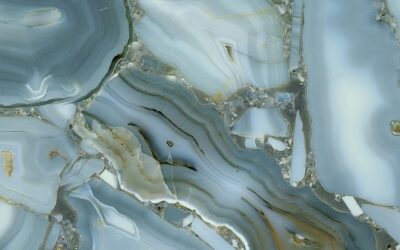
- Calacatta-style marble look slab or large-format porcelain. A single full-height slab or large panels with bold gray veining feels upscale and avoids grout lines entirely.
- Warm cream handmade tile. Warm charcoal (with a brown lean) looks rich next to cream tile and aged brass hardware.
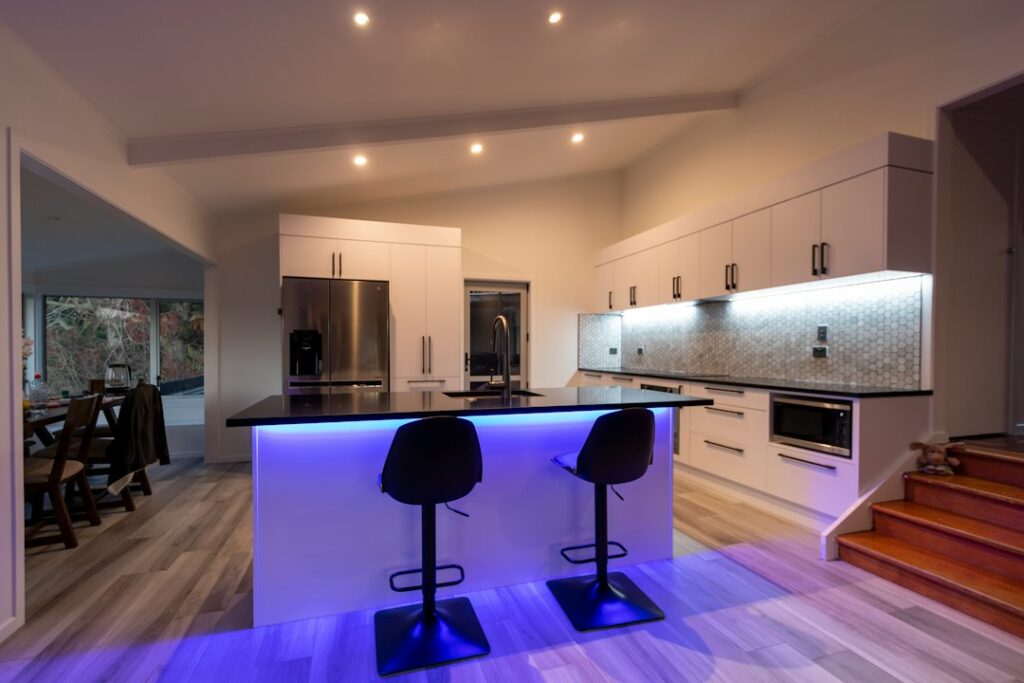
- White and gray mosaic. A small marble-look mosaic adds sparkle and texture without introducing new colors.
- Light wood-look or fluted tile accent. For a modern kitchen, a pale wood-tone or fluted ceramic panel behind open shelves softens the darkness.
Coordinating With Countertops and Hardware
The countertop sits between the cabinets and the backsplash, so it often decides which backsplash for gray cabinets wins. Busy granite with lots of speckle pairs best with a quiet, single-color backsplash. A plain quartz or solid-surface top leaves room for pattern on the wall. If your counter has gray veining, pull your backsplash color from the lightest tone in that veining, not the darkest.
Butcher block and warm wood tops push the room warmer. That suits greige cabinets with cream or warm white tile. With cool blue-gray cabinets and a wood top, a crisp white backsplash bridges the gap better than either a cool or warm tile alone.
Hardware is the finishing note. Brushed brass and bronze reinforce warm schemes; polished nickel, chrome and matte black work with cool schemes. Matte black also works in nearly every gray kitchen as a neutral accent.
Grout Color and Finish Choices
Grout covers a surprising share of a subway tile wall, often 5 to 10 percent of the visible surface. White grout with white tile reads clean and unbroken from a distance but shows cooking stains sooner. A light or mid gray grout hides wear and visually links the wall to gray cabinets. Charcoal grout with white tile is a strong graphic look that emphasizes the pattern, which is great for herringbone and less so for irregular handmade tile.
Sheen matters too. Gloss tile reflects light and is easier to wipe; matte or honed tile feels softer and more natural but can hold grease near the range. In a busy cooking zone, many homeowners use gloss behind the stove and matte elsewhere in the same color.
Installation Notes Before You Start
Tiling a backsplash is a reasonable weekend DIY for most homeowners, but plan around a few safety points. Before you remove outlet and switch covers, turn off the breaker for that circuit and confirm power is off with a non-contact voltage tester. Do not test or work around live outlets. If an outlet needs to move or be extended to sit flush with the new tile surface, use box extenders rated for that purpose, and hire a licensed electrician for any new outlets or circuits. Kitchen counter outlets should be GFCI protected.
Cutting ceramic and porcelain tile creates fine silica dust. Use a wet saw or score-and-snap cutter when possible, wear an N95 or P100 respirator for any dry cutting or grinding, and clean up with a HEPA vacuum rather than sweeping.
Basic tools and materials
- Tile, plus 10 to 15 percent extra for cuts and breakage
- Thinset or premixed adhesive suited to your tile size
- Notched trowel, spacers, level and tape measure
- Wet saw or manual tile cutter, tile nippers
- Grout, rubber float, sponges and grout sealer if using cement grout
- Painter’s tape, drop cloths and a non-contact voltage tester
Common Problems and Fixes
The tile looks yellow next to the cabinets. That is a warm tile against cool gray. Swap to a brighter white or add cooler accents like nickel hardware and white grout.
The kitchen feels flat and gray. Add texture (handmade tile, a pattern layout) or a warm material like wood shelves. Under-cabinet lighting also helps a light-gray-on-white scheme look dimensional.
Too much contrast. If charcoal cabinets and stark white tile feel harsh, shift to a warm white or soft marble look and use gray grout to soften the transition.
Cost Ranges and When to Hire a Pro
Material costs vary widely. Basic ceramic subway tile is one of the most affordable options, often in the low single digits per square foot, while marble-look porcelain, handmade tile and natural stone mosaics climb into the mid to high range. Professional installation for a typical 30 to 40 square foot backsplash generally runs from several hundred dollars to a couple thousand, depending on tile size, layout complexity and how many outlets and windows need careful cuts.
Consider hiring a tile setter for large-format slabs, intricate herringbone or chevron, natural stone that needs sealing, or walls that are out of plumb. A pro can also handle outlet relocation coordination with an electrician. For straight subway layouts on a flat wall, DIY is realistic and can cut the job cost roughly in half.
Frequently Asked Questions
What color backsplash goes with gray cabinets?
White is the safest choice for any gray, but the best match depends on undertone. Warm grays pair well with cream and beige stone looks, while cool grays look best with bright white, blue or gray-veined marble looks.
Should the backsplash be lighter or darker than gray cabinets?
Usually lighter, especially with mid and charcoal gray, because a lighter backsplash reflects light and keeps the kitchen from feeling closed in. A darker accent panel behind the range can work with light gray cabinets.
Does white subway tile work with gray cabinets?
Yes. White subway tile works with every shade of gray. Use light gray grout to tie it to the cabinets or white grout for a cleaner, brighter look.
What grout color is best with gray cabinets and white tile?
Light to mid gray grout hides stains and links the tile to the cabinets. White grout looks crisp but needs more cleaning, and charcoal grout creates bold contrast.
Can I use a patterned backsplash with gray cabinets?
Mid gray cabinets handle pattern best. Choose a pattern that includes your cabinet gray and keep the countertop fairly plain so the room does not feel busy.