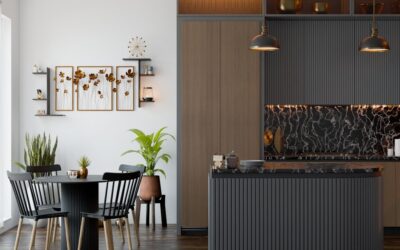
Gray became the default backsplash choice for a reason that has nothing to do with trends. A well-chosen gray backsplash tile is the rare finish that flatters warm woods and cool whites, hides splatter better than pure white, and never fights with your countertop for attention. The catch is that gray is not one color. It ranges from soft dove to near-black charcoal, and picking the wrong undertone can leave a kitchen feeling cold and flat instead of calm and current.
Part of our Kitchen Remodeling guide — explore the full guide →
This guide walks through the shades, materials, and layouts that make gray work, plus the pairing rules and costs that keep the project from going sideways.
- Why Gray Works in So Many Kitchens
- Understanding Gray Undertones
- Popular Materials for Gray Backsplash Tile
- Choosing the Right Shade for Your Space
- Layout and Pattern Options
- Pairing Gray With Countertops and Cabinets
- Cost and Installation Considerations
- Lighting and How Gray Reads at Different Times
- Maintenance and Longevity
Why Gray Works in So Many Kitchens
Gray sits between the starkness of white and the heaviness of black, which is exactly what makes it flexible. It functions as a neutral, so it lets a bold countertop or colorful cabinets take the lead. At the same time, it has enough depth to add interest on its own when the rest of the kitchen is plain.
Practically, gray also earns its keep. Light grays hide water spots and grease film that would show instantly on white subway tile, while darker grays camouflage the inevitable splatter behind a stovetop. That day-to-day forgiveness is a real advantage in a hardworking kitchen.
Understanding Gray Undertones
The single biggest mistake homeowners make is ignoring undertone. Every gray leans either warm or cool, and that lean determines whether it harmonizes with your space or clashes with it.
- Cool grays carry blue or green undertones and pair beautifully with white cabinets, stainless steel, and marble-look quartz. They can feel clinical if the room lacks warm accents.
- Warm grays, sometimes called greige, blend gray with beige or taupe. They flatter wood tones, cream cabinets, and brass hardware.
- True neutral grays lean neither way and are the safest bet when you are unsure or plan to change your decor over time.
Always test a sample against your cabinets and counters in the actual kitchen light. A gray that looked perfect in the store can turn lavender or dingy under warm LED bulbs.
Popular Materials for Gray Backsplash Tile
Gray shows up across every tile material, and the one you choose affects both the look and the maintenance. Matching the material to your budget and style keeps the result cohesive.
Ceramic and Porcelain
The workhorse choice. Glazed ceramic and porcelain come in every gray imaginable, resist stains, and wipe clean easily. Expect $3 to $12 per square foot for the tile itself.
Glass
Gray glass tile reflects light and makes small kitchens feel brighter. It runs $10 to $30 per square foot and shows fewer grout lines when installed as a mosaic sheet.
Natural Stone
Gray marble, slate, and soapstone bring organic veining and texture. Stone costs $15 to $40 per square foot and needs sealing, since it is porous and absorbs kitchen grease.
Cement and Zellige
Handmade cement and Moroccan zellige tiles offer subtle color variation and a matte, artisanal look that mass-produced tile cannot match, though they carry a premium price and more upkeep.
Choosing the Right Shade for Your Space
The depth of gray you pick should respond to your kitchen’s light and size. In a small or north-facing kitchen with limited natural light, a light dove or greige backsplash keeps the room from feeling like a cave. In a large, bright kitchen with plenty of windows, a charcoal or graphite gray backsplash tile adds welcome drama and grounds the space.
Contrast is your other lever. Pairing a dark gray backsplash with white cabinets creates a crisp, high-contrast look. Matching a soft gray backsplash to gray cabinets produces a serene, tonal effect. Neither is wrong; it comes down to whether you want the backsplash to stand out or blend in.
Layout and Pattern Options
The same tile reads completely differently depending on how it is laid. Layout is a free design lever, since it costs nothing extra beyond a little more cutting.
- Classic subway in a running bond pattern is timeless and pairs with almost any style.
- Vertical stack draws the eye up and modernizes a plain rectangular tile.
- Herringbone adds movement and a tailored, upscale feel.
- Large-format slabs minimize grout lines for a sleek, low-maintenance surface.
- Hexagon or penny-round mosaics introduce geometry and a retro or spa-like vibe.
Your grout color changes the whole effect too. A matching gray grout makes the pattern recede into a smooth field, while a contrasting white or dark grout highlights every tile and emphasizes the shape.
Pairing Gray With Countertops and Cabinets
A backsplash never lives alone, so plan it alongside your counters and cabinets. Warm gray tile ties together wood cabinets and butcher block or brown-veined granite. Cool gray tile completes a modern scheme of white cabinets and quartz with gray veining.
Be careful mixing too many grays that fight each other. If your countertop already has strong gray veining, choose a simpler, solid gray backsplash so the two do not compete. When the counters are busy, let the tile be quiet, and when the counters are plain, let the gray backsplash tile carry the pattern and texture.
Cost and Installation Considerations
A typical kitchen backsplash covers 30 to 40 square feet. Material costs land between $150 and $1,200 depending on whether you choose budget ceramic or premium stone. Professional installation adds $10 to $25 per square foot, putting a full installed backsplash in the $500 to $1,500 range for most kitchens.
DIY installation can cut labor entirely if you are comfortable with a wet saw and thinset, dropping the project to material cost plus around $75 in supplies. Budget for extra tile, roughly 10 to 15 percent, to cover cuts and future repairs. Whatever route you take, gray remains one of the most reliable investments you can make in a kitchen refresh, delivering a look that stays current long after bolder colors fall out of favor.
Lighting and How Gray Reads at Different Times
Gray is the most light-sensitive neutral there is, which is exactly why the same tile can look elegant in one kitchen and grim in another. Natural daylight tends to reveal a tile’s true undertone, while warm incandescent and 2700K LED bulbs push gray toward beige or even a muddy brown. Cooler 4000K to 5000K bulbs sharpen cool grays and can make warm grays look flat. Before committing, tape a full sheet of the tile to the wall and look at it in the morning, at midday, and under your evening lights.
Under-cabinet lighting matters too, since it hits the backsplash at a raking angle that exaggerates texture and grout lines. A matte tile softens that effect, while a glossy or glass tile bounces the light and brightens the counter workspace. If your kitchen leans dark, a glossy light gray backsplash doubles as a subtle reflector that lifts the whole room.
Maintenance and Longevity
One of gray’s quiet advantages is how forgiving it is day to day, but a little care keeps it looking its best. Glazed ceramic and porcelain need nothing more than a wipe with a soft cloth and a pH-neutral cleaner. Skip abrasive scrubbers, which can dull a glossy glaze over time, and avoid ammonia on glass tile, which leaves streaks.
Grout is the part that ages fastest. Light gray grout hides coffee splatter and grease better than white, but it still benefits from sealing once a year to keep stains from soaking in. Natural stone grays, whether marble or slate, need their own penetrating sealer every one to two years to fend off the grease and acid that a kitchen throws at them. With that minimal routine, a gray backsplash tile holds its color and finish for a decade or more without looking tired.
Prefer to explore on your own?
See how new flooring looks in your actual room in seconds — free, no signup.
Try the free Floor Studio →