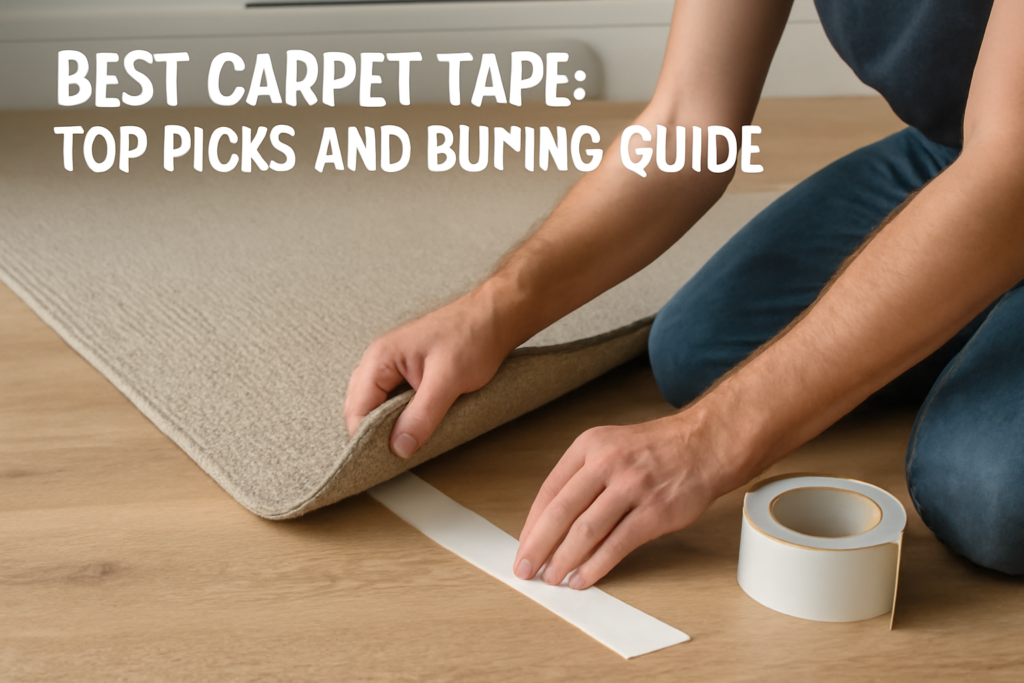
The wrong carpet tape ruins floors. Cheap rubber adhesive leaves a sticky residue that traps grit for years, and pressure-sensitive double-sided tape from the dollar store fails within weeks under foot traffic, sending throw rugs sliding across hardwood like a comedy routine. The best carpet tape matches the substrate (hardwood, LVP, tile, carpet pad), the rug fiber (wool, polypropylene, jute), and the duration (seasonal, permanent, removable) — and ranges from $8 to $35 per roll depending on adhesive chemistry.
Acrylic vs Rubber vs Hybrid Adhesives
Three adhesive families dominate the market. Pressure-sensitive acrylic tapes (XFasten Professional, Yes Tape Pro) bond strongly to most surfaces and remove cleanly within 60 to 90 days. Rubber-based hot-melt tapes (Roberts 50-580, Henry 12056) deliver the strongest hold for seaming but leave heavy residue that requires solvent cleanup. Hybrid silicone-acrylic tapes (Gorilla Tough and Clear Mounting Tape) work on textured surfaces where standard tapes fail.
Match the adhesive to the use case. Acrylic tapes shine for rug-to-floor applications under 100 days. Rubber tapes are the only choice for hot-iron seaming on broadloom carpet during installation. Silicone hybrids work on stair nosings, brick, and uneven concrete where flexibility matters more than peak strength.
Best Tape for Area Rugs on Hardwood
XFasten Professional Carpet Tape 2-inch by 30-yard ($18 from Amazon) is the top pick for area rugs on sealed hardwood. The pressure-sensitive acrylic adhesive holds firm under foot traffic but peels cleanly after 90 days with no residue on polyurethane finishes. It works on both Bona-finished and Minwax-finished hardwood without damaging the topcoat.
For wool rugs on hardwood, switch to ScotchBlue Painters Tape Original 209 ($8) layered under standard XFasten — the painter’s tape protects the finish from the stronger adhesive while still allowing the rug to grip. This two-layer trick is what hardwood pros use in showrooms. For an even gentler approach, Gorilla Tape Double-Sided ($12 for 1-inch by 30-yard) works on most pre-finished hardwoods.
Tape for Rugs on LVP and Vinyl
Luxury vinyl plank floors react differently to adhesives because the urethane wear layer is softer than hardwood polyurethane. Aggressive acrylic tapes can transfer residue or even pull color from the wear layer after extended contact. Roberts Indoor and Outdoor Carpet Tape ($14) is one of the few tapes specifically rated by the manufacturer for vinyl-safe use.
Even better, skip tape entirely and use a non-adhesive rug pad. The Mohawk Home Felt Rug Pad ($35 for 5×8) and the Gorilla Grip Original Rug Pad ($30 for 5×8) grip vinyl without any adhesive, eliminating residue risk on Shaw Floorte, COREtec Plus, and Karndean LooseLay. Reserve tape for stair runners and bonded seam repairs where the rug pad approach will not work.
Stair Runner Specialists
Stair runners face constant edge stress and require tape that resists peeling under shear loads. Sticky Pro Carpet Tape Indoor ($23 for 2-inch by 75-foot) holds runners on hardwood stair treads through aggressive foot traffic. Roberts 60-105 Carpet Seaming Tape ($28) bonds even more aggressively but requires solvent removal.
Install runners with tape strips perpendicular to the tread nose, spacing them every 4 inches across the width. Avoid running tape along the long axis only — perpendicular strips distribute force evenly. Use tackless strips (gripper strips like Roberts 10-541, $25 for 10-foot pack) at the riser-tread junction for the strongest possible long-term hold.
Carpet Seaming Tape for Installations
Professional broadloom seams require hot-melt carpet seam tape activated by a heat iron. Roberts 50-580 Seam Tape ($32 for 50-foot roll) is the industry standard, used with the Roberts 10-282 Carpet Seaming Iron ($75 rental, $180 to buy). The tape softens at 350°F and bonds to the carpet primary backing as it cools.
Henry 12056 Premium Seam Tape ($28) delivers similar performance with slightly thicker fiberglass scrim for better seam strength. Both products require the carpet primary backing to be jute, polypropylene, or fiberglass — they will not bond to recycled rubber pads. Most DIY broadloom seaming jobs cost more in rental and material than hiring a CRI-certified installer at $0.75 to $1.50 per linear foot.
Removable Indoor-Outdoor Tape
Outdoor mats and seasonal rugs need tape that survives UV, rain, and freeze-thaw cycling. 3M VHB 4910 Acrylic Foam Tape ($35 for 36-yard) bonds permanently to concrete, brick, and outdoor decking and holds up to 50 pounds per square inch. Reserve it for permanent welcome mats and outdoor rug pads.
For seasonal use, Duck Brand Tough Tape Indoor Outdoor Carpet Tape ($10) holds rugs in place from April to October on concrete patios and treated deck boards, then removes with light heat from a hair dryer when storing for winter. Test on a hidden corner first — some composite decking (Trex, Timbertech) reacts to aggressive adhesives by leaving permanent ghosting.
Removing Old Tape Without Damaging the Floor
Old carpet tape adhesive responds to three techniques. Start with a heat gun on low setting ($25 Wagner Furno 300) or a hair dryer at 4 inches distance. Heat softens the adhesive and lets you peel the tape cleanly. For stubborn residue, apply Goo Gone Pro-Power ($12) with a microfiber cloth, wait 5 minutes, and wipe away. For tape on tile or stone, mineral spirits ($10 per quart) work without damaging grout.
Skip acetone on hardwood and vinyl — it can lift finish and cloud LVP wear layers. Always test in a hidden area for 24 hours before treating a visible spot.
Common Carpet Tape Mistakes to Avoid
The first mistake is buying generic dollar-store double-sided tape and expecting it to hold a rug under daily traffic. The second is applying tape directly to dirty flooring — even invisible dust prevents proper bond and causes tape failure within a week. Clean the floor with a microfiber cloth and rubbing alcohol ($4 per pint) before applying any tape.
The third mistake is leaving tape in place beyond its rated removal window. Most acrylic tapes specify 60 to 90 days for clean release. Past that point, adhesive cross-links with the finish and removal becomes a $400 hardwood refinishing project. Mark your calendar at install time and rotate or replace tape before residue sets. Picking the best carpet tape for your specific job and removing the old tape correctly saves both the floor finish and the cost of professional refinishing down the road.