Walk into any paint aisle and the number of choices is paralyzing, but choosing the best paint for living room walls really comes down to three decisions: the right sheen, a washable and durable formula, and a low-VOC product that will not leave your family breathing fumes for days. The living room is a high-visibility, moderate-traffic space where you want walls that look rich and inviting yet stand up to fingerprints, furniture scuffs, and the occasional wipe-down. Get these fundamentals right and the specific color becomes the fun part.
Part of our Paint & Walls guide — explore the full guide →
Start With the Right Sheen
Sheen, or the paint’s level of shine, matters more than most people realize because it affects both looks and durability. For living room walls, two sheens dominate for good reason.
- Eggshell: A soft, low-luster finish that hides minor wall imperfections beautifully and is the most popular living room choice. It offers modest washability, enough for a lightly used room.
- Satin: Slightly shinier and more durable than eggshell, satin wipes clean more easily, making it a smart pick for homes with kids, pets, or busy living rooms.
Avoid flat or matte on walls you will need to clean, since it marks easily, and skip semi-gloss on large wall expanses because it highlights every imperfection and can look harsh. Eggshell for elegance, satin for durability, is the reliable rule.
Prioritize Washability and Durability
A living room takes more abuse than you think, from shoulders brushing the hallway wall to a couch scuffing the baseboard. Look for paints marketed as scrubbable or stain-resistant, which use tougher acrylic resins that let you wipe off marks without burnishing a shiny spot into the finish.
Higher-quality paints also offer better coverage and hide, often covering in two coats where a cheap paint needs three. Spending a bit more per gallon frequently saves money and labor because you use less paint and repaint less often.
Choose Low-VOC or Zero-VOC Formulas
Volatile organic compounds are the chemicals responsible for that strong paint smell, and they off-gas into your home’s air. Because the living room is a space where your family spends hours every day, a low-VOC or zero-VOC paint is worth prioritizing.
Most major manufacturers now offer low-VOC lines that perform just as well as older high-VOC formulas, with far less odor and faster safe re-occupancy. This matters especially in homes with children, elderly family members, or anyone with respiratory sensitivities. Look for the VOC content on the label or third-party certifications like GREENGUARD.
Trusted Brand Categories to Consider
Rather than chase fabricated prices that change constantly, focus on the quality tiers each major brand offers. Premium interior lines from the leading manufacturers consistently deliver the washability, coverage, and low-VOC performance a living room needs.
- Benjamin Moore: Their higher interior tiers are known for rich color depth and excellent washability in eggshell and satin.
- Sherwin-Williams: Popular premium interior lines offer strong durability and one-coat-capable coverage in the right conditions.
- Behr: A widely available option at home centers with well-regarded mid and premium interior paint-and-primer products.
- Valspar and PPG: Solid choices with low-VOC options and good coverage across their better lines.
Whatever brand you choose, buy from the premium or upper-mid tier rather than the contractor-grade base; the durability difference in a living room is worth it.
Paint-and-Primer vs. Separate Primer
Many modern paints are labeled paint-and-primer-in-one, which works well when you are repainting a previously painted wall in a similar color. If you are covering bare drywall, a drastic color change, or stains, a dedicated primer coat still gives the best, most uniform result and can save you a finish coat.
Color and Lighting Tips
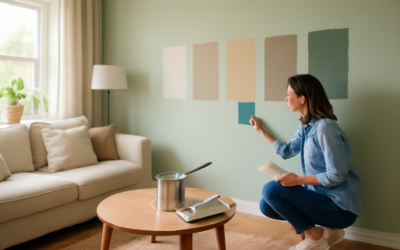
Living rooms often have mixed lighting, so always test colors on the actual wall and view them at different times of day. Warm whites, soft greiges, and muted earth tones remain reliable living room choices because they flatter most furniture and adapt to changing light. Buy sample pots, paint large swatches, and live with them for a couple of days before committing to gallons. Remember that a color always reads a shade or two darker and more saturated once it covers a whole wall, so if you are torn between two options, the lighter, softer choice is usually the safer bet for a room you will live with every day.
Estimating How Much Paint You Need
Buying the right quantity prevents both mid-project runs to the store and wasted half-used cans. As a rule of thumb, one gallon of quality interior paint covers roughly 350 to 400 square feet with one coat. To estimate your living room, measure the perimeter of the room, multiply by the wall height to get total wall area, then subtract the square footage of large windows and doors.
Plan for two coats on most jobs, which is where premium paints save you effort by covering more completely. For a typical 12-by-16-foot living room with 8-foot ceilings, expect to need about two gallons for two coats. Buy all your paint from the same batch or have the store box (combine) multiple cans together, since slight color variations between batches can show as a faint stripe on a large wall. Keep a labeled leftover can for touch-ups down the road.
Prep Work That Makes Any Paint Look Better
Even the best paint disappoints over a poorly prepped wall, and living rooms accumulate more surface flaws than you might notice day to day. Start by cleaning the walls of dust, cobwebs, and any grime near switches and behind furniture, then let them dry. Fill nail holes and dents with spackle, sand smooth, and lightly sand any glossy or previously semi-gloss areas so the new paint grips.
- Wipe walls down and address any grease or scuff marks before painting.
- Spot-prime patched areas and stains so they do not flash through the finish.
- Caulk gaps along trim and baseboards for a crisp, finished look.
- Use quality painter’s tape and a drop cloth to protect trim, floors, and furniture.
Cutting in the edges with a good angled brush and rolling the field while the cut-in paint is still wet prevents lap marks and gives a seamless, professional result. Thorough prep is unglamorous, but it is the single biggest factor in how good the finished walls look and how long they last.
Bringing It Together
The best paint for living room walls is a premium eggshell or satin, low-VOC, scrubbable interior paint from a trusted manufacturer’s upper tier. That combination gives you a finish that looks refined, cleans up easily, and keeps your air healthier, all of which matter in the room where your household spends the most time. Nail the sheen and quality first, then enjoy picking the color that makes the space yours.