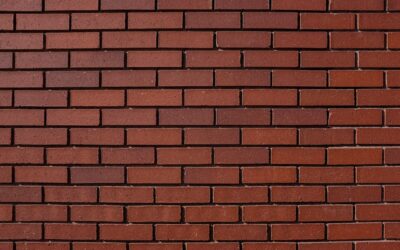
Nothing else on the floor reads quite like brick — the warm reds, the mortared seams, the sense of a kitchen or entryway that has been there for 100 years. Brick tile flooring delivers that aesthetic in two fundamentally different ways: real thin brick veneers cut from actual fired clay, and porcelain tile printed and textured to mimic brick with dramatically easier installation. Both serve the look, but they have very different price tags, maintenance profiles, and structural requirements. This guide breaks down each approach, realistic costs, top brands, and where brick flooring earns its place.
Part of our Tile & Grout guide — explore the full guide →
Real Brick vs Porcelain Brick-Look
Real Thin Brick (Brick Pavers)
True clay brick, either full-thickness pavers (2.25 to 2.5 inches) or thin brick veneers (1/2 to 3/4 inch) that install like tile. Colors range from warm reds to tumbled ochres to deep grays. Produced by brick companies like Pine Hall Brick, Whitacre Greer, General Shale, and Glen-Gery. Material runs $6 to $15 per sq ft; total installed cost hits $15 to $30 per sq ft for a proper mortared install.
Porcelain Brick-Look Tile
Digitally printed and textured porcelain that replicates brick color, surface variation, and the illusion of mortared seams. Typically 2 x 10 or 3 x 12 inch planks. Much lighter, waterproof, and easier to install than real brick. $2 to $6 per sq ft material; $8 to $14 installed.
From six feet away, premium porcelain brick-look is nearly indistinguishable from real clay. Up close, real brick wins on texture depth and thermal feel.
Pros of Brick Tile Flooring
- Instant historic character that suits farmhouse, Tuscan, industrial loft, and classic colonial designs.
- Extreme durability — real clay brick floors in European estates are routinely 200-plus years old and still in service.
- Hides dirt and wear thanks to mottled natural color variation.
- Works indoors and outdoors on covered porches, sunrooms, and mudrooms.
- Warm thermal mass with radiant floor heating — brick holds heat exceptionally well.
- Slip-resistant texture especially on tumbled and wire-cut finishes.
Cons to Consider
- Hard and cold underfoot; rugs and radiant heat become almost mandatory in living areas.
- Mortared seams collect crumbs and dust; cleaning takes more effort than flat tile.
- Real brick requires sealing every 2 to 5 years to prevent staining.
- Heavy structural load — real brick weighs 9 to 11 lb per sq ft before mortar, which can exceed joist capacity in older homes.
- Dropped glass and ceramic break on impact; not forgiving to dishware.
Best Spaces for Brick Flooring
Kitchens
The classic application. Brick stands up to grease, water, and dropped cast iron. Pair with quarry stone counters or butcher block for a cohesive look. Herringbone and running bond patterns suit the scale of most kitchens.
Entryways and Mudrooms
Wet boots and dog paws disappear into brick’s natural color variation. The slip resistance helps with wet-entry safety.
Sunrooms and Enclosed Porches
Brick transitions seamlessly between indoor and outdoor spaces. Pair with thermal-mass advantage on sunny exposures.
Wine Cellars and Basements
Cool thermal mass and humidity tolerance suit wine storage and finished basement spaces.
Fireplaces and Hearths
Tie brick flooring into brick hearth surrounds for an integrated, cohesive look.
Common Patterns
- Running bond: each row offset by half a brick. The standard, most informal look.
- Herringbone: 45 or 90 degree interlocking pattern. Dramatic and formal.
- Basketweave: pairs of bricks alternating direction. Traditional colonial style.
- Stacked bond: bricks aligned in a grid. Modern and minimal.
- Chevron: angled running bond that creates zigzag lines. Contemporary twist on classic.
Installation Notes
Real Brick Installation
- Subfloor reinforcement often required. Verify joist capacity with a structural engineer for second-floor installs.
- Mortar bed thickness 1/2 to 3/4 inch on cement backer board or structurally isolated cement slab.
- Mortar joints typically 3/8 inch, sanded cement grout.
- Penetrating sealer applied after cure — Aqua Mix, Miracle Sealants, or TileLab.
- Cure time 72 hours before foot traffic, 7 days before heavy loads.
Porcelain Brick-Look Installation
- Thinset with uncoupling membrane (Schluter Ditra, Laticrete Strata) on wood subfloors.
- Large-format thinset for brick-sized planks to ensure full back coverage.
- Grout lines 1/16 to 1/4 inch; sanded grout for wider joints.
- Leveling clips help keep long plank edges flush.
- Walk-on time 24 to 48 hours; full grout cure 72 hours.
Top Brick Tile Brands
- Pine Hall Brick: US-made thin brick in authentic colors and textures.
- General Shale: wide availability, value pricing on thin brick.
- Glen-Gery: custom color blends and historical reproductions.
- Whitacre Greer: premium handmade Flemish-style brick.
- Daltile Brickwork: porcelain brick-look, widely stocked at distributor level.
- MSI Brickstone: popular porcelain brick-look, often sold at Floor & Decor.
- Porcelanosa Venice: Spanish-made designer porcelain brick-look with refined color palettes.
Sealing and Maintenance
Real brick needs a penetrating sealer within 30 days of install and every 2 to 5 years afterward. Test by spilling a few drops of water — if the water beads, the sealer is working; if it darkens the brick, it is time to reseal.
Sweep daily or vacuum with a hard-floor head. Damp mop with pH-neutral stone and tile cleaner. Avoid acidic cleaners (vinegar, citrus) on real brick; they etch the surface and degrade sealer. Porcelain brick-look tile is effectively maintenance-free beyond basic mopping.
Cost Comparison
- Real thin brick installed: $15 to $30 per sq ft.
- Real full-depth pavers installed: $18 to $35 per sq ft.
- Porcelain brick-look installed: $8 to $14 per sq ft.
- Reclaimed historic brick: $20 to $45 per sq ft installed.
Bottom Line
Brick tile flooring brings a warmth and history that few other materials can match, whether you go with the authentic clay original or a well-made porcelain stand-in. Real brick belongs in kitchens, mudrooms, sunrooms, and any historic renovation where authenticity matters. Porcelain brick-look delivers most of the visual reward at half the installed cost and with no sealing maintenance. Pick based on budget, structural capacity, and how often you want to kneel down with a sealer brush.
Prefer to explore on your own?
See how new flooring looks in your actual room in seconds — free, no signup.
Try the free Floor Studio →